
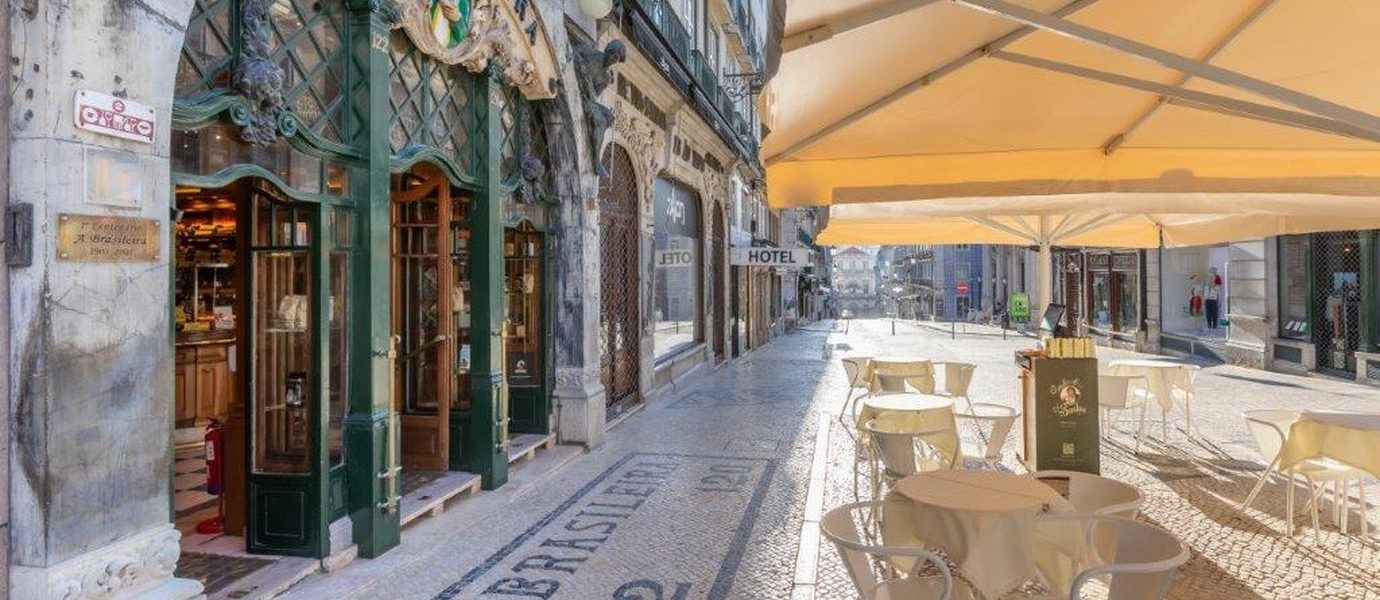
Historic cafés in Lisbon: 12 stops from 1782 to 1966
Lisbon runs on coffee and sugar. Some of the places that serve both were open long before the monarchy fell in 1910.
This guide covers twelve of them. Five are in the historic centre. Five are in neighbourhoods most visitors skip. One is in Belém, and one is a short drive away in Sintra. The oldest opened in 1782. The newest, a late-night counter, opened in 1966. Every one is still serving.
Most lists stop at the famous names and a date. This one adds the rest. What to order. How to order it. Which rooms the locals still use. And how to join the dots in a day without wearing out your shoes.
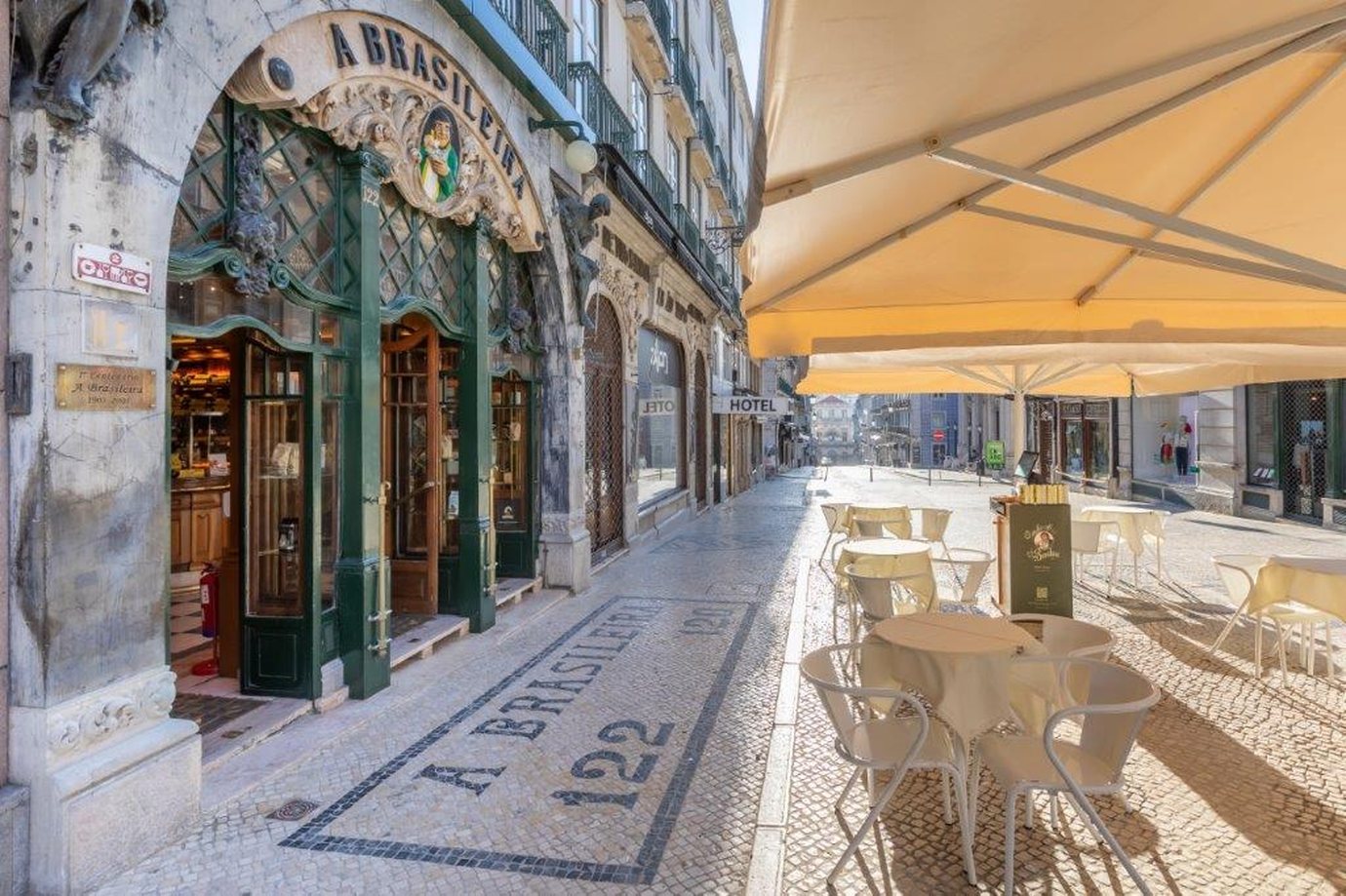
A Brasileira, Rua Garrett, Chiado. Photo: VDT2021 / Wikimedia Commons (CC BY-SA 4.0)
What counts as a historic café in Lisbon
Three words cover most of this list. A café serves coffee and a short menu. A pastelaria is a pastry shop with tables. A confeitaria is the older word for a confectioner, and it usually means a grander room.
Two official labels help you spot the real ones. Lisbon City Council’s Lojas com História programme, launched in 2015, recognises long-running independent shops. Most places below are on its list. The Historic Cafés Route is a European network, certified as a Council of Europe Cultural Route in 2022. In 2023 its board admitted eleven more Portuguese cafés, including Martinho da Arcada and Café Nicola in Lisbon.
The twelve at a glance
| Café | Where | Open since | Known for |
|---|---|---|---|
| Martinho da Arcada | Praça do Comércio | 1782 (a shop from 1778) | Lisbon’s oldest café and a table named for Pessoa |
| Confeitaria Nacional | Praça da Figueira | 1829 | The oldest confectioner still open, and bolo-rei |
| Pastéis de Belém | Belém | 1837 | The original custard tart |
| Casa Piriquita | Sintra | 1862 | Travesseiros and queijadas |
| Benard | Chiado | 1868 | A tea room that predates its famous neighbour |
| A Brasileira | Chiado | 1905 | The Pessoa statue and a gilded hall |
| Pastelaria Versailles | Avenida da República | 1922 | Chandeliers, mirrors and painted lakes |
| Café Nicola | Rossio | 1929 (older roots) | Art Deco and the poet Bocage |
| Panificação Mecânica | Campo de Ourique | 1942 (city listing) | A bakery wrapped in azulejos |
| Aloma | Campo de Ourique | 1943 | Award-winning pastéis de nata |
| Pastelaria Mexicana | Praça de Londres | 1946 | A 1962 ceramic sun on the wall |
| Galeto | Avenida da República | 1966 | Neon, counters and the small hours |
Baixa and Rossio: where Lisbon learned to linger
Start under the arcades of Praça do Comércio. Martinho da Arcada claims to be Lisbon’s oldest café, and the history backs it up. The business began in 1778 as a small shop selling drinks and ice. Its official opening date is 7 January 1782.
The name came later. In 1829 the owner’s grandson, Martinho Bartolomeu Rodrigues, called it Café Martinho. In 1845 he added “da Arcada” to tell it apart from another café he owned in Largo Camões.
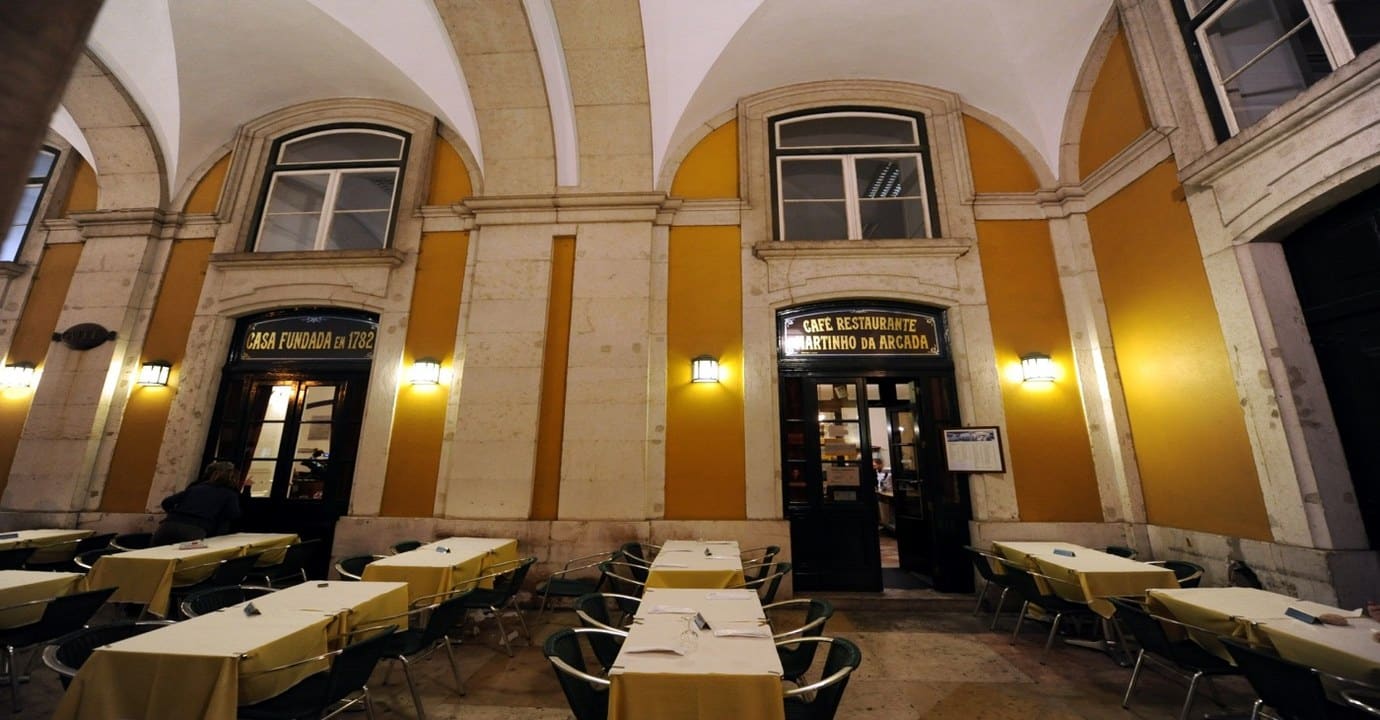
Martinho da Arcada, under the northeast arcade of Praça do Comércio. Photo: Martinho da Arcada
The room is plain and warm, with dark wainscoting and white tablecloths. The star is a table with Fernando Pessoa’s name on it. The house says the poet considered this his favourite café. Other tables honour José Saramago, Júlio Pomar and Manoel de Oliveira. In 1999 the Guia dos Cafés da Europa named it café of the year.
This is a restaurant as much as a café. It is known for dishes such as bife à Martinho and codfish. For a lighter visit, come in the afternoon for a coffee.
A few minutes’ walk north, the corner of Rossio belongs to Café Nicola. The name dates from 1929, when a new owner took over. The house itself is older. Accounts of its origins disagree. One credits an Italian called Nicola with opening a tavern here in 1779. Others say 1787.
Everyone agrees on the Art Deco makeover of 1935. Everyone also agrees on the regular who made the place famous, the poet Bocage. A sculpture of him greets visitors, and paintings of him cover the walls. Order bife à Nicola or bacalhau à lisbonense. The terrace is the best seat for watching the square. When it rains, the Art Deco room is reason enough to come inside.
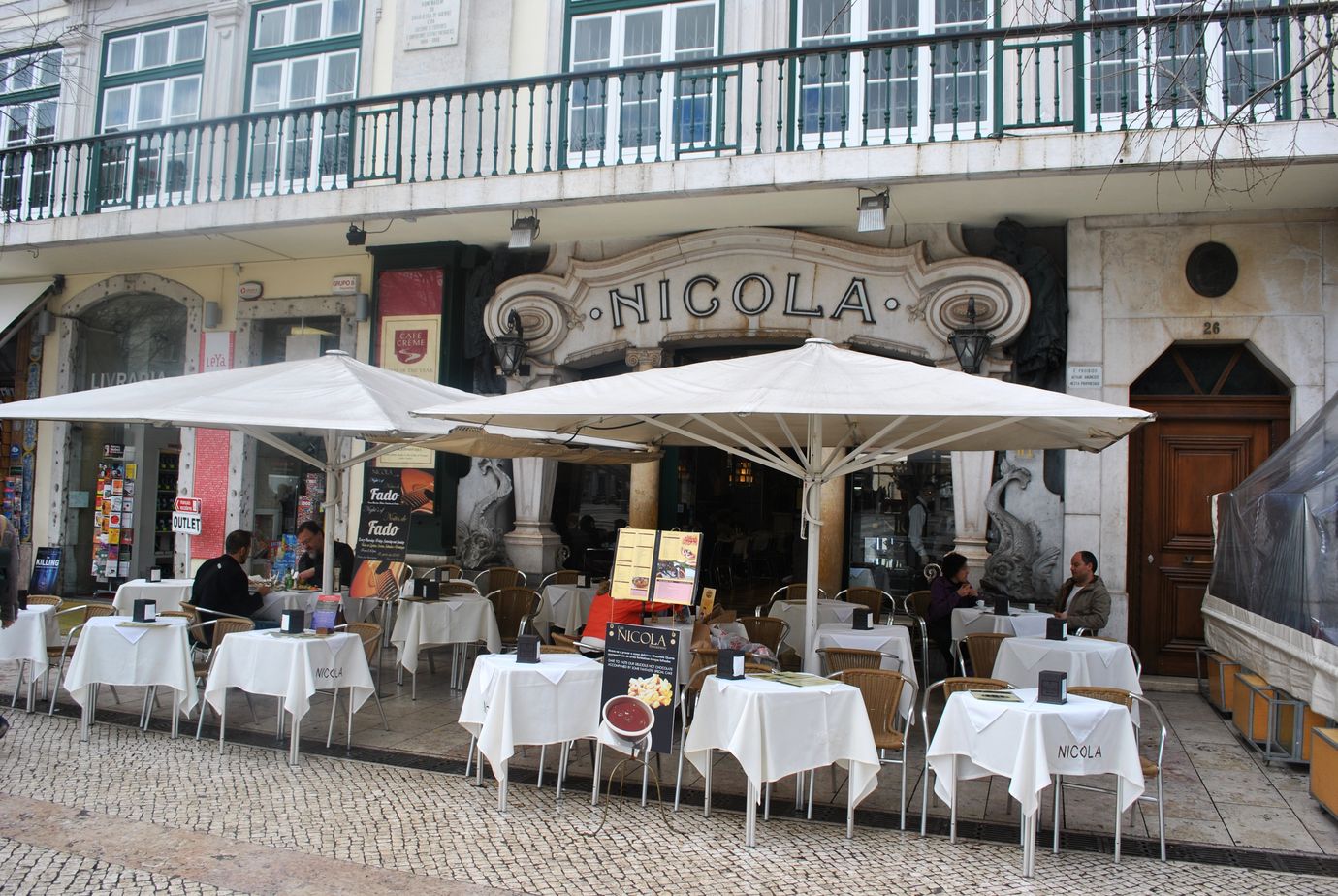
Café Nicola, Rossio. Photo: Elisa.rolle / Wikimedia Commons (CC BY-SA 4.0)
Cross to Praça da Figueira for the oldest confectioner in the city still in business. Confeitaria Nacional opened in 1829. Balthazar Roiz Castanheiro founded it, and the same family still runs it.
Its claim to fame is bolo-rei, the Christmas king cake. According to the city’s listing, the confectioner Gregório adapted a French recipe that the founder’s son brought back from Paris. The result is said to be Portugal’s first.
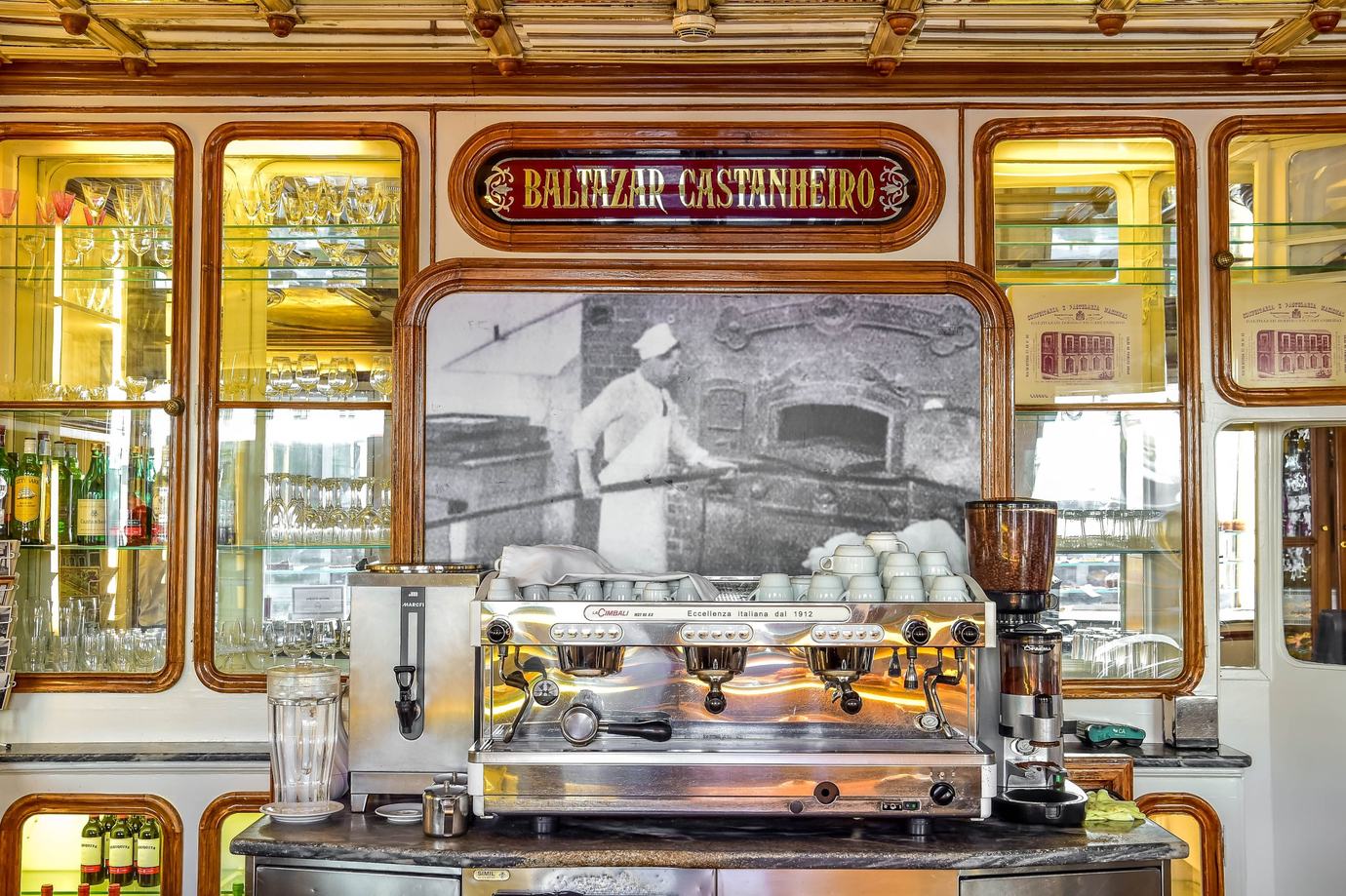
Confeitaria Nacional, Praça da Figueira. Photo: Confeitaria Nacional
Look for the details. A winding staircase, added in 2004, links the two floors. An old telephone that once connected the shop to its bakery is still on display. It no longer rings. The shop opens every day from 8:00 to 20:00.
This part of town is flat, so it works on foot. The squares are covered in our Lisbon Downtown tour and our Rossio Square page.
Chiado: Pessoa’s neighbourhood
Rua Garrett is the postcard. A Brasileira is the reason. It opened on 19 November 1905, in a former shirt shop at number 120. Its founder, Adriano Telles, had made his money in Brazilian coffee. He came home with a mission. He wanted Portugal to drink it.
To prove the point, he gave coffee away by the cup for years. A sign in the shop told customers to drink it with sugar. The architect Manuel Norte Júnior designed the façade. Inside, a long hall runs back past marble mosaic floors, carved wooden pillars and mirrors set between them.
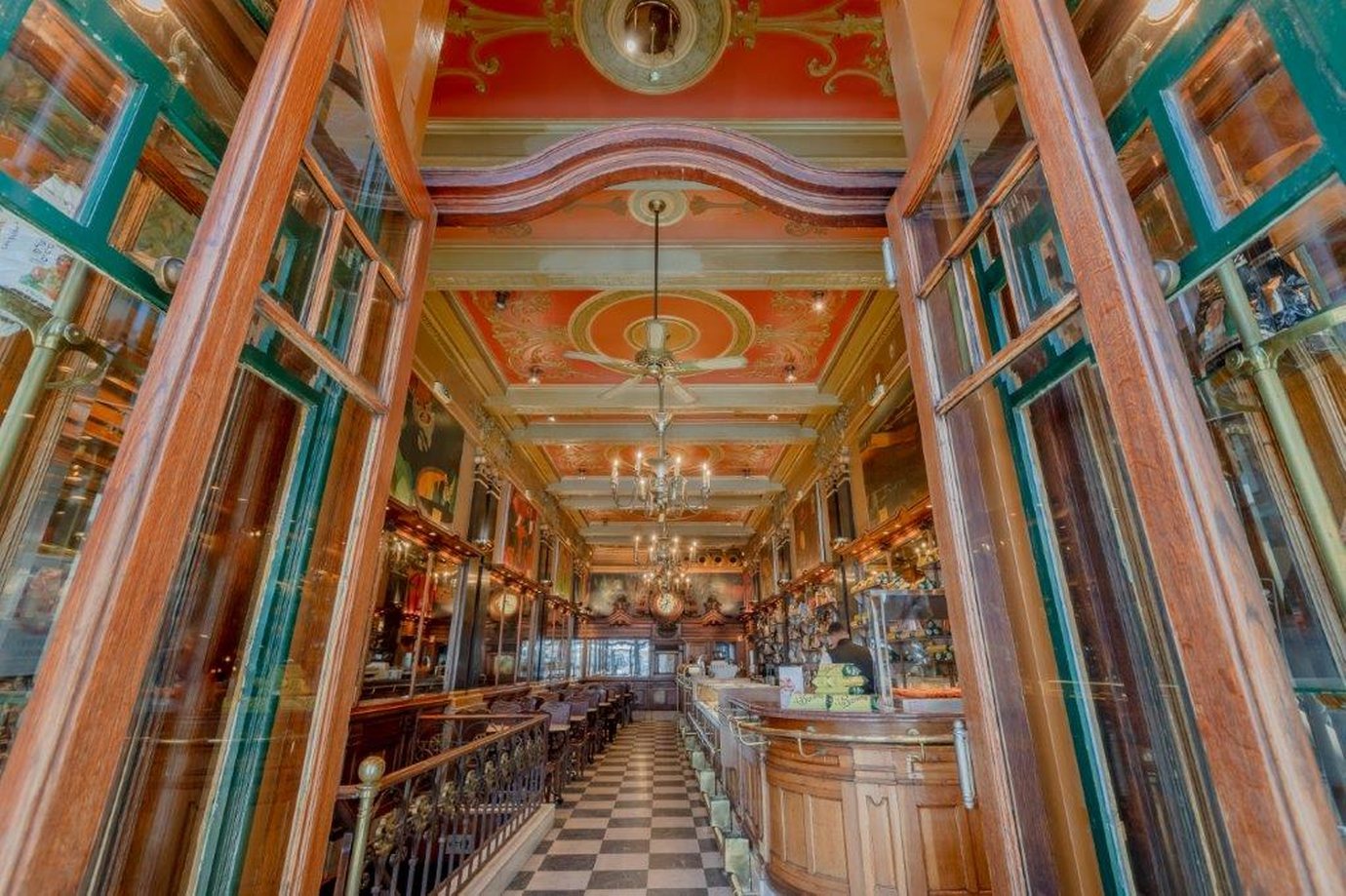
Inside A Brasileira. Photo: VDT2021 / Wikimedia Commons (CC BY-SA 4.0)
By the 1920s, painters and writers had made it their living room. In 1925 the café showed avant-garde paintings, including two by Almada Negreiros. Critics did not love them. According to the Historic Cafés Route, the revolutionaries who helped found the republic in 1910 also met here. The state later classified the café as a property of public interest, in 1997.
Outside, a bronze Fernando Pessoa sits at a terrace table. The sculptor Lagoa Henriques placed it here in 1988. It is one of the most photographed statues in Portugal, and the empty chair beside the poet is the reason. Sit down and the photo takes itself.
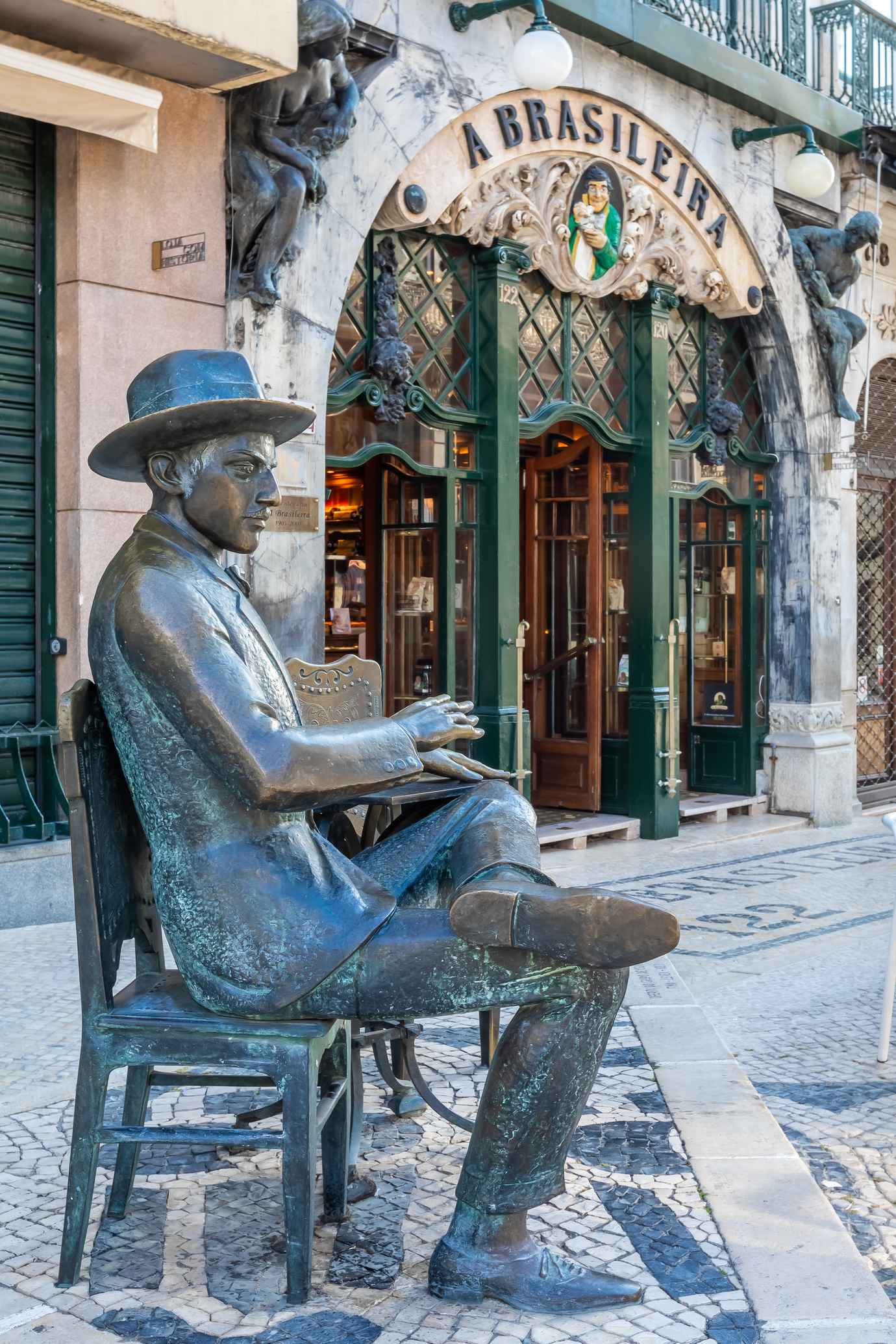
The Pessoa statue outside A Brasileira. Photo: Luísa Paulos / Wikimedia Commons (CC BY-SA 4.0)
The café is open every day from 8:00 to 2:00 a.m. There is a restaurant downstairs and a newsagent at the entrance. For a first order, the city’s listing recommends the pastéis de nata, the chicken pasties and the lemon meringue pie.
A little further along Rua Garrett, at number 104, Benard is older than its famous neighbour. Elie Benard, from a family of French bakers, opened a bakery on Rua do Loreto on 6 September 1868. In 1902 his son Casimiro moved the food business to Rua Garrett, three years before A Brasileira opened.
It became a tea room for Lisbon’s elegant society, and a newspaper called it a rendezvous. The shop was remodelled in 1914, and the façade still largely stands. The name changed to Pastelaria Benard when the city required Portuguese signage. Maria Augusta Montes bought it in 1983, renovated it and restored in-house production.
Book lovers can add one more stop. Bertrand’s Chiado shop is on the same street, and our guide to Portugal’s historic bookshops tells its story.
Chiado is steep and cobbled. Ask your driver for the drop-off closest to the door you want. Our Carmo Convent and Santa Justa Lift pages cover the neighbourhood’s other landmarks.
Avenidas Novas and Areeiro: grand salons and a 1960s sun
North of the centre, on Avenida da República, Pastelaria Versailles opened on 25 November 1922. Its founder, Salvador José Antunes, trained in French pastry and loved the style. He built a salon to match.
Benvindo Ceia painted the lakes of Versailles on the walls. Fausto Fernandes carved the woodwork. Chandeliers, mirrors and stucco ceilings do the rest. The room has barely changed. The ceiling and gilded woodwork need a deep clean every ten years. The group opened a second branch in Belém in 2017, beside the Coach Museum.
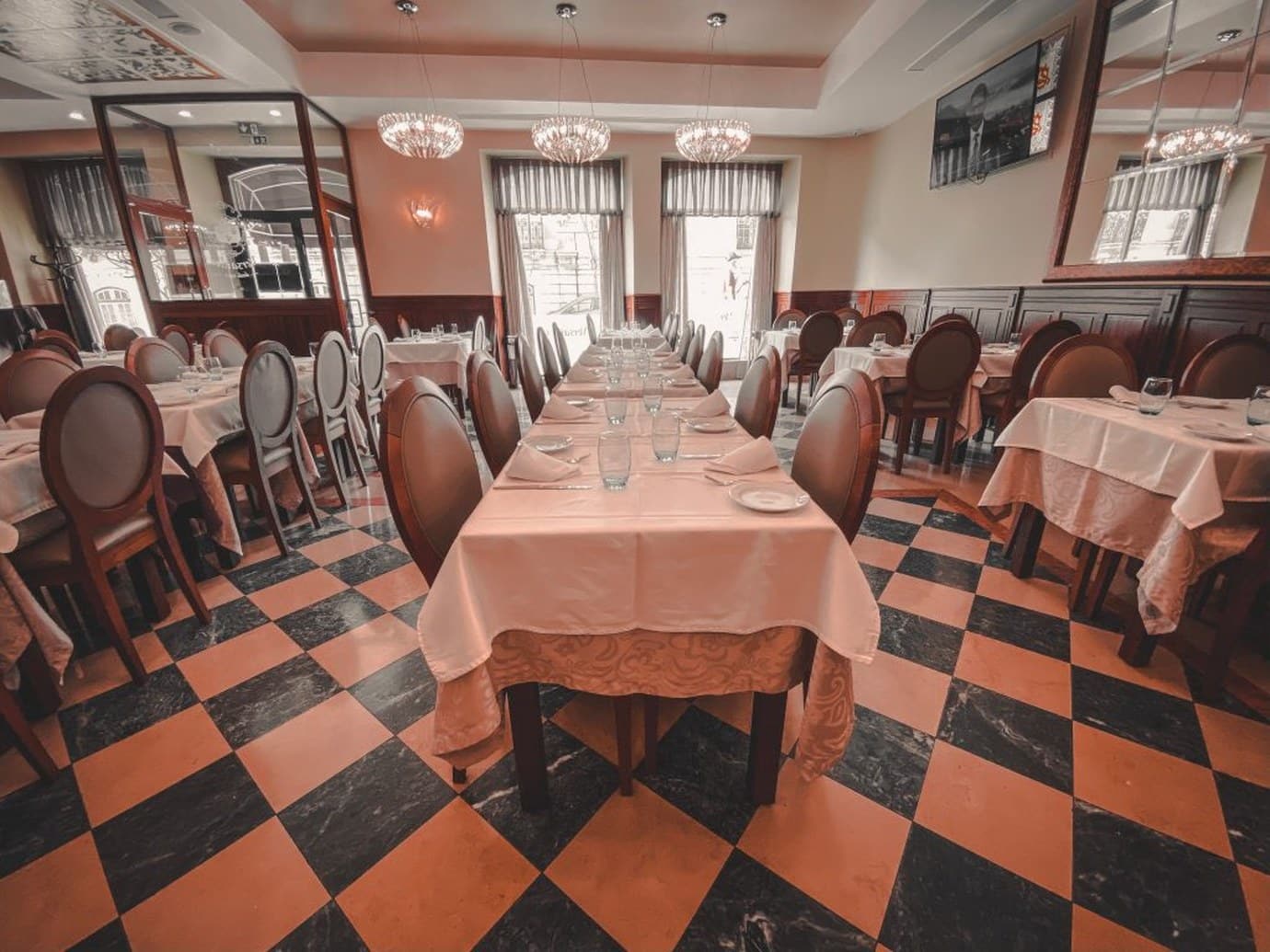
Pastelaria Versailles, Avenida da República. Photo: Grupo Versailles
Across the avenue, Galeto, is at Avenida da República 14. It opened in July 1966, the idea of six restaurateurs who had worked in Brazil. They planned to sell grilled chicken, galeto, to a crowd that never bit. The counter format, however, was an instant hit.
The interior is by the architects Victor Palla and Joaquim Bento d’Almeida. It is reportedly the only one of their snack bars that still keeps its original design. Expect neon, long counters and a menu built for late nights. It makes a good last stop of the day. The city lists it as open from 7:30 to 3:30 every day, closing only on 1 May. In January 2025 the government opened the process to classify it as national cultural heritage.
Further north, Pastelaria Mexicana faces Praça de Londres. A sign over the door says desde 1946. The name is said to nod to the square’s old name, Praça do México.
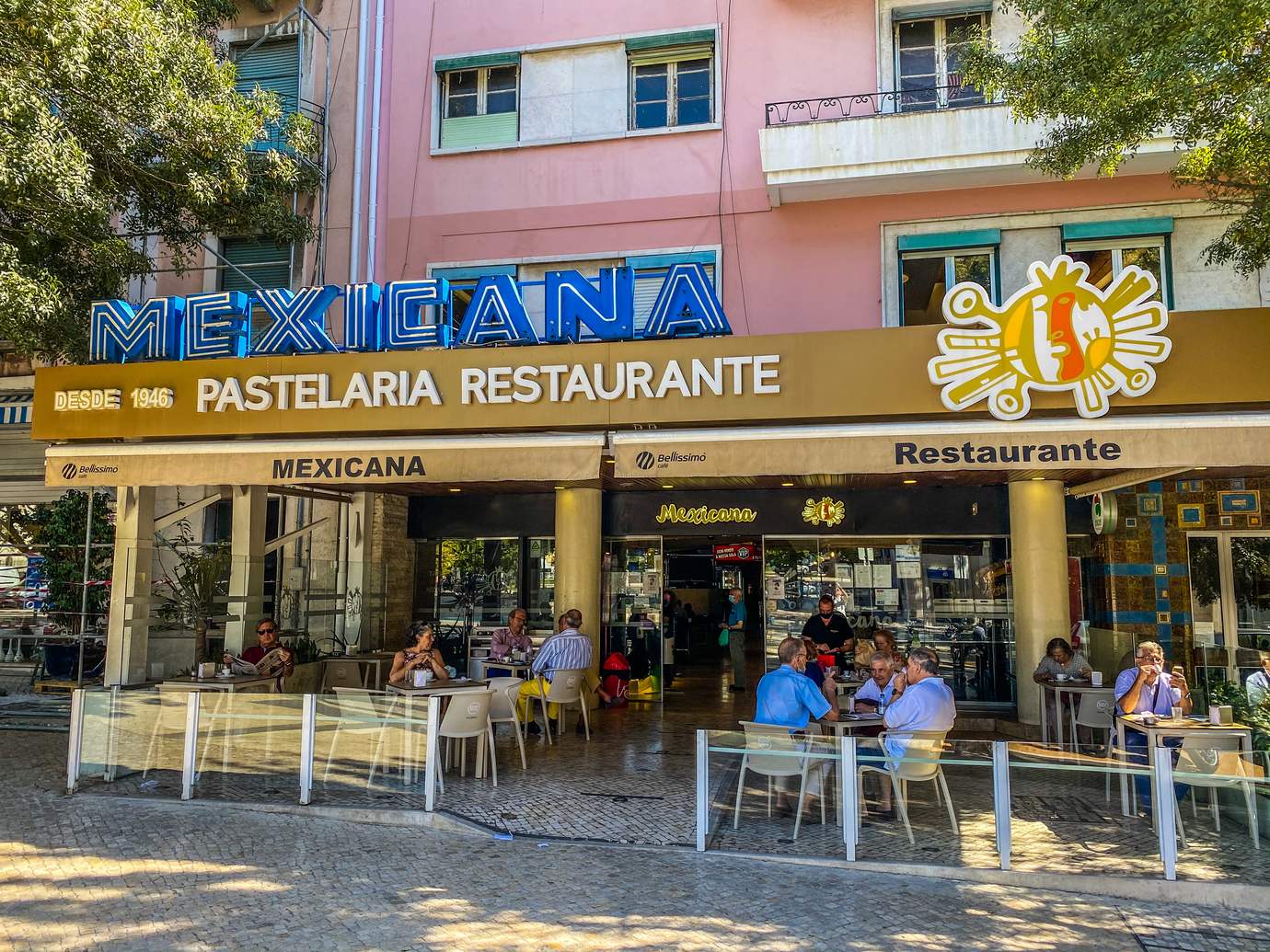
Pastelaria Mexicana, Praça de Londres. Photo: Pedro S Bello / Wikimedia Commons (CC BY-SA 4.0)
Go inside. A ceramic panel from 1962, a golden sun by the artist Querubim Lapa, covers a wall of the dining room. A large cage of live birds stands nearby. The pastries are made in house. Try the queques, the Garibaldi or a puff-pastry croissant. It is open every day from 7:30 to 22:00.
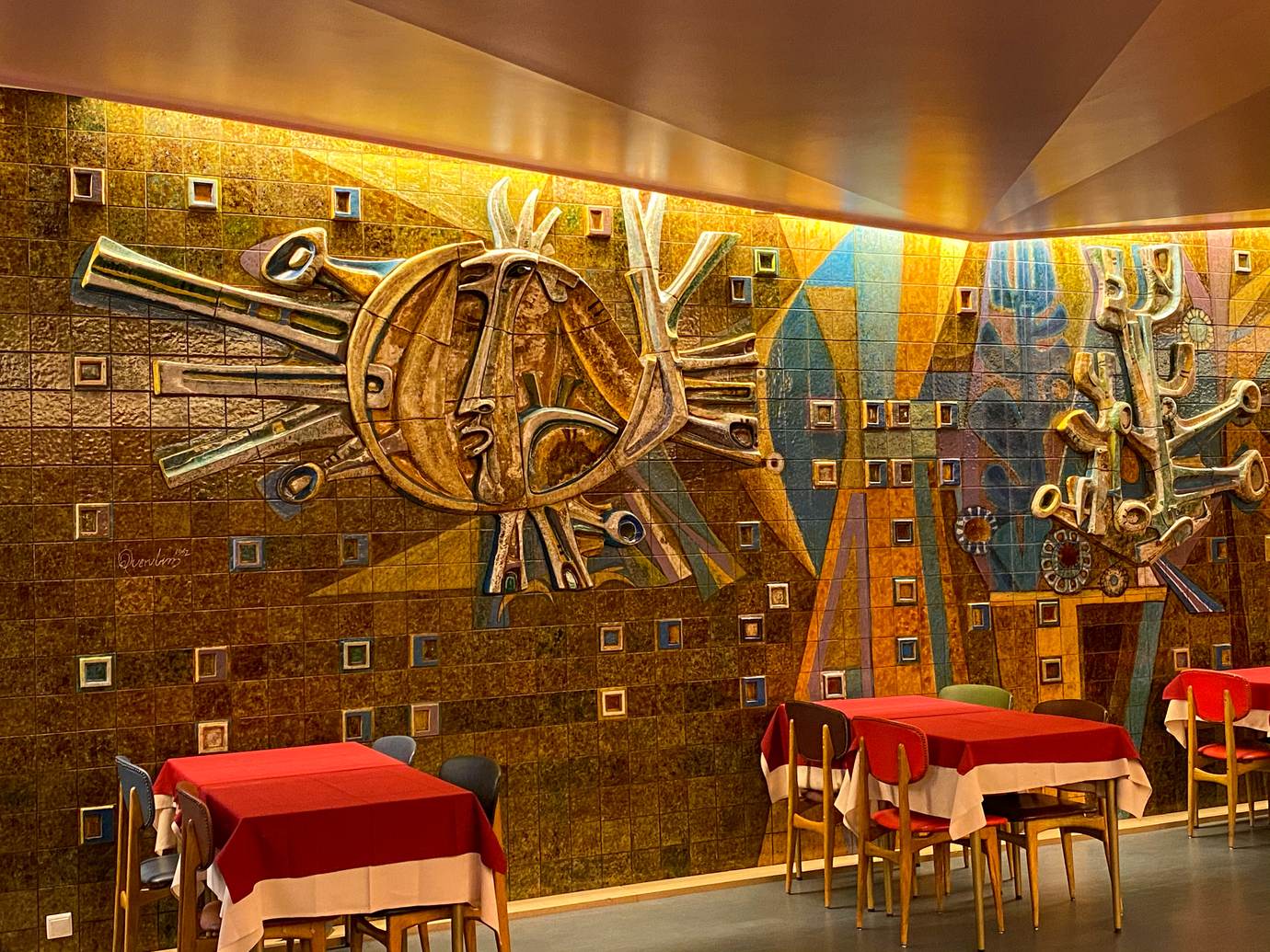
The ceramic panel inside Pastelaria Mexicana. Photo: Pedro S Bello / Wikimedia Commons (CC BY-SA 4.0)
Campo de Ourique: the neighbourhood café at its best
Campo de Ourique is where Lisbon residents take their own guests. It is a tidy grid of streets west of the centre. Pessoa lived his last years here, and his house is now a museum. Our guide to Lisbon like a local covers it.
Panificação Mecânica, on Rua Silva Carvalho, is a bakery that looks like a palace. The listed building has three floors of azulejos, a cast-iron shopfront and arched windows. Inside, Art Nouveau tiles from the Bordalo Pinheiro factory show wheat as plant motifs.
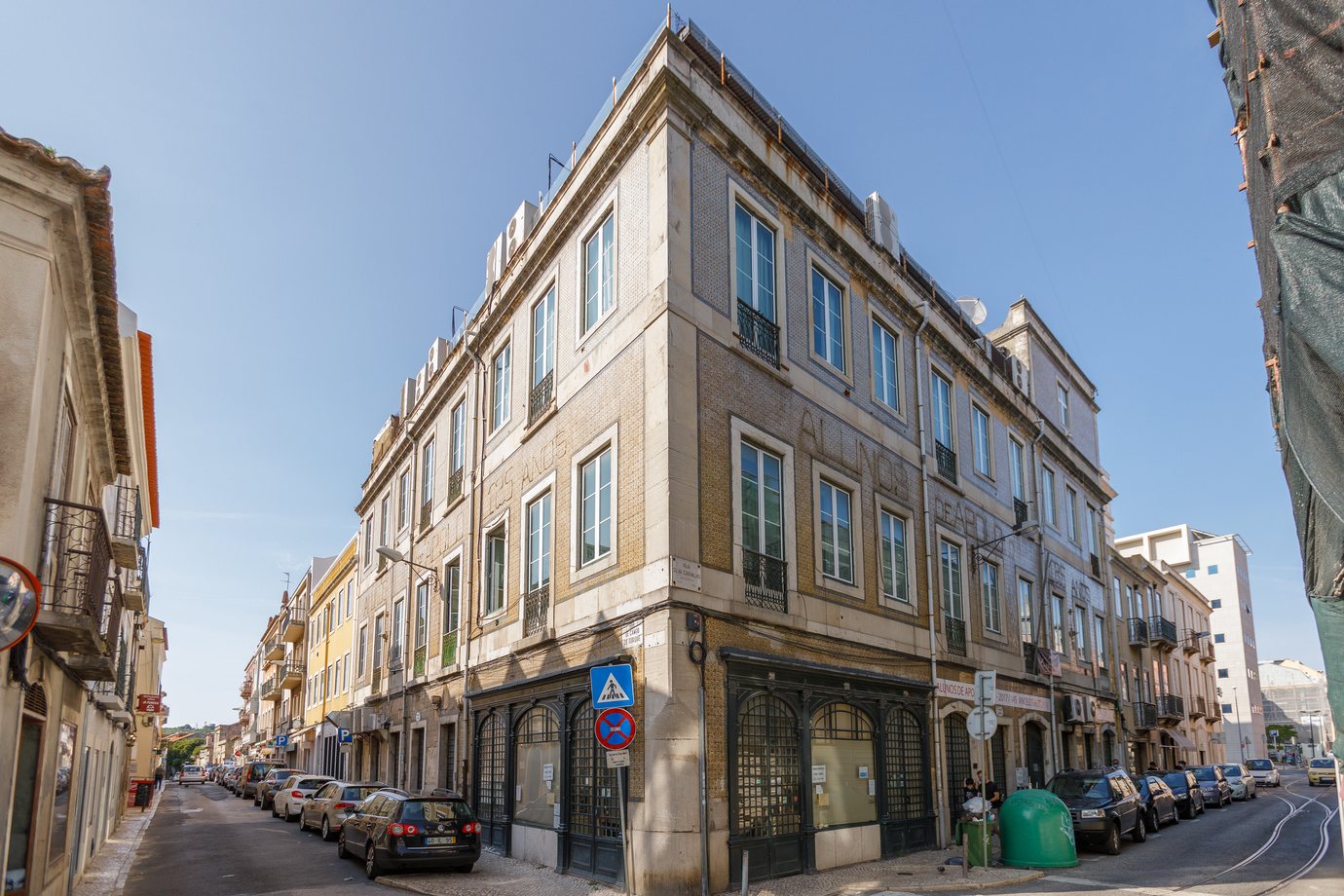
Panificação Mecânica, Campo de Ourique. Photo: Camilla Morselli / Wikimedia Commons (CC BY-SA 4.0)
The city lists the bakery as operating since 1942. The site’s first record dates to 1902, when a company proposed a bread-oven building there. It opens Monday to Friday from 7:00 to 20:00 and on Saturday from 7:00 to 17:00. Sunday hours are not listed, so check before you go.
A short walk away, Aloma opened in 1943. The house says its name comes from a 1941 film, Aloma of the South Seas. In October 2025 it won the contest O Melhor Pastel de Nata for the fifth time. The jury tasted blind, as Time Out Portugal reported. The shop is at Rua Francisco Metrass 67. Order the pastel de nata, then judge for yourself.
Belém: the tart with its own address
Pastéis de Belém opened in 1837, in buildings attached to a sugar refinery beside Jerónimos Monastery. Portugal had closed its religious houses in 1834. People tied to the monastery began selling sweet pastries in the shop to get by.
The recipe came from the monastery. The bakery says it has not changed since. Only master confectioners know it, and they work in a room the bakery calls secret. The name Pastéis de Belém belongs to this bakery alone. Everyone else sells pastéis de nata. The address is Rua de Belém 84 to 92. Eat them warm, with cinnamon and sugar.
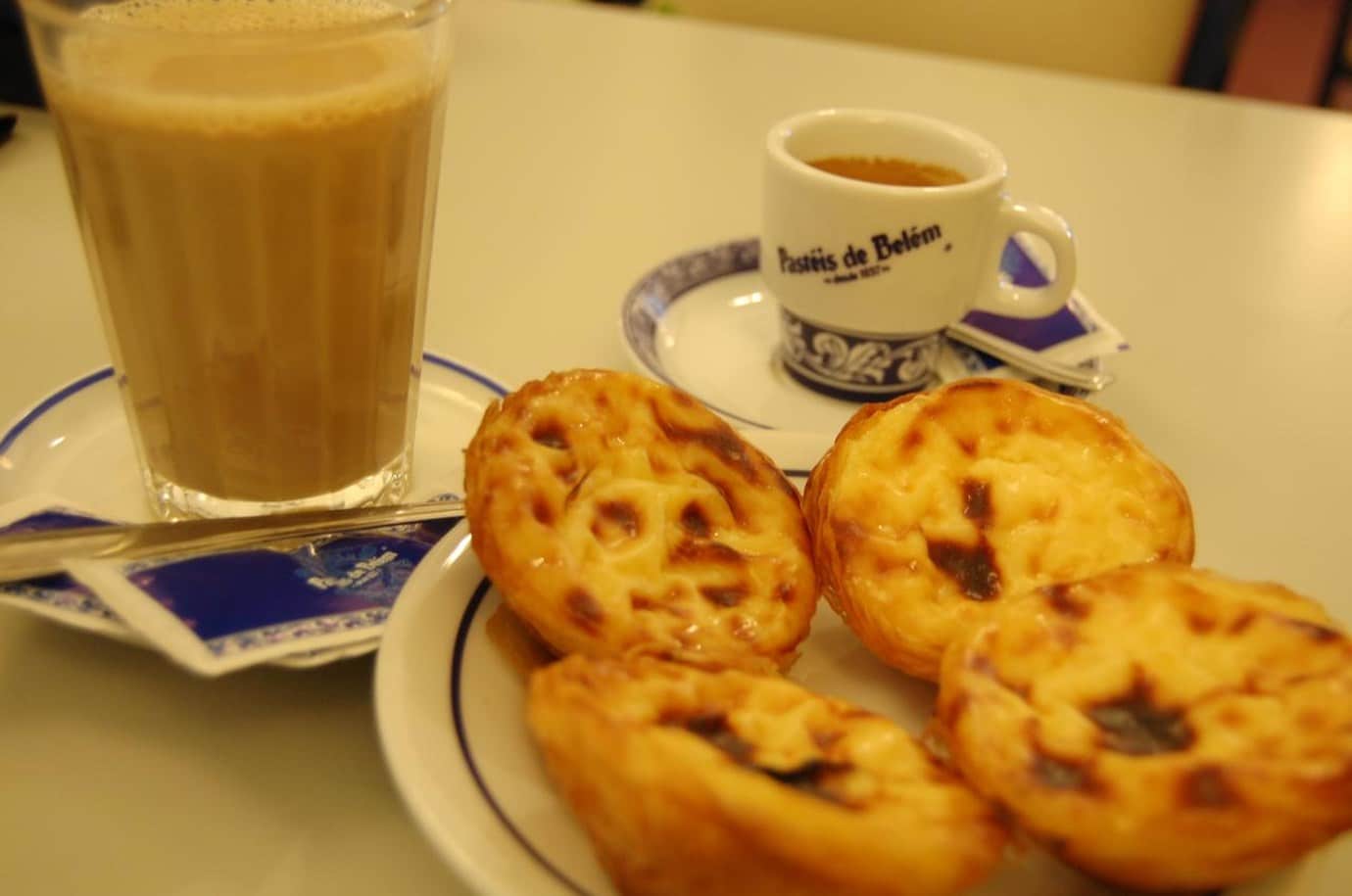
Pastéis de Belém with a galão. Photo: Yusuke Kawasaki / Flickr / Wikimedia Commons (CC BY 2.0)
Our Pastéis de Belém tour puts the bakery on a private route through the district.
Sintra: pillows and little cheese tarts
Casa Piriquita is on Rua das Padarias, in the old town. A sign inside says it was founded in 1862 by Constança Gomes, nicknamed Piriquita. The shop first became known for queijadas, small cheese tarts.
The travesseiro came later. Most accounts date it to the 1940s. It is a puff-pastry “pillow” filled with almond and egg cream. The recipe has stayed in the family. Buy a box of both and eat them on the walk up to the palaces.
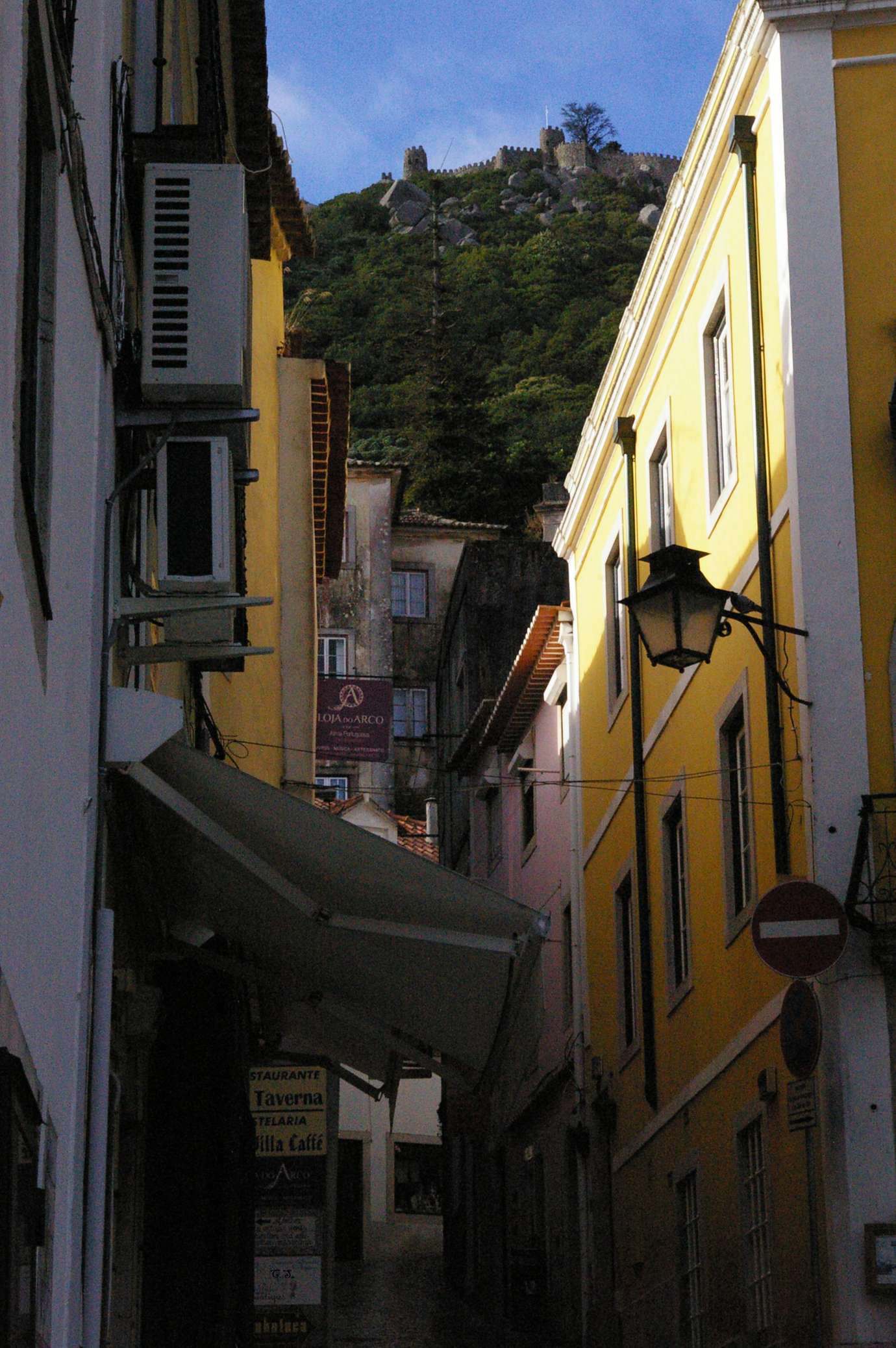
A lane in Sintra’s old town. Photo: Kikas33 / Wikimedia Commons (CC BY-SA 3.0)
The old town climbs, so plan the drop-off. Sintra is about 40 minutes from Lisbon by car. Our Sintra city tour and our guide to Sintra beyond Pena Palace help you plan the rest of the day.
How to order like a local
Say “uma bica” and nobody blinks. Say “an espresso” and they will understand, but you will sound like a visitor. Here is the short list.
| Ask for | What you get |
|---|---|
| Uma bica | A short espresso, the Lisbon standard |
| Um pingado | An espresso with a drop of milk |
| Um garoto | A small cup of coffee topped up with milk |
| Uma meia de leite | Half coffee, half milk, in a cup |
| Um galão | A tall, milky coffee in a glass |
| Um abatanado | An espresso stretched with hot water |
Pair any of them with a pastel de nata. In Lisbon, locals often add cinnamon and icing sugar on top.
One day, one route
Do not try all twelve. Choose a theme and keep the pace slow.
Morning in the centre. Start at Martinho da Arcada, then walk to Rossio and Praça da Figueira. Finish the morning in Chiado with Benard and A Brasileira. All five sit within a short walk.
Midday in the avenues. Take a car north to Avenida da República for Versailles, then on to Praça de Londres for Mexicana. Galeto, across the avenue from Versailles, is the late-night finish.
Afternoon in Campo de Ourique. Campo de Ourique rewards a slow afternoon. Visit Panificação Mecânica, stop at Aloma, and walk past Pessoa’s house.
Another day. Belém and Sintra each deserve their own half day. Give them a separate morning.
Baixa is flat. Chiado climbs. Some historic rooms have steps at the door. If mobility is a concern, tell us in advance and we will plan the closest drop-off for each stop.
Choosing the right Amiroad vehicle for a café route
| Group Size | Recommended Vehicle | Best For |
|---|---|---|
| 1–3 passengers | Mercedes S Class | A Chiado and Baixa morning with a drop-off close to each door |
| 4–6 passengers | Mercedes V Class | A family or friends’ pastry tour, with room for the shopping bags |
| 8–15 passengers | Mercedes Sprinter | A group coffee-and-pastry day for a corporate or celebration programme |
Amiroad’s Services
Amiroad arranges private transfers and half-day or full-day tours around Lisbon, Belém and Sintra. Your chauffeur handles the hills, the parking and the timing. See our private transfers in Lisbon or browse our Lisbon tours. Every vehicle in Amiroad’s fleet has air conditioning, GPS, Wi-Fi and complimentary water.
Hungry for something more formal after the pastries? Our guide to the best restaurants in Lisbon has the next stop.
Frequently asked questions
What is the oldest café in Lisbon?
Café Martinho da Arcada, on Praça do Comércio. The business began in 1778 and its official opening date is 7 January 1782. The oldest confectioner still open is Confeitaria Nacional, from 1829.
Why is A Brasileira famous?
A Brasileira opened in 1905 and became a meeting place for writers and artists. A bronze statue of Fernando Pessoa sits outside. The state classified the café as a property of public interest in 1997.
Where is the Fernando Pessoa statue in Lisbon?
Outside A Brasileira, at Rua Garrett 120 in Chiado. The bronze is by the sculptor Lagoa Henriques and was placed there in 1988.
What is Lojas com História?
It is a Lisbon City Council programme, launched in 2015, that recognises long-running independent shops. Most of the places in this guide are on its list.
What should I order in a Lisbon café?
Start with a bica, which is a short espresso, or a galão, which is a tall milky coffee. Add a pastel de nata or the house pastry. Each café above has its own signature.
Which historic cafés in Lisbon stay open late?
The city lists A Brasileira as open until 2:00 a.m. and Galeto until 3:30 a.m. Hours change, so check before you go.
Can I visit several historic cafés in one day by car?
Yes. The five cafés in the centre are within a short walk of each other. Versailles, Mexicana and Galeto sit close together to the north, and Campo de Ourique is a short drive west. Belém and Sintra work best as separate half days.

For tailor-made tours or other programs, please get in touch with us through the telephone below or by filling out the form.