
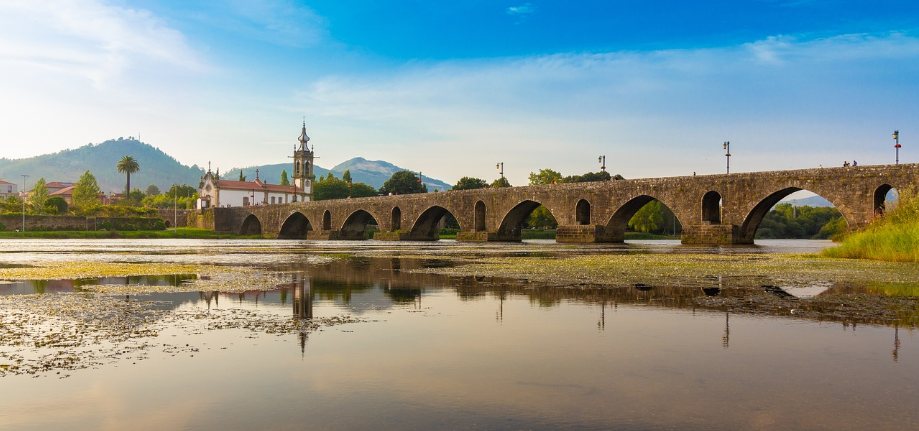
The Best Places to Visit in Minho, Portugal
Nestled in the northwest corner of Portugal, the region of Minho is a true hidden gem. With its stunning natural beauty, rich history, and vibrant culture, the Minho region, in Portugal, is a must-visit destination for anyone looking to discover the beauty of this stunning country. From the breathtaking coastline to the rolling hills and verdant forests, Minho is a place of unparalleled natural splendor. But the region’s charm doesn’t stop there: its centuries-old traditions, colorful festivals, and delicious cuisine make it a true cultural treasure. So come and discover the magic of Minho for yourself: you won’t be disappointed!
Minho at a Glance
Minho sits in the far northwest of Portugal. The Minho River marks its northern edge and forms the border with Spain. Porto airport is the main gateway, and Braga lies about 50 km from it.
- Best for: history, hiking, Vinho Verde and traditional festivals.
- Best bases: Braga, Guimarães or Viana do Castelo.
- Getting there: Braga is under an hour from Porto by train, and Guimarães is just over an hour.
- How long: three days cover Braga, Guimarães and the coast. Five days add Ponte de Lima and Peneda-Gerês.
A Look Back at the History of Minho
Minho’s story starts long before Portugal existed. Iron Age communities of the Castro culture, believed to be Celtic, built hilltop towns here. The Citânia de Briteiros, near Guimarães, is one of the best known. Later, the Romans founded Bracara Augusta, today’s Braga. They also built the Via Nova, a road that linked it to Asturica Augusta and crossed what is now Peneda-Gerês National Park.
The medieval chapter is just as rich. Braga’s cathedral began rising in 1070, and Ponte de Lima received its first charter on 4 March 1125. Guimarães, meanwhile, is celebrated as the birthplace of Portugal, although historians debate the details. Today the castles, churches and bridges are easy to visit. Our guides to Braga and Guimarães go deeper into each city.
The Natural Wonders of Minho
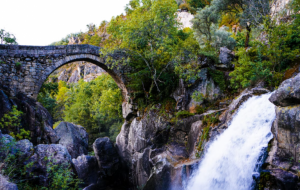
The Minho region of Portugal has a varied geography of mountains, river valleys and Atlantic coastline. The Minho River forms the border with Spain, while the green valleys of the Lima and Cávado rivers shape much of the landscape and its vineyards.
The region also protects some of Portugal’s wildest landscapes. Peneda-Gerês National Park is the country’s only national park, created in 1971. It covers nearly 700 square kilometers of granite peaks, forests and waterfalls. A small number of Iberian wolves survive there. Free-roaming Garrano horses, a small native breed, are easier to spot. Brown bears disappeared from the area in the 17th century.
The park also protects human heritage. The Roman Via Nova road crossed it, and stretches survive along the Homem River, with Roman bridges and milestones. In Soajo, 24 granite granaries called espigueiros stand together on a slope, and Lindoso has similar ones. The village of Vilarinho das Furnas was flooded in 1970 when a dam was built, and its ruins reappear in dry years. Some trails are steep and uneven, so ask about shorter or easier routes when you plan. The espigueiros of Soajo, however, sit in the village itself.
Minho is also home to the Costa Verde (Green Coast), the Atlantic shoreline of the north. Praia do Cabedelo, by Viana do Castelo, is popular with kitesurfers and windsurfers. Afife and Moledo are other beaches worth a stop, and Moledo looks across the water to Spain. Further south, Ofir and Fão sit inside the Litoral Norte Natural Park, close to Esposende.
The natural beauty of the Minho region is a major draw for visitors, and the region’s many protected areas offer a wealth of opportunities for outdoor enthusiasts. Whether you’re interested in exploring the region’s stunning coastline, hiking through its forests and hills, or simply soaking up the beauty of nature, Minho is the perfect destination.
Experience the Rich Culture of Minho
Festivals and cultural events
The Minho region of Portugal is known for its rich culture, which is reflected in its traditions, festivals, and cuisine. Three festivals stand out, and each is worth planning a trip around:
- Festa de Nossa Senhora da Agonia (Viana do Castelo, around 20 August): flower carpets cover the streets the night before, and a procession leads to the sea. Parades, giant puppets and fireworks follow, and the festival was declared of public interest for tourism in 2013.
- Feiras Novas (Ponte de Lima, second weekend of September): fairs founded in 1826 in honor of Our Lady of Sorrows.
- São João de Braga (Braga, around 24 June): the biggest street party in the city, with a peak on the night of 23 to 24 June. Check the official program before you go. For more traditions across the country, see our guide to festivals and traditional festivities in Portugal.
Gastronomy
Minho is also famous for its wine and gastronomy, with traditional Portuguese dishes you won’t want to miss on your trip through the Minho Region.
- Caldo verde: This hearty soup is made with kale, potatoes, and onions, and is often served with slices of chorizo sausage.
- Bacalhau à Minhota: a salt cod dish listed among the region’s classics.
- Arroz de sarrabulho: a rich rice dish cooked with pork and pork blood. Ask what goes into it if you have dietary restrictions.
- Lampreia (lamprey): a seasonal delicacy, usually served as a stew in spring.
- Sweet treats: try the Pudim Abade de Priscos in Braga, plus torta de Guimarães and the clarinha pastry in Guimarães. Our Guimarães guide names where to find them.
- Looking for francesinha or tripas à moda do Porto? Those are Porto classics, not Minho dishes. Find them in our guide to things to do in Porto. For the wider picture, see Portuguese food.
Vinho Verde: The Region’s Signature Wine
Vinho Verde is the wine most closely tied to Minho. The name means “young wine” rather than green in color. Bottles are usually released three to six months after harvest and drunk soon after. The Vinho Verde DOC covers the old Minho province and some areas to the south, and it has nine subregions.
About 86% of Vinho Verde is white. Reds and rosés are rarer, and sparkling versions exist too. The whites are lightly fizzy, and most sit around 8.5% to 11% alcohol. Alvarinho and Loureiro are the two most successful white grapes, and Vinhão is the leading red.
Alvarinho from the Monção e Melgaço subregion, near the Spanish border, is the most prestigious style. It is stronger, usually 11.5% to 14%. Near Guimarães, the Casa de Sezim estate offers Vinho Verde tastings by booking. To build a wider wine trip, read our guides to wine tourism in Portugal and Portuguese wines.
Exploring the Tourist Attractions
Braga: Discover the Religious Heart of Portugal

- Visit the Sé de Braga, Portugal’s oldest cathedral. Construction began in 1070, and later centuries added Manueline and other changes. See our Braga guide for more.
- Explore the historic center of Braga, which is home to a number of charming squares, churches, and other landmarks.
- Climb to Bom Jesus do Monte, a hilltop sanctuary on the UNESCO World Heritage List since 2019. A Baroque stairway leads up to it. Visitors who prefer not to climb can ride the funicular.
- Continue to the Sanctuary of Nossa Senhora do Sameiro, on a hilltop 572 meters high with wide views over the city.
- Take a hike in the nearby Gerês National Park, which is home to a number of hiking trails and beautiful scenery.
Guimarães: Visit the Cradle of Portugal
- Explore the historic center of Guimarães, a UNESCO World Heritage Site since 2001. A 2023 extension added the Couros Zone. Our Guimarães travel guide covers it square by square.
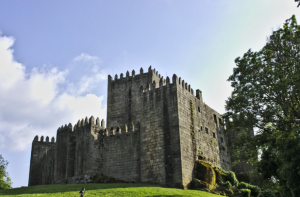
- Visit Guimarães Castle, a medieval fortress whose first version dates to the mid-10th century.
- Stop at the Largo da Oliveira, the square beside the Gothic church of Nossa Senhora da Oliveira. The Padrão do Salado, a Gothic canopy, marks the 1340 Battle of Salado.
- Visit the Museu de Alberto Sampaio, founded in 1928 in the former collegiate church of Nossa Senhora da Oliveira. It opens Tuesday to Sunday, 10:00 to 18:00, and a standard ticket costs €5. A €13 combined ticket also covers the Paço dos Duques de Bragança and the castle. Check the museum’s site before you go.
- Ride the Guimarães cable car up Penha, the highest point in the municipality at 613 meters. Operating hours change by season, so check the operator first.
- Look in on the church of Nossa Senhora da Consolação e Santos Passos, at the Campo da Feira.
- Tour the Paço dos Duques de Bragança, built in the 1420s for Afonso, first Duke of Braganza. Today it is a museum of tapestries, furniture and arms.
- Drive out to the Citânia de Briteiros, an Iron Age hillfort about 15 km northwest of town. About 7 of its 24 hectares are open to visitors, and it became a national monument in 1910.
Viana do Castelo: Experience the Charm of a Seaside Town
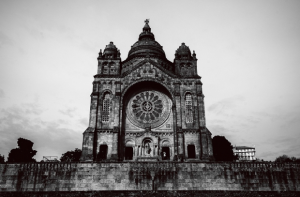
- Ride the funicular up Monte de Santa Luzia to the Sanctuary of the Sacred Heart of Jesus. Construction began in 1904, and the hilltop offers panoramic views.
- Walk the old town around Praça da República, the historic center, and look for the Miseric00f3rdia building, dating from 1589.
- Step aboard the Gil Eannes, a hospital ship built in Viana in 1955 for the cod fishing fleet. It was restored in 1998 and now sits in the fishing harbor as a museum ship. Confirm opening hours with the Gil Eannes Foundation, as published times vary.
- Explore the historic center of Viana do Castelo, which is home to a number of charming squares, churches, and other landmarks.
- Spend time at Praia do Cabedelo, a long beach popular with kitesurfers and windsurfers. It also suits a simple swim.
- See the Eiffel Bridge, a railway bridge over the Lima River designed by Gustave Eiffel. Time your trip for the Agonia festival in August if you can.
Ponte de Lima: Portugal’s Oldest Chartered Town
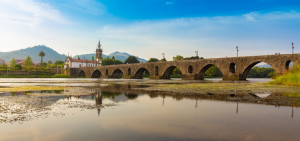
Ponte de Lima is described as the oldest chartered town in Portugal. Countess Theresa and her son Afonso Henriques granted its first charter on 4 March 1125. Take a stroll through the historic center to feel that age.
- Cross the medieval bridge over the Lima River that gave the town its name. Roman builders crossed the river here too, and in the 16th century Manuel I ordered the bridge paved.
- Visit during the Feiras Novas in September, when the riverside town fills with fairs and music.
- Taste Vinho Verde in the Lima Valley, where vineyards cover the gentle slopes. Cyclists also like the Ecovia do Vez nearby.
- Take a hike through the surrounding countryside, which is home to a number of beautiful trails and stunning views.
Esposende: Relax on the Beautiful Beaches of the Costa Verde
- Relax on Praia de Ofir, south of the Cávado river mouth, inside the protected coastal landscape. A boardwalk crosses the dunes, and the beach is popular for surfing and kitesurfing.
- Look out over the Atlantic from the Forte de São João Baptista, which guards the mouth of the Cávado.
- Walk the dune boardwalks of the Litoral Norte Natural Park, a protected strip of coast rich in birds and dune plants.
- Explore the historic center of Esposende, which is home to a number of charming squares, churches, and other landmarks.
Barcelos: The Rooster Legend and a Thursday Market
- Come on a Thursday for the Feira de Barcelos in the Campo da República. Baskets, embroidery, pottery and food fill the stalls, and many visitors arrive early to beat the crowds.
- Visit the Igreja Matriz de Barcelos, the parish church. Count Pedro ordered it enlarged in the 14th century, and it became a collegiate church in 1464.
- Explore the historic center of Barcelos, which is home to a number of charming squares, churches, and other landmarks.
- Cross the Gothic bridge over the Cávado, built between 1325 and 1328.
- Hunt for the town’s emblems: the Galo de Barcelos rooster and the comic clay figures called figurado. In the legend, a roasted rooster crows to prove a pilgrim’s innocence. Barcelos belongs to the UNESCO Creative Cities Network as a crafts and folk art city.
- Take a hike through the surrounding countryside, which is home to a number of beautiful trails and stunning views.
More of Minho Worth the Detour
Valença and Monção on the Spanish Border
Valença is a fortress town that faces Tui across the Minho River. Its frontier defenses date back to the 13th century, and the present fortress was rebuilt in the 17th and 18th centuries. Upriver, Monção received its charter in 1261. Local legend says Deu-la-Deu Martins saved the town from a Castilian siege by throwing its last bread over the walls. Monção also anchors Alvarinho country. Together the two towns make an easy detour on the road to Galicia, and our Portugal and Spain private transfers cover the crossing.
Getting Around Minho
Porto airport is the main gateway. Trains link Porto, Braga and Guimarães, but buses to smaller villages can be slow and run less often at weekends. Driving gives the most freedom, especially for the coast and the national park.
A private driver removes the logistics. Amiroad can link several stops in one day, so nobody has to drive after a Vinho Verde tasting. Arriving in Lisbon? Our Lisbon to Porto private driver guide explains the route north. Comparing options? Read about private transfers versus car rental, and plan your dates with the best time to visit Portugal.
Final Thoughts on Minho
The Minho region of Portugal is a stunning and diverse destination that offers something for everyone. From its rich history and culture, to its beautiful natural areas and outdoor adventures, there are plenty of things to see and do in the region. Whether you’re interested in exploring the historic landmarks, or relaxing on the beautiful beaches, the Minho region has something for you. And with a range of accommodation and dining options available, it’s easy to find a place to stay and enjoy the region’s delicious local cuisine. So, if you’re looking for a unique and memorable vacation destination, be sure to consider the charming and picturesque region of Minho, Portugal.
Frequently Asked Questions
What is the Minho region of Portugal known for?
Minho is known for Braga’s religious heritage, Guimarães’ medieval center, Peneda-Gerês National Park and Vinho Verde wine. It also has a green Atlantic coast and some of Portugal’s oldest festivals.
How many days do you need in Minho?
Three days are enough for Braga, Guimarães and one coastal stop. Add two more days for Ponte de Lima, Barcelos and Peneda-Gerês.
What is Vinho Verde?
Vinho Verde is a “young wine” from northern Portugal, mostly white, light and slightly fizzy. The word green refers to youth, not color. Alvarinho from Monção e Melgaço is its best-known style.
Is Ponte de Lima really the oldest town in Portugal?
Ponte de Lima is described as the oldest chartered town (vila) in Portugal. It received its first charter on 4 March 1125.
When is the best time to see Minho’s festivals?
Late June, August and September bring the biggest events. São João in Braga peaks on the night of 23 to 24 June, and Viana’s Agonia festival centers on 20 August. Ponte de Lima holds the Feiras Novas in the second weekend of September.
Do you need a car to explore Minho?
A car or private driver gives the most freedom. Trains connect Porto, Braga and Guimarães, but buses to small villages are slower and thinner at weekends.

For tailor-made tours or other programs, please get in touch with us by telephone or by filling out the form below.