
Braga, Portugal: the sanctuary staircase and the country’s oldest cathedral
Braga was already an important city when Portugal itself didn’t exist yet, and it still carries that seniority today: the country’s oldest cathedral, a Roman past older than Lisbon’s, and a Baroque staircase served by the oldest water-powered funicular on Earth. Most itineraries send visitors north to Porto and stop there. Braga rewards the extra hour.
This guide covers the Bom Jesus sanctuary and its remarkable staircase, the cathedral that predates the country, the Roman city buried beneath it, and a dessert with a genuinely strange backstory that most visitors never hear about.
Why visit Braga with a private chauffeur
Braga sits about 50 minutes north of Porto, close enough to combine with a Porto stay but far enough that most day tours skip it entirely in favor of easier stops. The city’s real highlights are also spread out in a way that rewards planning:
- The cathedral and Roman ruins sit in the historic center. Bom Jesus do Monte is a separate hill five kilometers east, and the Priscos pudding has its roots in a village further out still.
- Parking near the historic center is limited, and the narrow streets around the cathedral weren’t built with cars in mind.
- A private driver turns three separate stops into one relaxed day, with no need to double back for a rental car between them.
Bom Jesus do Monte and its remarkable staircase
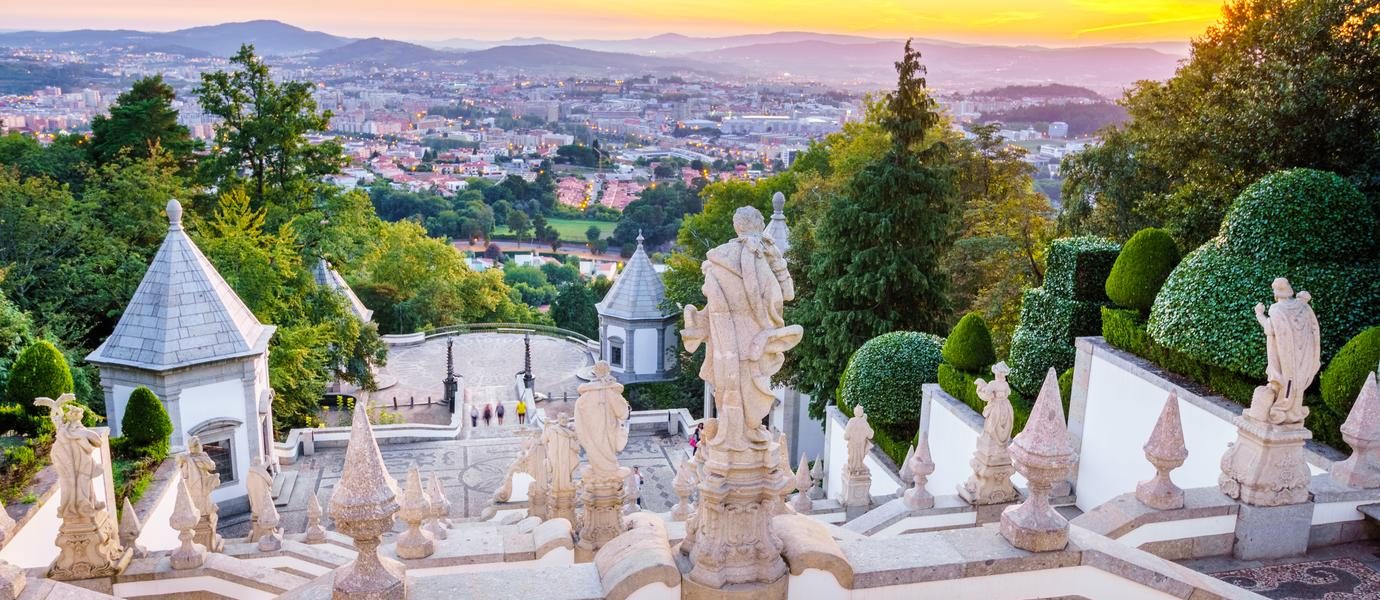
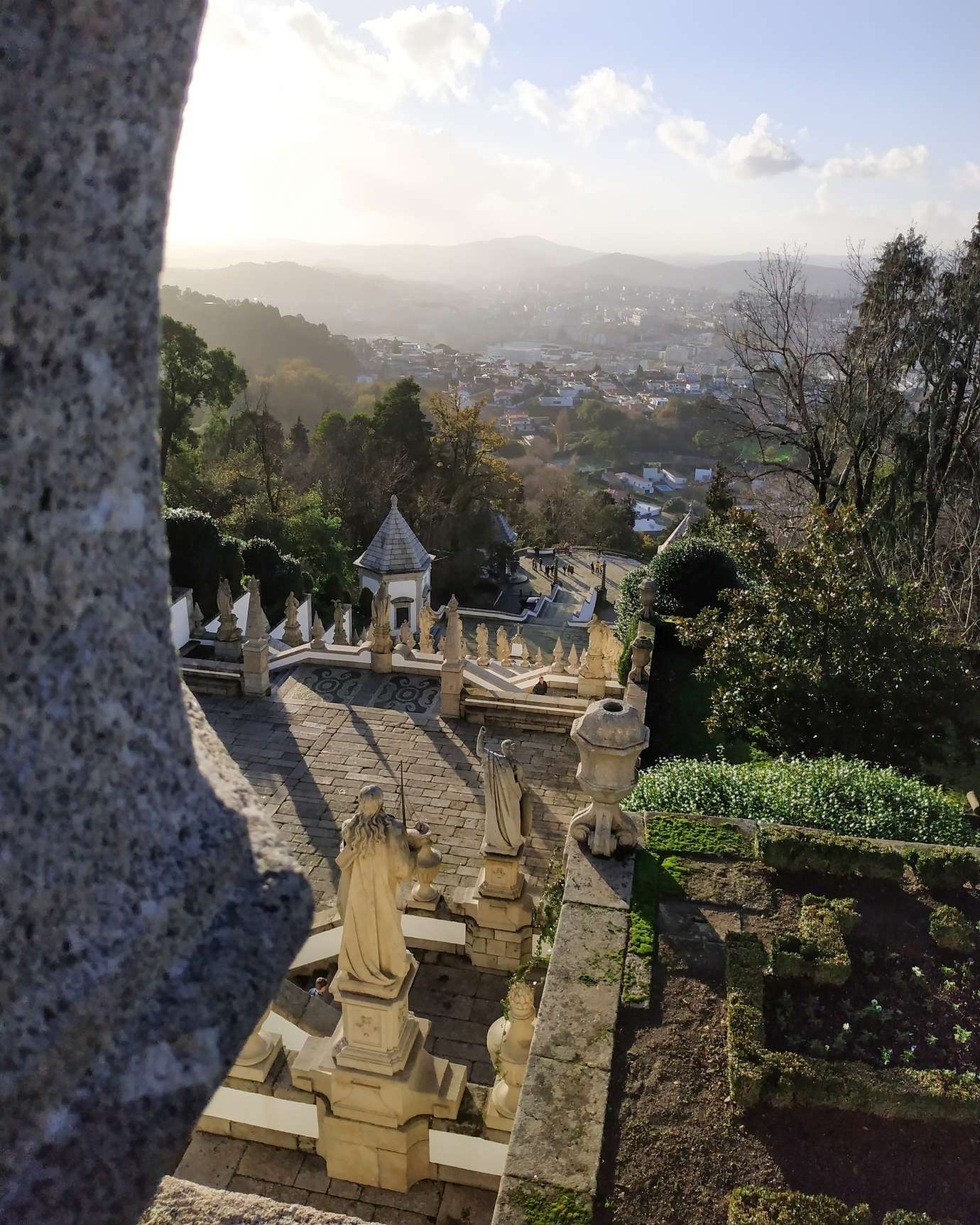
The Santuário do Bom Jesus do Monte climbs a wooded hillside in a zigzag of white walls, granite statues and fountains, each landing themed around a sense or a virtue on the way up to the church at the top. It is 573 steps in total, and the view back over Braga from the top makes the climb worthwhile even before reaching the sanctuary itself.
For anyone who would rather not climb, the funicular running alongside the staircase has its own claim to fame: inaugurated in 1882, it is the oldest funicular in the world still operating on a water-balance system, with no motor at all. Water fills a tank on the upper car until it outweighs the lower one, and gravity does the rest, a design by the same engineer, Raoul Mesnier du Ponsard, behind several of Lisbon’s famous elevators.
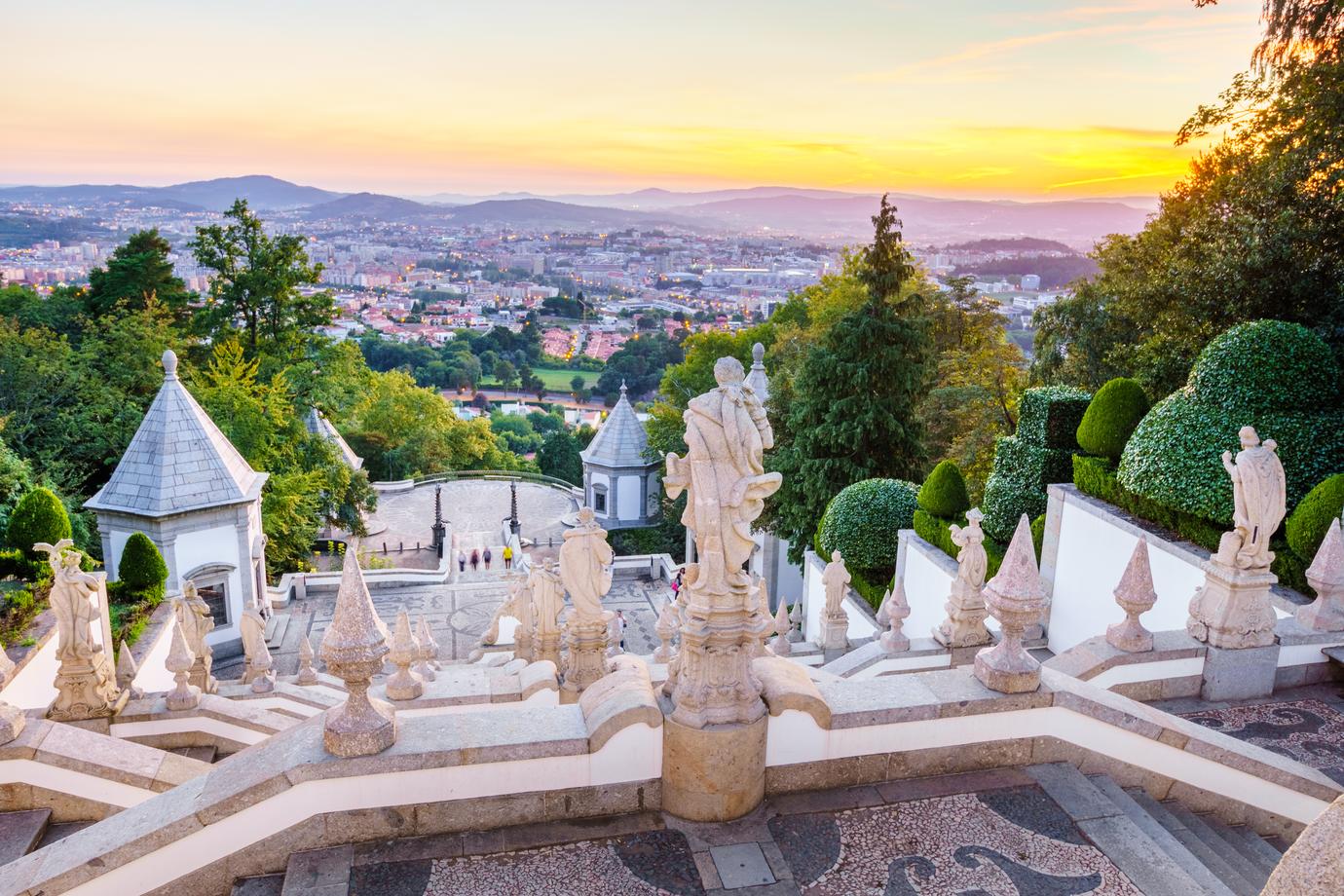
Between the walk and the ride, most visitors take one direction on foot and the other by funicular, which also happens to be the easiest way to experience both without anyone in the group needing to manage all 573 steps twice.
Sé de Braga, the cathedral that predates the country
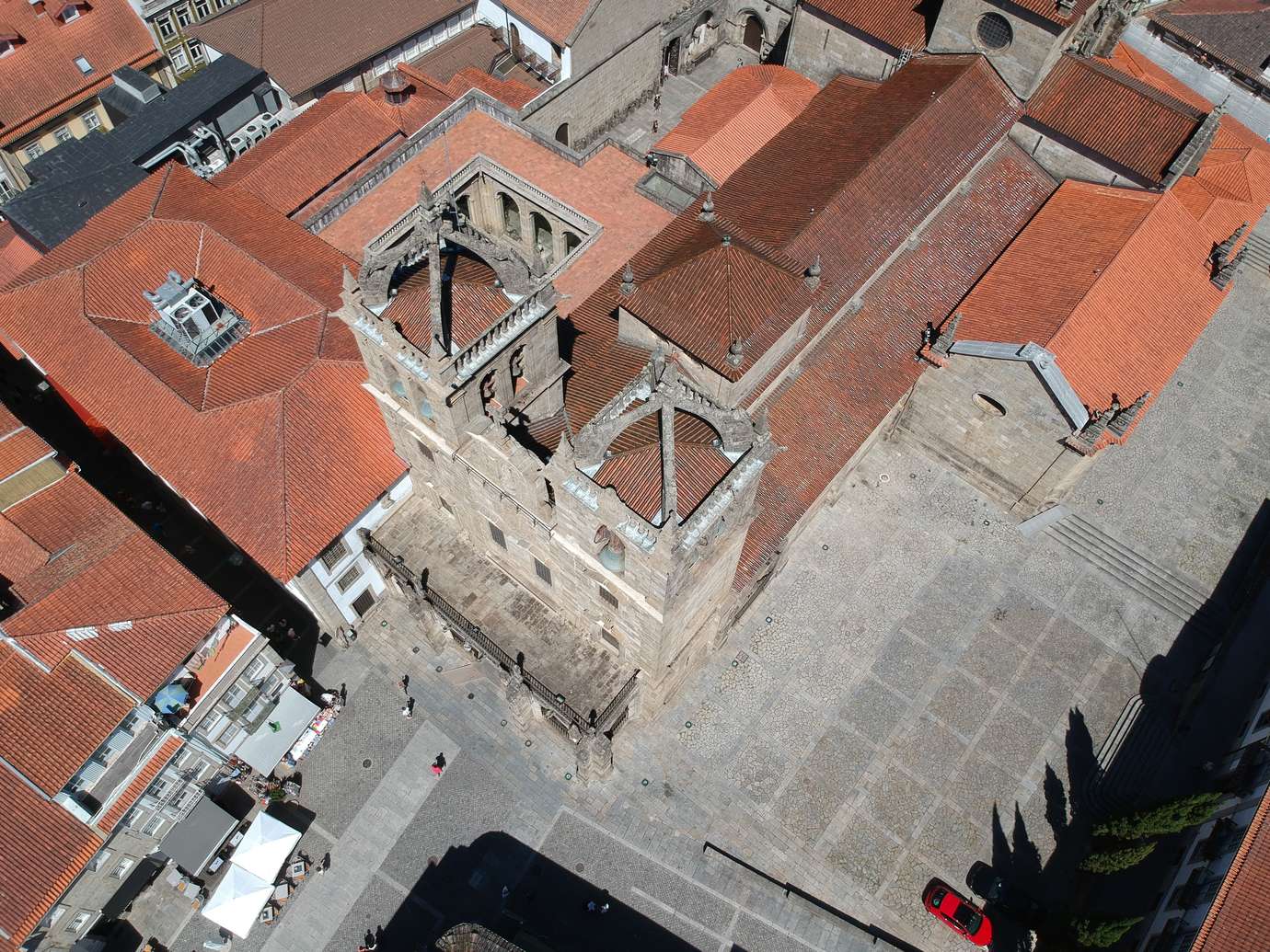
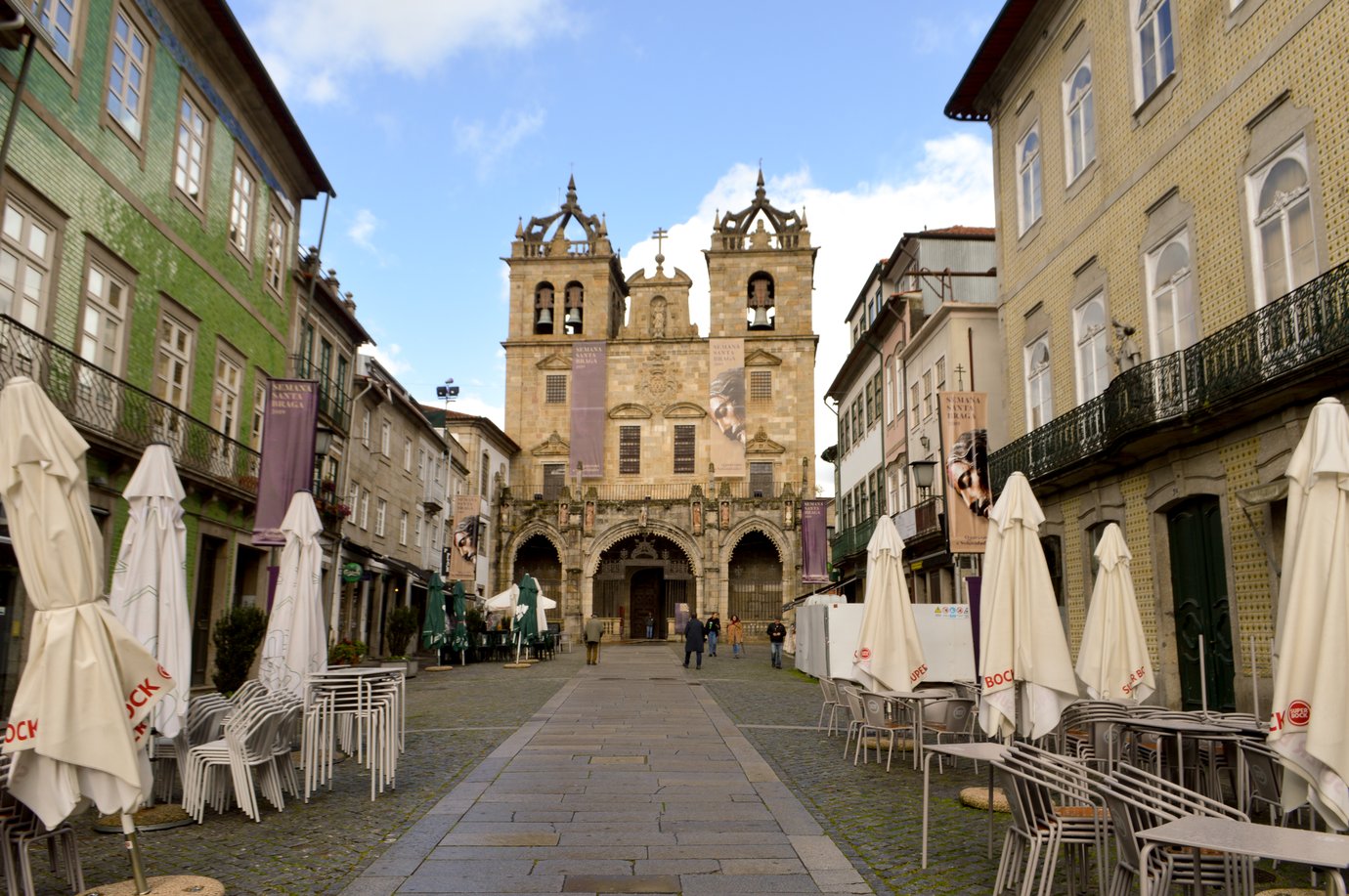
Construction on the Sé de Braga began in 1070, and the building was consecrated in 1089, decades before Portugal existed as an independent kingdom. It remains the oldest cathedral in the country. The original Romanesque doorway survives, though most of what visitors see today reflects later Gothic, Manueline and Baroque additions layered on across the centuries.
Bracara Augusta, 2,000 years under the streets
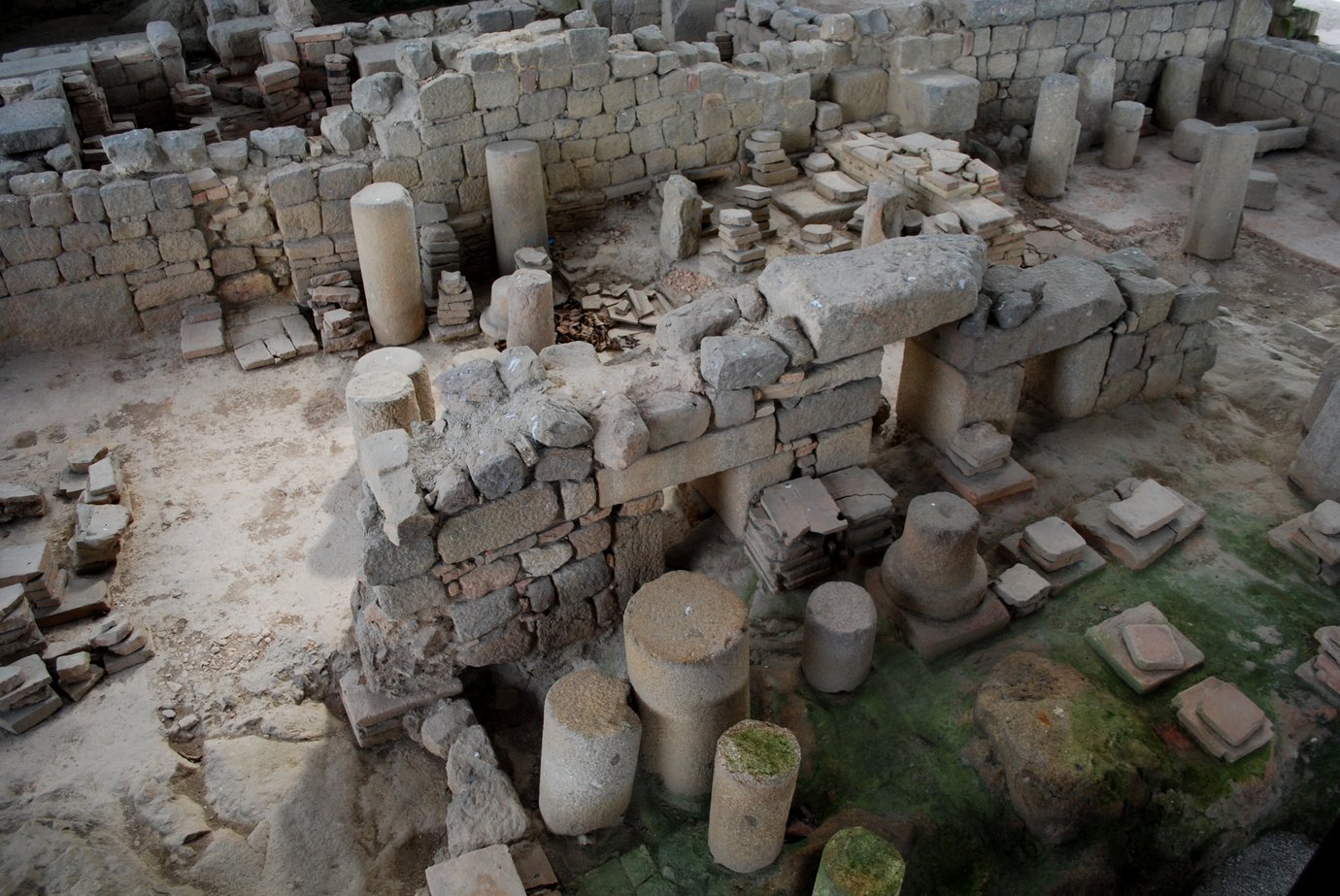
The Romans founded Braga as Bracara Augusta in 16 BCE, which makes it the oldest city in Portugal, older than Lisbon’s Roman-era settlement. By the late 3rd century, it had been promoted to capital of the province of Gallaecia. Much of that history stayed buried until 1977, when excavations at Alto da Cividade uncovered the Roman Baths, a complex of over 800 square meters that is still open to visit today, tucked a short walk from the cathedral.
A pudding with fifteen egg yolks
In the 19th century, a parish priest in the nearby village of Priscos, Manuel Joaquim Machado Rebelo, was asked to share a dessert recipe for the local school. What he handed over was Pudim Abade de Priscos: a crème caramel built on fifteen egg yolks, streaked with bacon fat and a splash of port wine. It sounds unlikely. It works, and in 2011 it placed as a runner-up in Portugal’s Seven Wonders of Gastronomy.
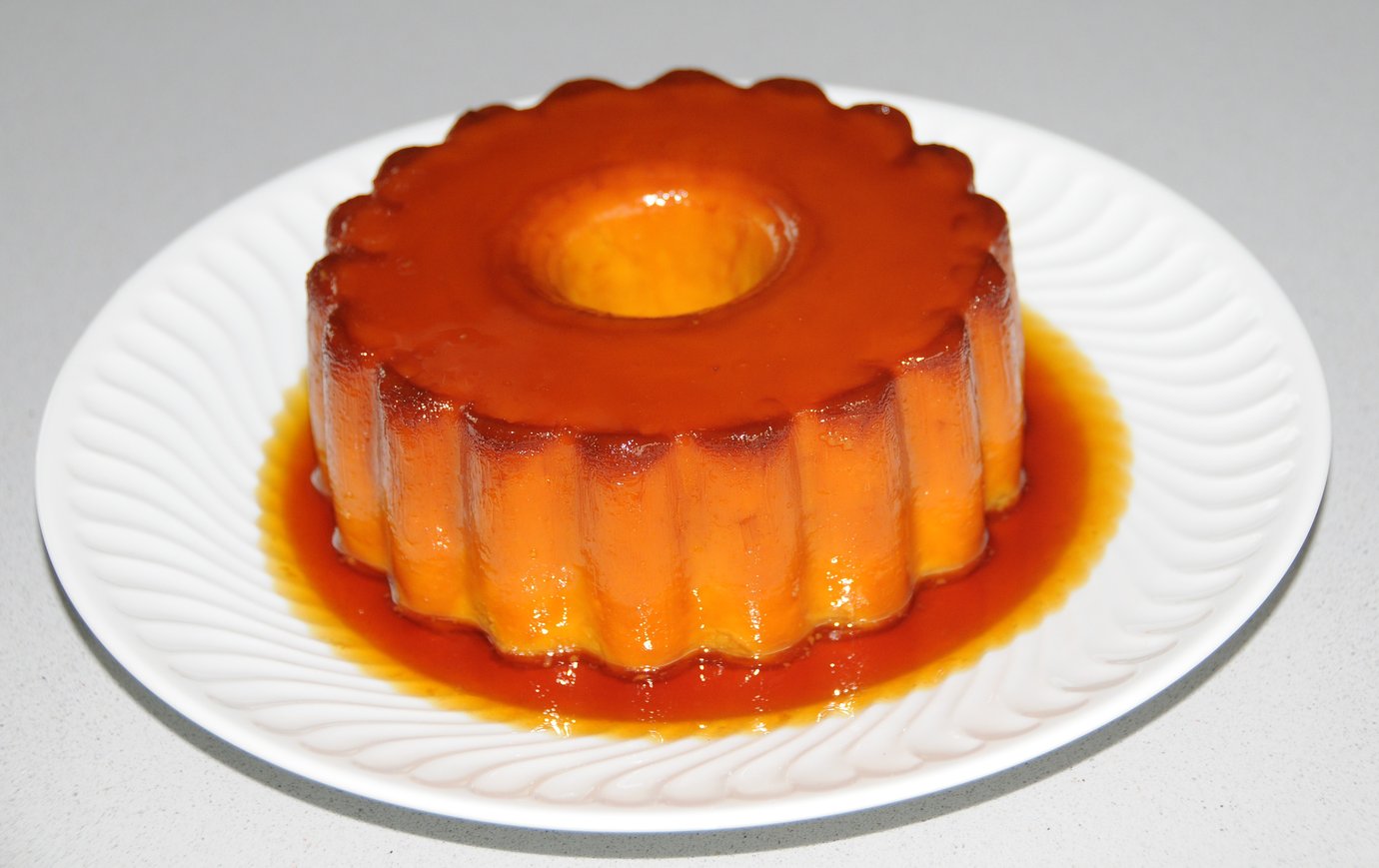
It’s the kind of dish that rarely makes it onto a rushed itinerary, precisely because it takes a moment of curiosity to order something described, half-jokingly, as bacon pudding.
Choosing the right Amiroad vehicle for a Braga day
| Group Size | Recommended Vehicle | Best For |
|---|---|---|
| 1–3 passengers | Mercedes E Class / S Class | Couples combining Braga with a Porto stay |
| 4–6 passengers | Mercedes V-Class | Families splitting time between the staircase and the funicular |
| 8–15 passengers | Mercedes Sprinter (Van) | Small groups touring Braga and Guimarães together |
A couple pairing Braga with a Porto stay fits easily in a sedan, while a family splitting the Bom Jesus staircase between walking and riding gets more flexibility in the V-Class.
Amiroad’s Services
Amiroad Luxury Transports builds each northern Portugal itinerary around the traveler, not a fixed script:
- Northern Portugal tours combining Braga with Porto, Guimarães or the Douro Valley in one custom day
- Coordinated stops between the historic center, Bom Jesus do Monte and outlying villages like Priscos
- Multilingual chauffeurs familiar with the drive between Porto and Braga’s historic center
Every vehicle in Amiroad’s fleet comes equipped with air conditioning, GPS, Wi-Fi and complimentary water, so the only planning left is whether to walk up the staircase or ride the funicular first. For the wider region, our guide to Lisbon to Porto by private driver covers how Braga fits into a longer north-south route.
Frequently asked questions
How far is Braga from Porto?
Braga is about 50 minutes north of Porto by car, making it an easy addition to a Porto-based itinerary.
How many steps are there at Bom Jesus do Monte?
The baroque staircase has 573 steps. Visitors who prefer not to climb can take the funicular running alongside it instead.
What makes the Bom Jesus funicular unusual?
Inaugurated in 1882, it is the oldest funicular in the world still running on a water-balance system, using no motor, only water tanks and gravity to move the two cars.
Is Braga Cathedral really the oldest in Portugal?
Yes. Construction began in 1070 and the cathedral was consecrated in 1089, before Portugal became an independent kingdom, making it the country’s oldest cathedral.
What is Pudim Abade de Priscos?
A 19th-century Portuguese dessert created by a parish priest near Braga, made with fifteen egg yolks, bacon fat and port wine. It was a runner-up in Portugal’s Seven Wonders of Gastronomy in 2011.

For tailor-made tours or other programs, please get in touch with us through the telephone below or by filling out the form.