
Guimarães, Portugal: a birthplace city that rewards a longer stay
Four words glow on a granite tower in the old town of Guimarães: Aqui nasceu Portugal. Portugal was born here. Whether the claim is literal or poetic depends on the historian, and that is part of the fun.
The solid facts are strong enough. In 1128 a young nobleman named Afonso Henriques won a battle outside the town. He went on to become the first king of Portugal. The castle, the palace and the lanes between them survive almost intact, and UNESCO has protected the historic centre since 2001. In 2023 it added the old tanners’ district next door.
Guimarães is having a moment. It is the European Green Capital for 2026, and National Geographic put it on its Best of the World 2026 list. It also has a Michelin-starred table, a cable car to a mountain sanctuary and an Iron Age hillfort 14 kilometres away. Yet most itineraries skip it in favour of Porto. This guide explains why that is a mistake, and how to do it well by car. For the wider region, see our overview of the best places to visit in Minho.
Where Portugal began, and where the story is only tradition
Start at the castle, a short uphill walk from the old town. Its origins are old and hard to date. Sources place the first fortress in the mid-10th century, built under Countess Mumadona Dias, a widow who also founded a monastery below. By the end of the 11th century, Count Henry of Burgundy and Countess Teresa lived here. Henry is credited with the square keep that still dominates the skyline.
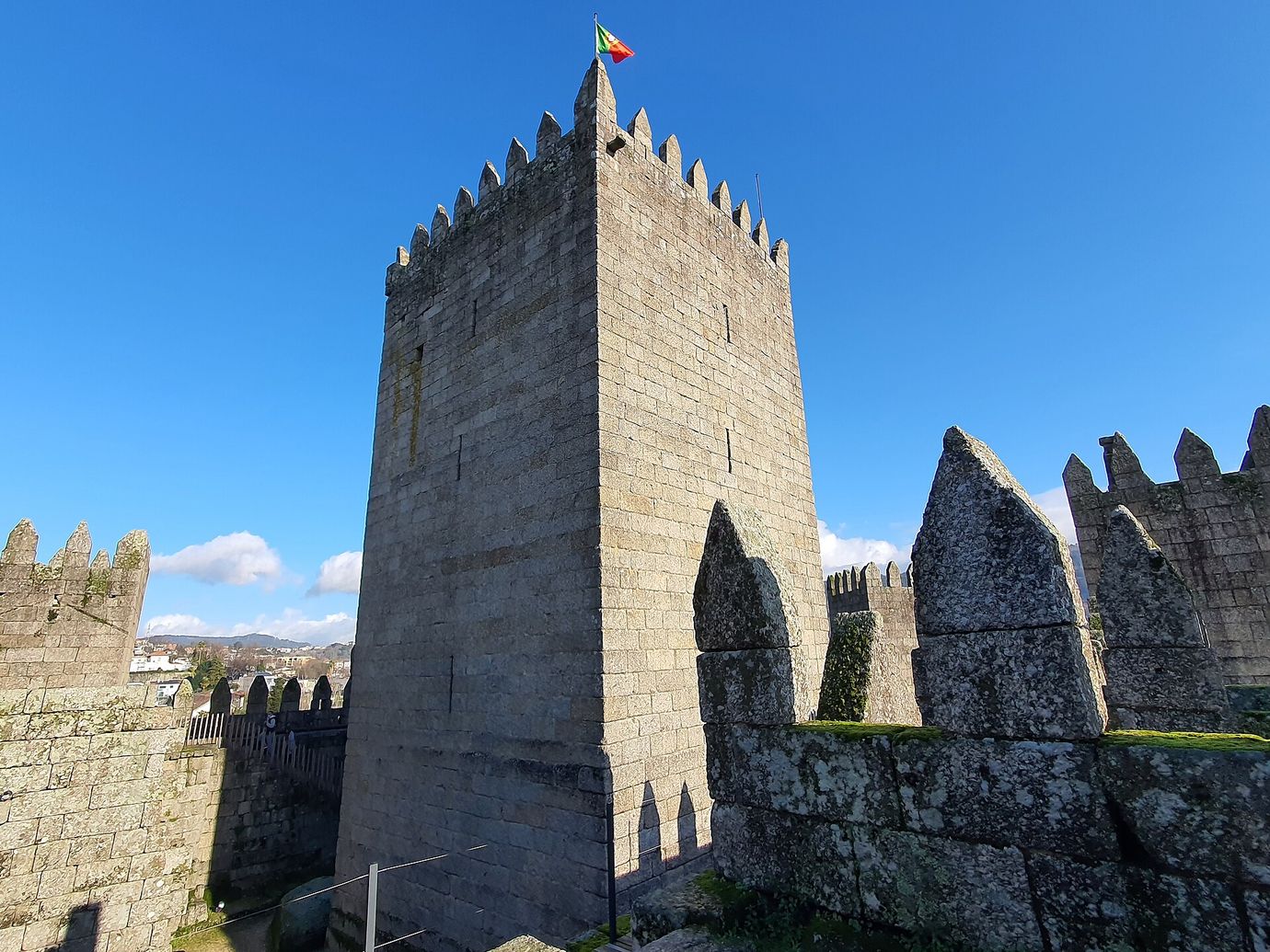
The keep of Guimarães Castle. Photo: Hugo Ferreira / Wikimedia Commons (CC BY-SA 4.0)
Here is the part guides tend to blur. The tradition says Afonso Henriques, their son, was born in the castle. The evidence is traditional rather than documented, and sources give the year as 1109, 1111 or 1112. What historians do agree on is the Battle of São Mamede, fought on 24 June 1128. Afonso defeated the forces of his own mother and her ally, and afterwards styled himself Prince of Portugal. Many treat this as the start of Portuguese independence.
The small chapel of São Miguel do Castelo sits beside the keep. Legend says the first king was baptised there. The castle you see today is also partly a 20th-century creation. It was declared a national monument in 1881 and heavily restored between 1936 and 1940. Historians still criticise that campaign for favouring appearance over archaeological accuracy.
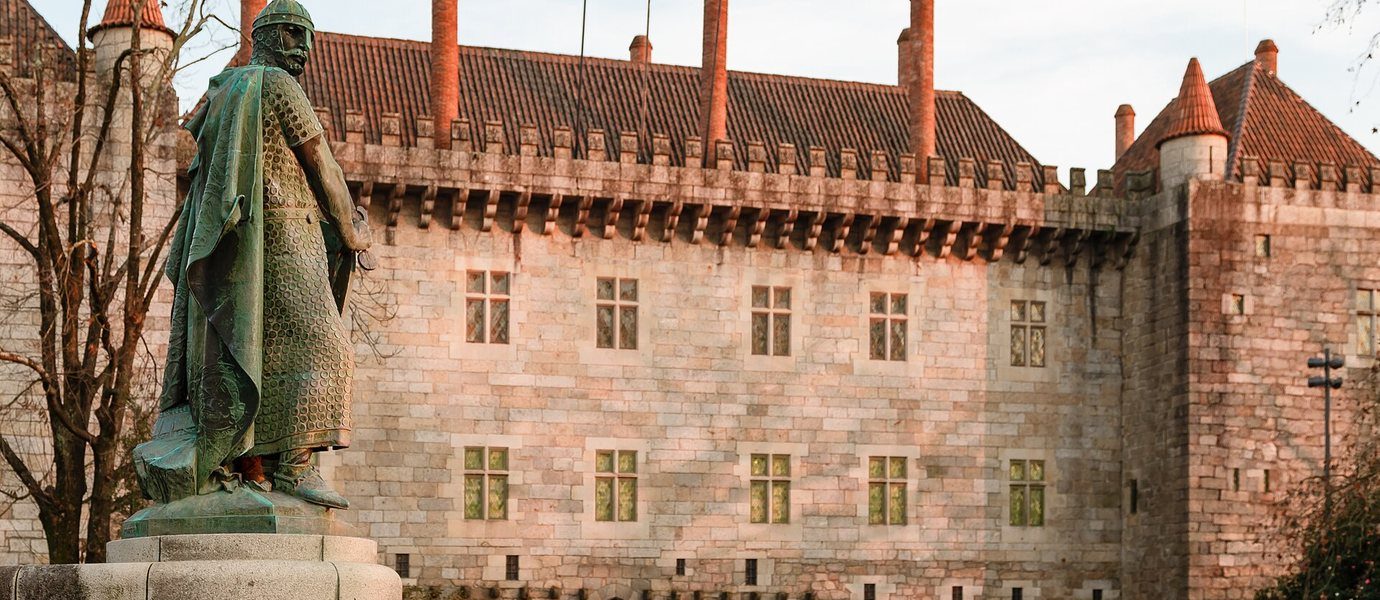
Below the castle stands the Palace of the Dukes of Braganza. Afonso, the first Duke of Braganza and an illegitimate son of King John I, had it built in the 1420s. Today it is a museum of tapestries, furniture and arms, with a row of tall brick chimneys that makes it instantly recognisable. A bronze statue of Afonso Henriques stands in front.
The old town, square by square
UNESCO inscribed the historic centre in 2001 for three reasons. It shows medieval building techniques that spread to Portugal’s overseas territories. It is tied to the birth of the nation and the Portuguese language. And it shows how a town evolved from the Middle Ages to today, especially between the 15th and 19th centuries.
Largo da Oliveira is the heart of it. Granite arcades face café terraces, and the Gothic church of Nossa Senhora da Oliveira anchors one side. In front of it stands the Padrão do Salado, a small Gothic canopy. King Afonso IV raised it to mark the victory at the Battle of Salado in 1340. The square is said to be named for an old olive tree.
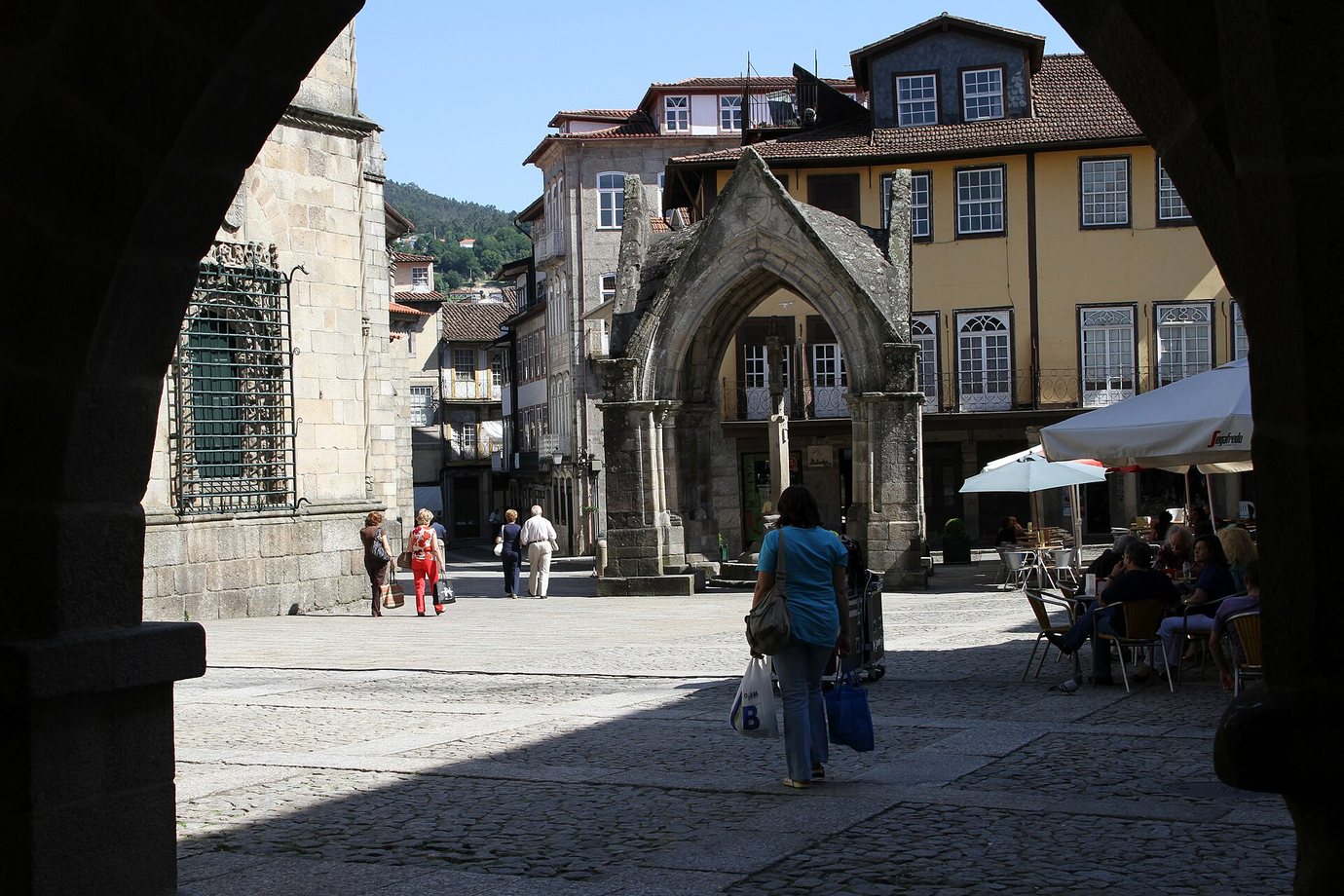
Largo da Oliveira and the Padrão do Salado. Photo: Gerd Eichmann / Wikimedia Commons (CC BY-SA 4.0)
From there, walk along Rua de Santa Maria. This medieval street once housed the town’s nobility. Look up for the carved balconies and the archway, and look in for the independent shops that now occupy the ground floors. Praça de Santiago is a few steps away, with more terraces under the old arches.
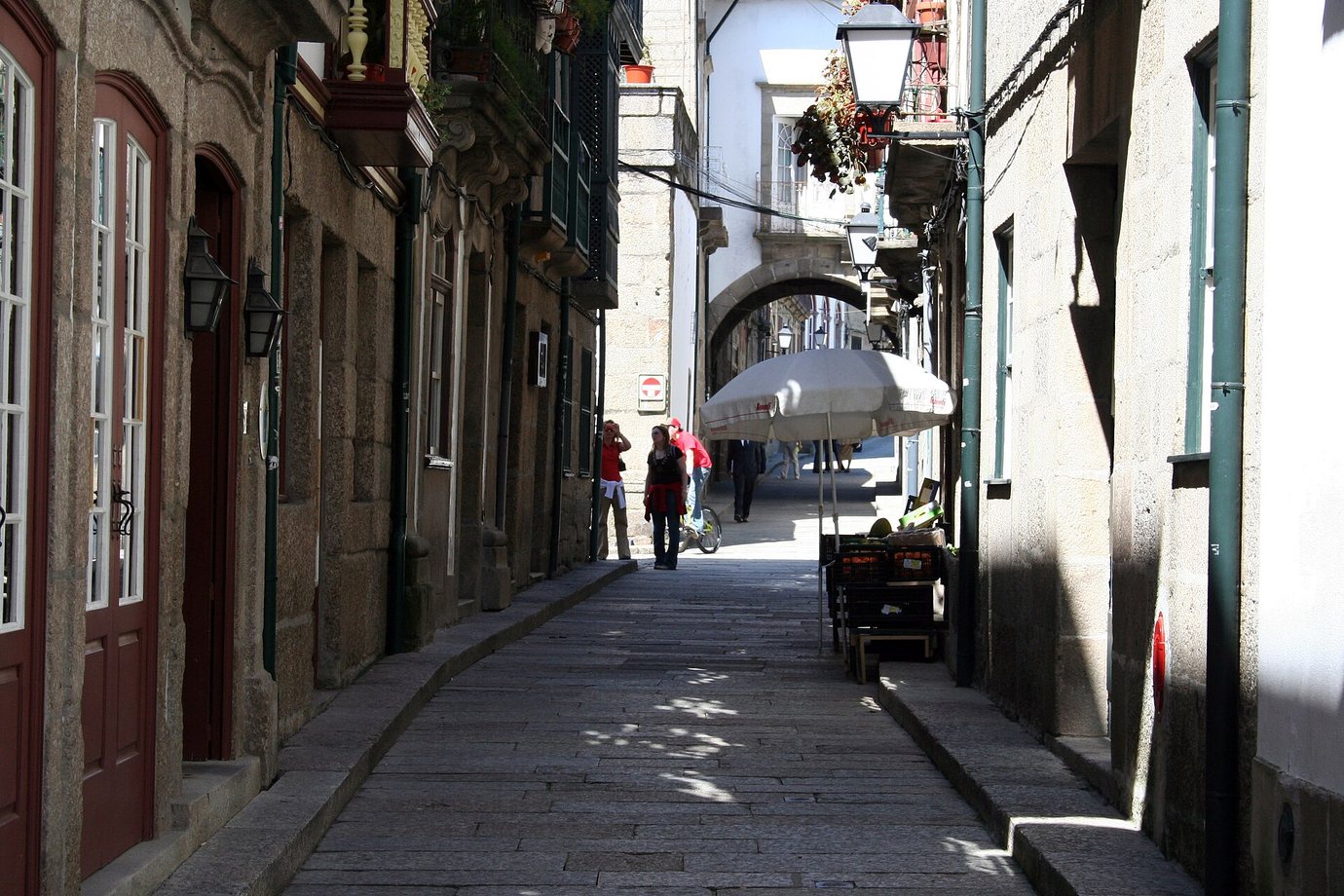
Rua de Santa Maria. Photo: Ramón / Wikimedia Commons (CC BY-SA 2.0)
The tower with the famous sign is the Torre da Alfândega, set in a stretch of old wall beside a square. At night the lettering glows. By day it is a reminder that the old town is compact, and that every sight is a short walk from the next.
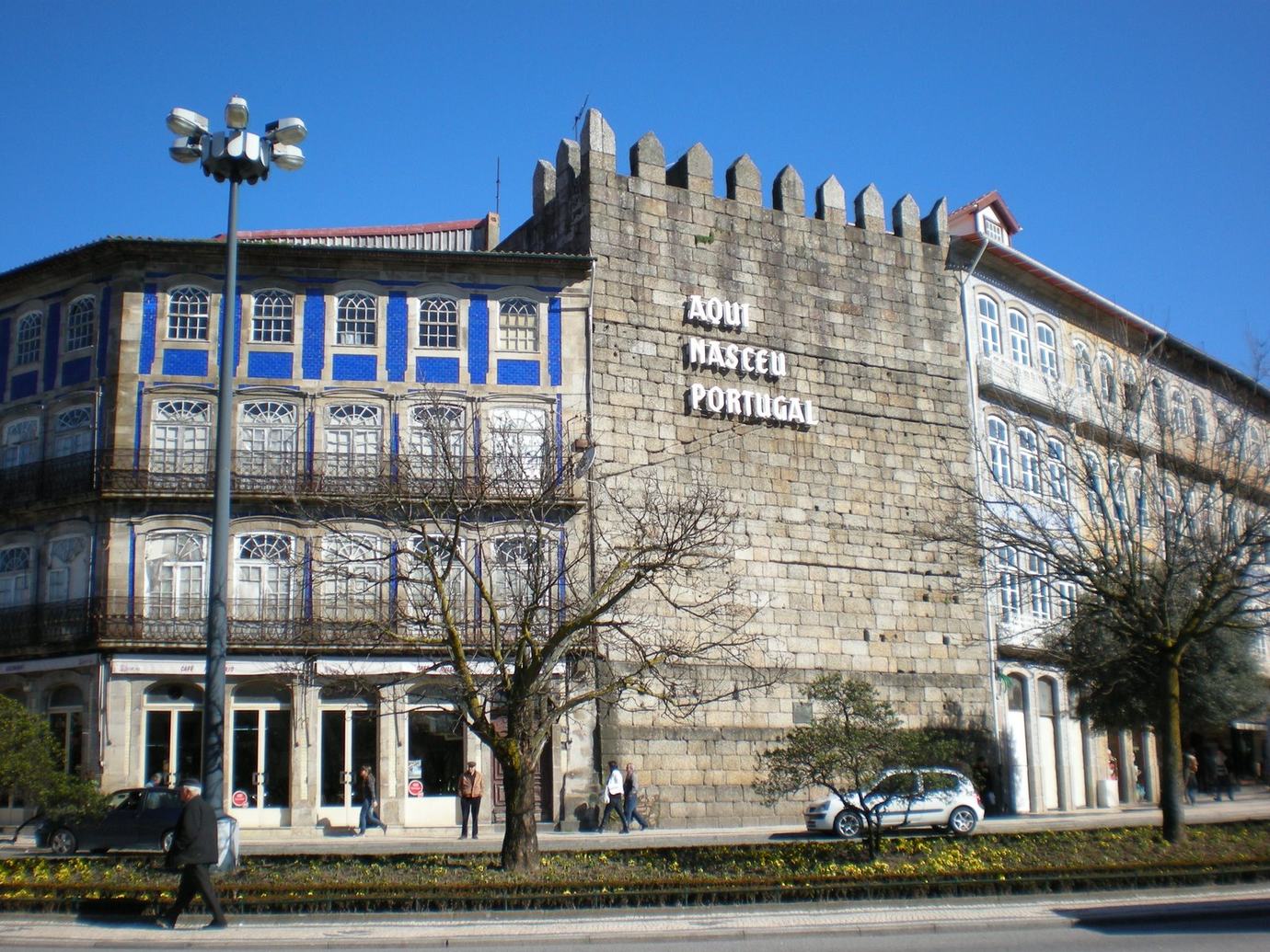
The “Aqui nasceu Portugal” tower. Photo: Wagner / Wikimedia Commons (CC BY-SA 3.0)
A word on accessibility. The centre is walkable, but it is cobbled and the castle is up a slope. If mobility is a concern, tell us in advance and we will plan the closest drop-off for each stop.
The Couros Zone: the district UNESCO added in 2023
Few visitors know about Couros, and that makes it the most interesting part of the UNESCO site. In 2023 the World Heritage listing was extended and renamed the Historic Centre of Guimarães and Couros Zone. The extension added two monastic complexes and this former tanners’ quarter.
Tanning here dates back to the 10th century, according to the nomination dossier. The trade shaped the streets and the buildings, from tanneries to workers’ houses. Trade with Africa and South America mattered too, and the local building methods were exported to Portuguese colonies. Sources disagree on when production ended, with dates ranging from the mid-20th century to 2005. A former tannery now houses a Ciência Viva science centre called Curtir Ciência. The stone tanning pools are still visible in places.
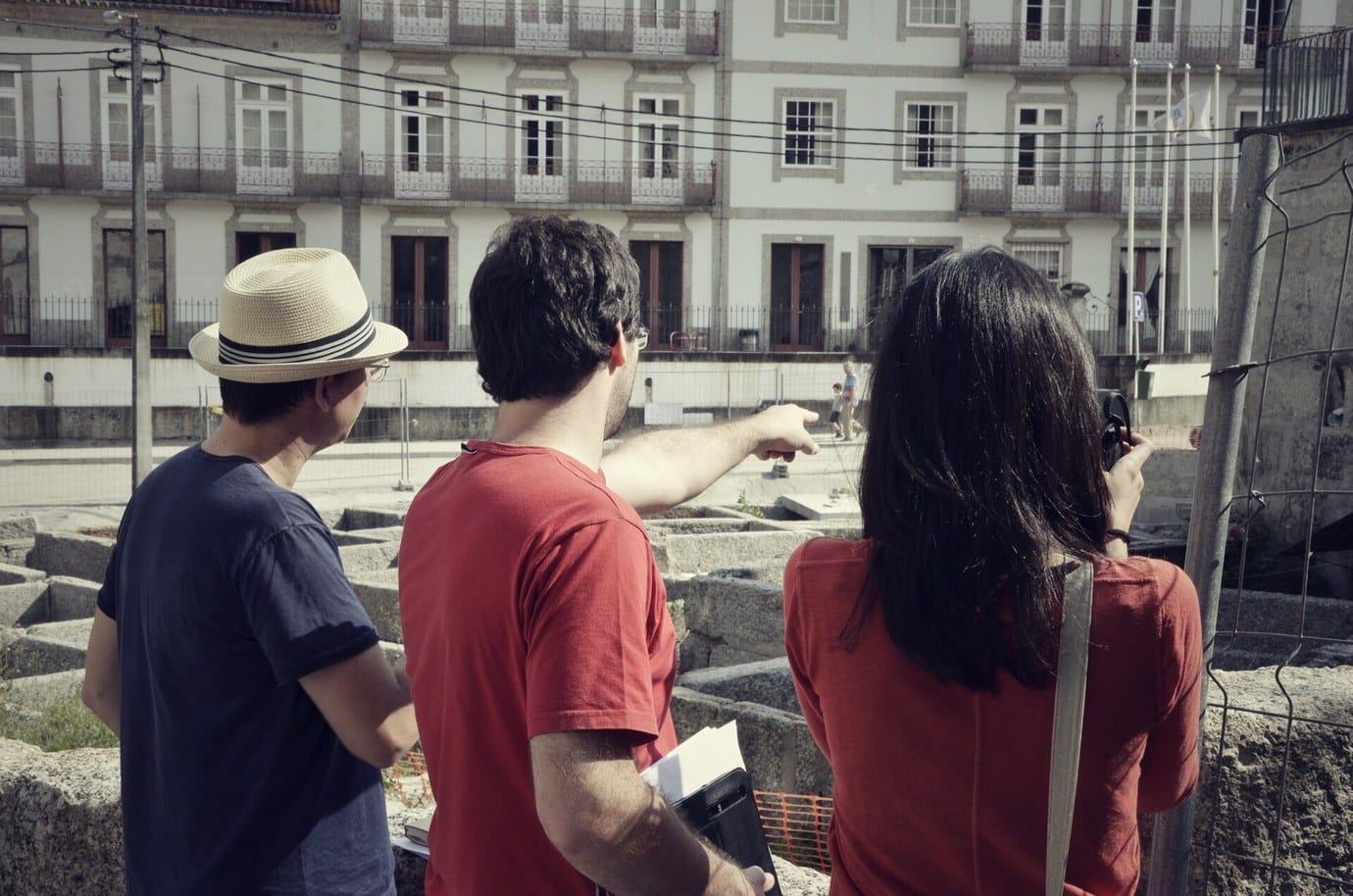
Visitors at the old tanning pools in the Couros district. Photo: Open City / Flickr / Wikimedia Commons (CC BY 2.0)
Culture: the 2012 legacy and a jazz festival
In 2012 Guimarães shared the title of European Capital of Culture with Maribor in Slovenia, with about 600 events. The legacy is visible. The Plataforma das Artes e da Criatividade is a bold arts centre of dark, gold-toned boxes. It is a modern counterweight to all that granite. The Vila Flor cultural centre, with its gardens, hosts concerts.
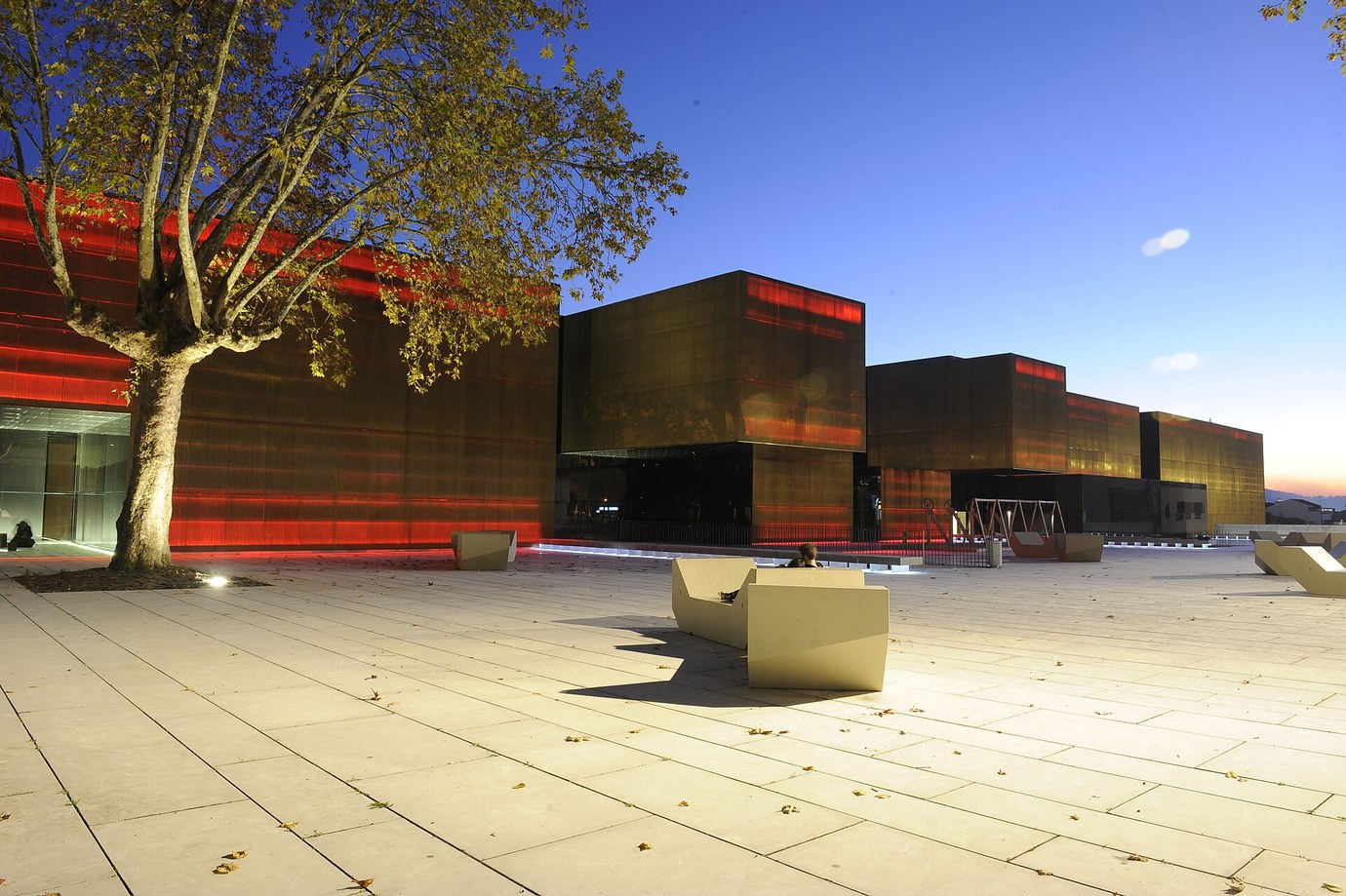
Plataforma das Artes e da Criatividade. Photo: PauloPinto65 / Wikimedia Commons (CC BY-SA 4.0)
The calendar is full. Guimarães Jazz runs in November and marks its 35th anniversary from 12 to 21 November 2026. The Feira Afonsina turns the town medieval each June. The Festas Gualterianas, in late July and early August, bring processions, concerts and a craft fair. In late November the Festas Nicolinas begin, with student parades and candlelit processions that run into early December. Dates move, so check each year.
Up the mountain: Penha
Guimarães sits below a wooded hill called Penha, and the quickest way up is the cable car. It opened in 1995 and is regarded as Portugal’s first. The ride is about 10 minutes and covers roughly 1.7 kilometres, with the town spread out beneath the cabin. At the top, about 60 hectares of park hold paths, viewpoints, picnic areas and restaurants.
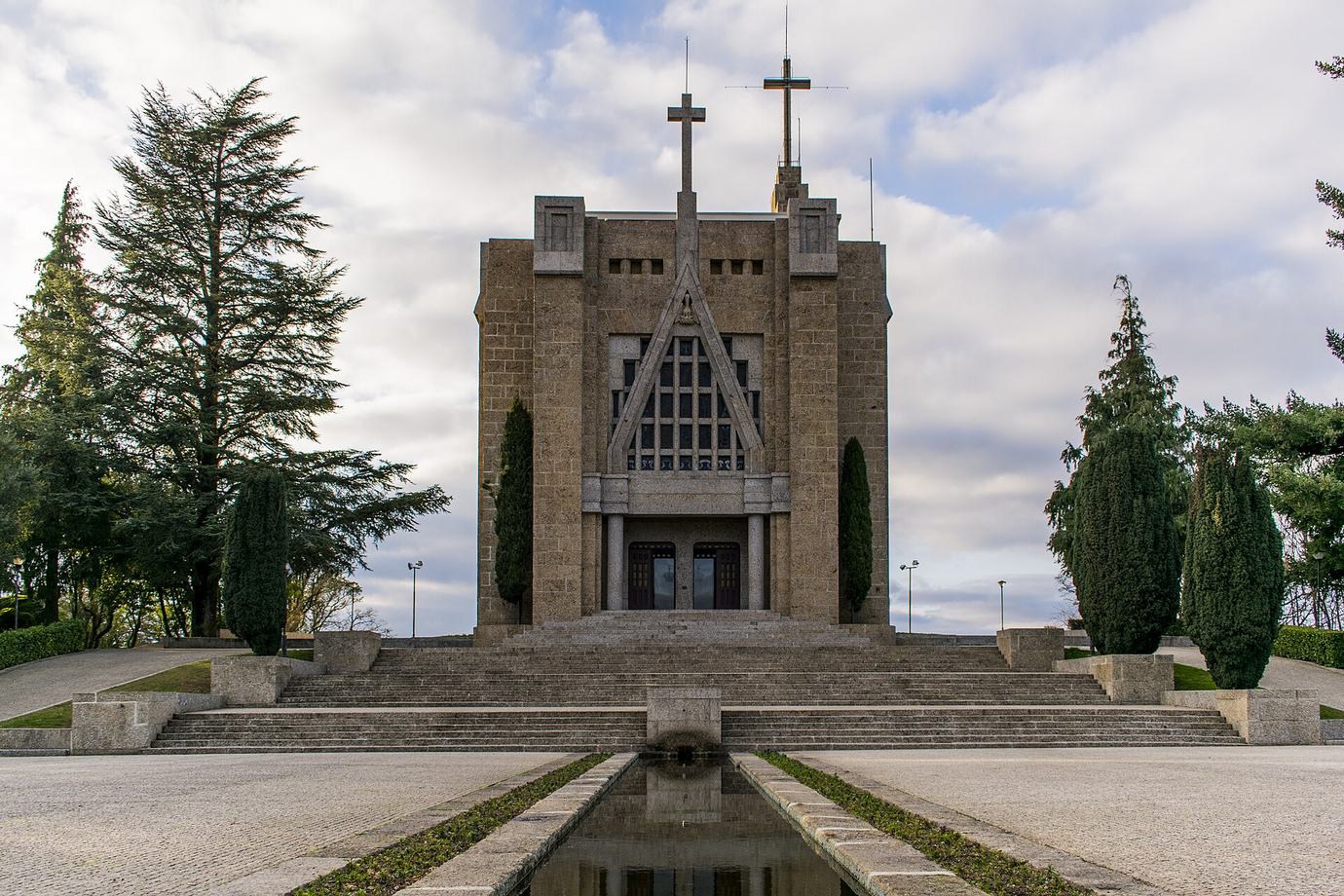
The Penha sanctuary. Photo: Jorge Lobo / Wikimedia Commons (CC BY-SA 4.0)
The sanctuary is an Art Deco shrine from the 1930s, an unexpected contrast to the medieval town below. Check the operator’s page for current hours and fares, as service depends on weather and maintenance. In September 2026 the cable car ran daily from 10:00 to 18:30.
Beyond town: an Iron Age hillfort and a Vinho Verde estate
The Citânia de Briteiros sits about 14 kilometres from the centre, on a hillside called São Romão. It is a fortified settlement from the Iron Age, with well over 100 stone dwellings linked by paved paths. The first excavations began in 1874 under Francisco Martins Sarmento, who also bought the land to protect it. He rebuilt two of the round houses with conical roofs, and those are the ones you see today. It became a national monument in 1910.
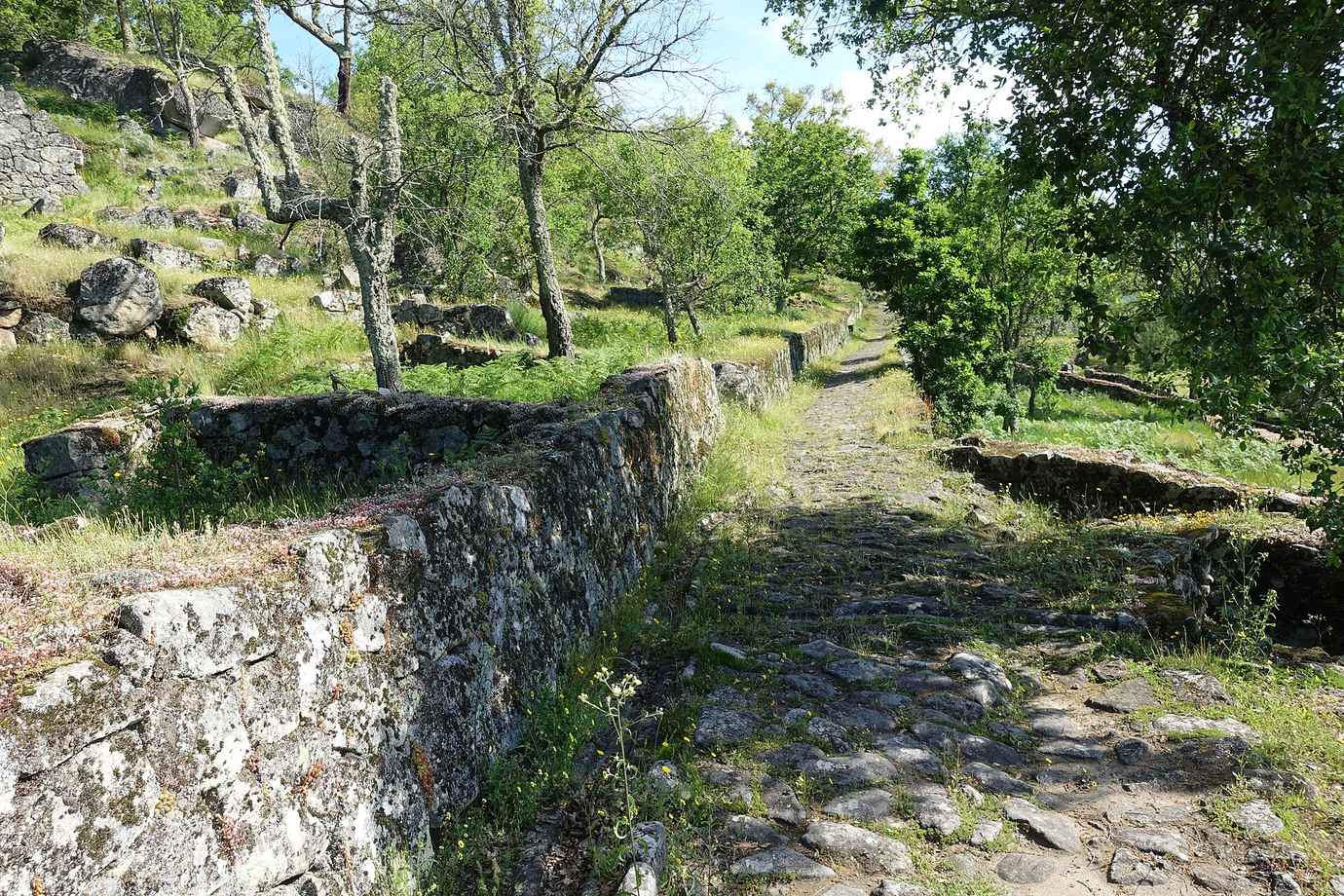
The Citânia de Briteiros. Photo: Joseolgon / Wikimedia Commons (CC BY-SA 4.0)
Plan one to one and a half hours. The paths are rocky and uneven, so wear sturdy shoes. The site is not suitable for wheelchairs or strollers. Entry costs a few euros, but check current hours, which vary by season.
For wine, the Casa de Sezim estate is a few minutes from the centre, surrounded by vineyards and old forest. The same family has held the house since 1376, according to the estate. The standard visit covers the vineyard, the winery and a tasting of two Vinho Verde wines with snacks. Book ahead. Our guide to wine tourism in Portugal covers the wider region.
Braga is close, and the two towns combine well in a day. Read our guide to Braga and the Bom Jesus sanctuary to plan it. Amarante and the Douro are further afield, covered by our Douro Valley tour and our winery visits near Porto.
What to eat, and what to take home
Guimarães has Michelin-level cooking. Chef António Loureiro, a Guimarães native, runs A Cozinha at Largo do Serralho 4. It opened in July 2016, won its star in 2019 and still holds it in the 2026 guide. The cooking is modern and seasonal, and reviewers note a rooftop garden that supplies part of the produce. It features in our guide to Michelin star restaurants in Portugal.
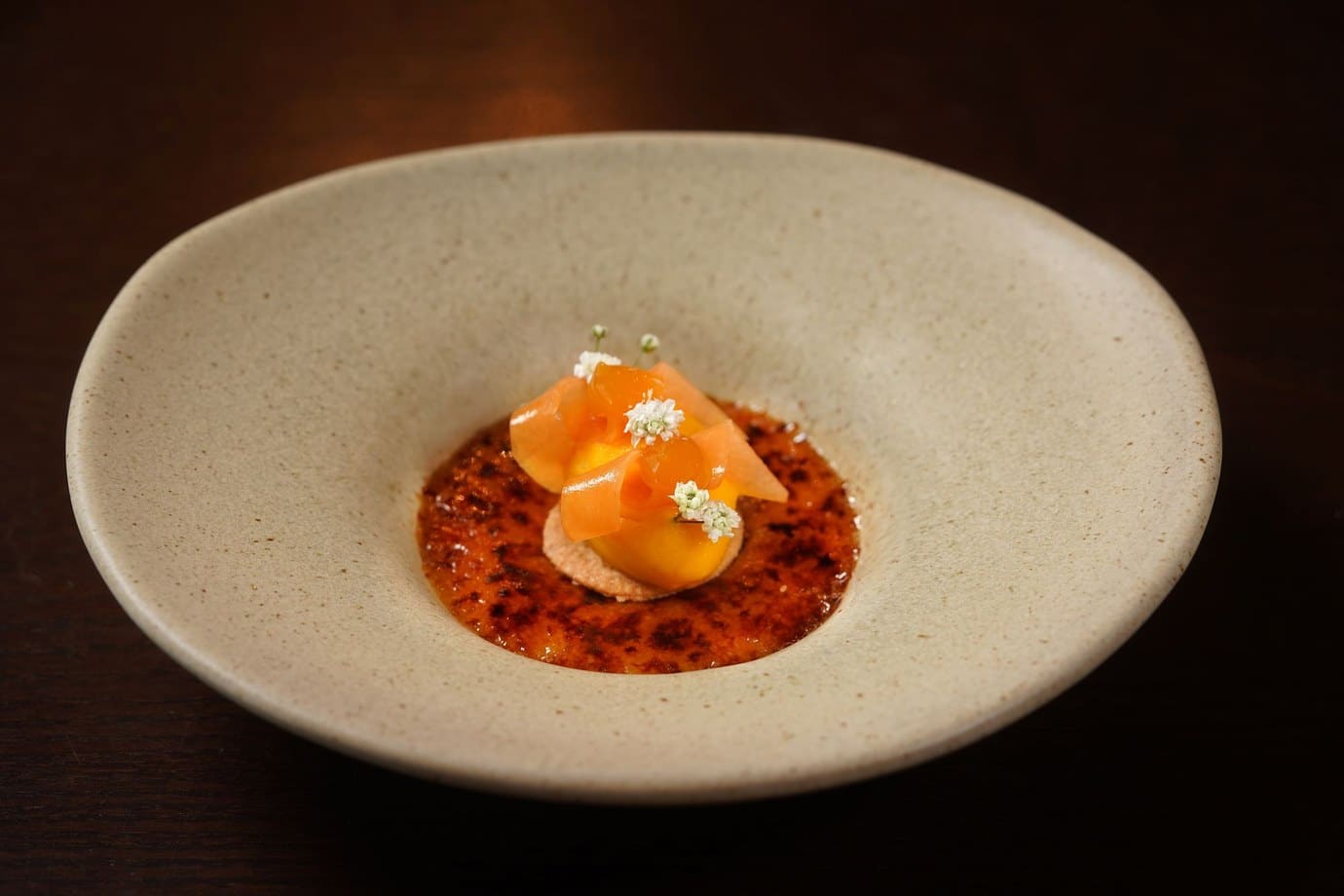
A dish at A Cozinha por António Loureiro. Photo: a Cozinha por António Loureiro
For something lighter, Norma holds a Michelin Bib Gourmand for good-value cooking in the 2026 guide. Cor de Tangerina, near the palace, serves a seasonal vegetarian and vegan menu. Booking is wise for all three, and opening days change, so confirm before you go.
Now the sweets. Torta de Guimarães and toucinho do céu are convent recipes, associated locally with the Convent of Santa Clara. Casa Costinhas is known for both. Pastelaria Clarinha, on Largo do Toural, is another good stop. Treat the Guimarães origin as local tradition, because other regions also claim toucinho do céu.
The best souvenir is embroidery. Bordado de Guimarães has been protected by an official certificate of authenticity since 2010. The town was already known for its linen in the 10th century. The traditional style is white on white, though coloured versions exist. Look for hand-embroidered linen at the local shops and at the cooperative showroom known as A Oficina.
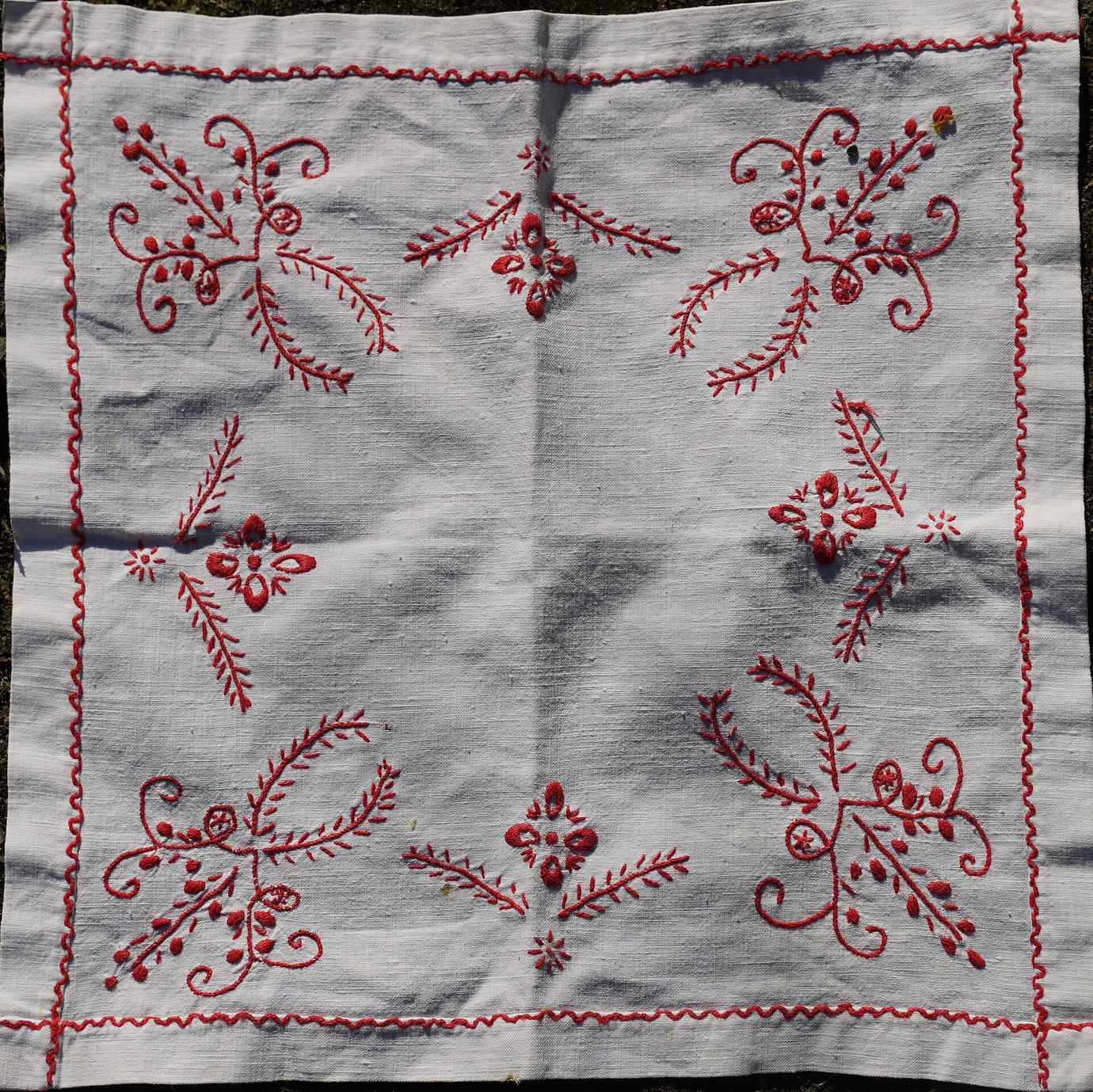
Bordado de Guimarães. Photo: Joseolgon / Wikimedia Commons (CC BY 4.0)
Where to stay
The Pousada Mosteiro Guimarães is the grand option, just outside the centre. It occupies the Monastery of Santa Marinha da Costa, a former Augustinian house with roots in the 12th century. The architect Fernando Távora led the restoration, and the pousada opened in 1985. Its former cells now form 22 rooms and two suites, with azulejos along the corridors.
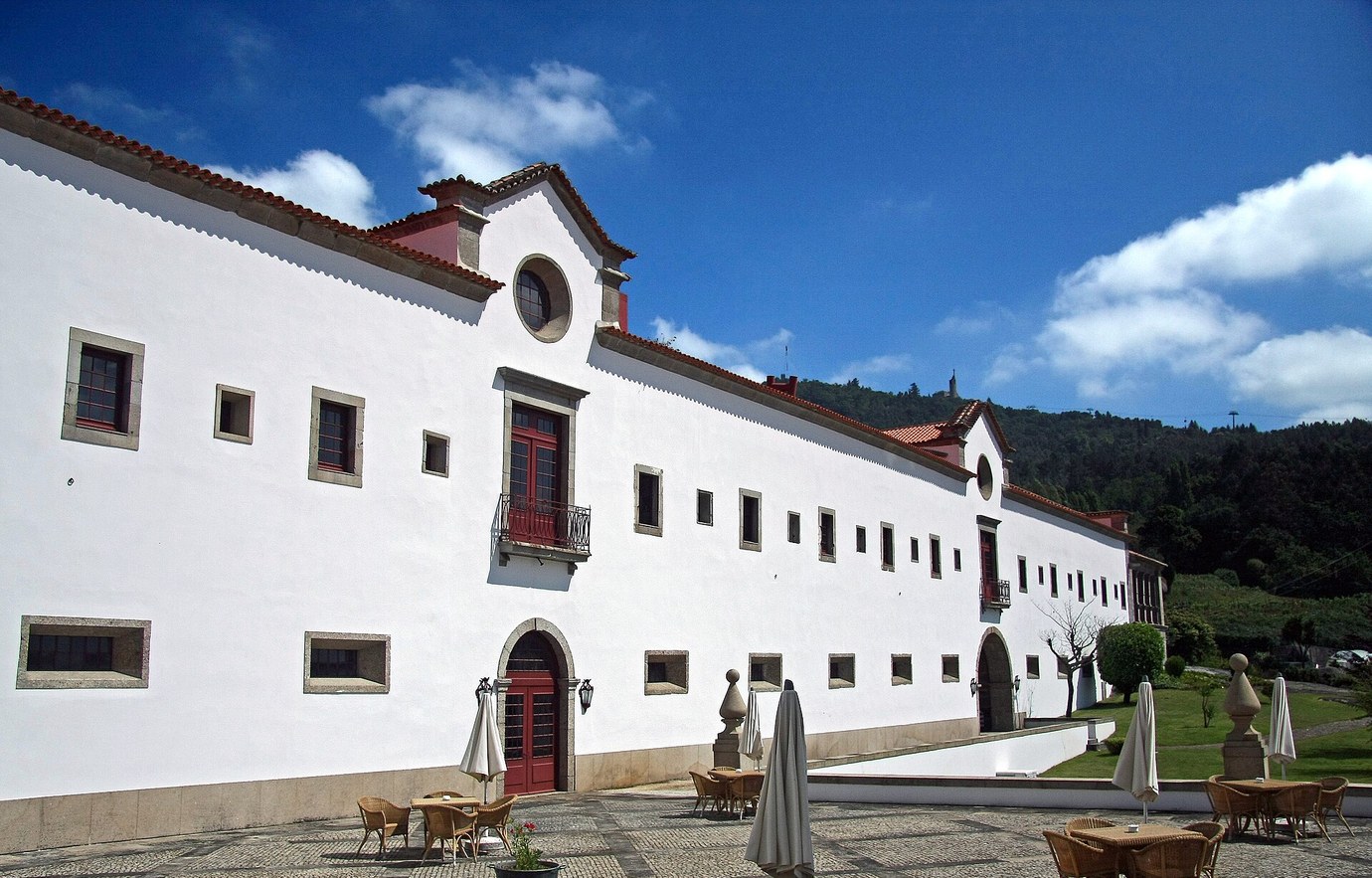
Pousada Mosteiro Guimarães. Photo: Vitor Oliveira / Wikimedia Commons (CC BY-SA 2.0)
In the old town, Torel Royal Court is a boutique hotel in an 1827 palace on Rua de Camões. It was known as Conquistador Palace until July 2025, and it lists itself as a five-star property. Hotel da Oliveira is a four-star on the square of the same name. Casa do Juncal is a design-led boutique hotel behind a medieval façade.
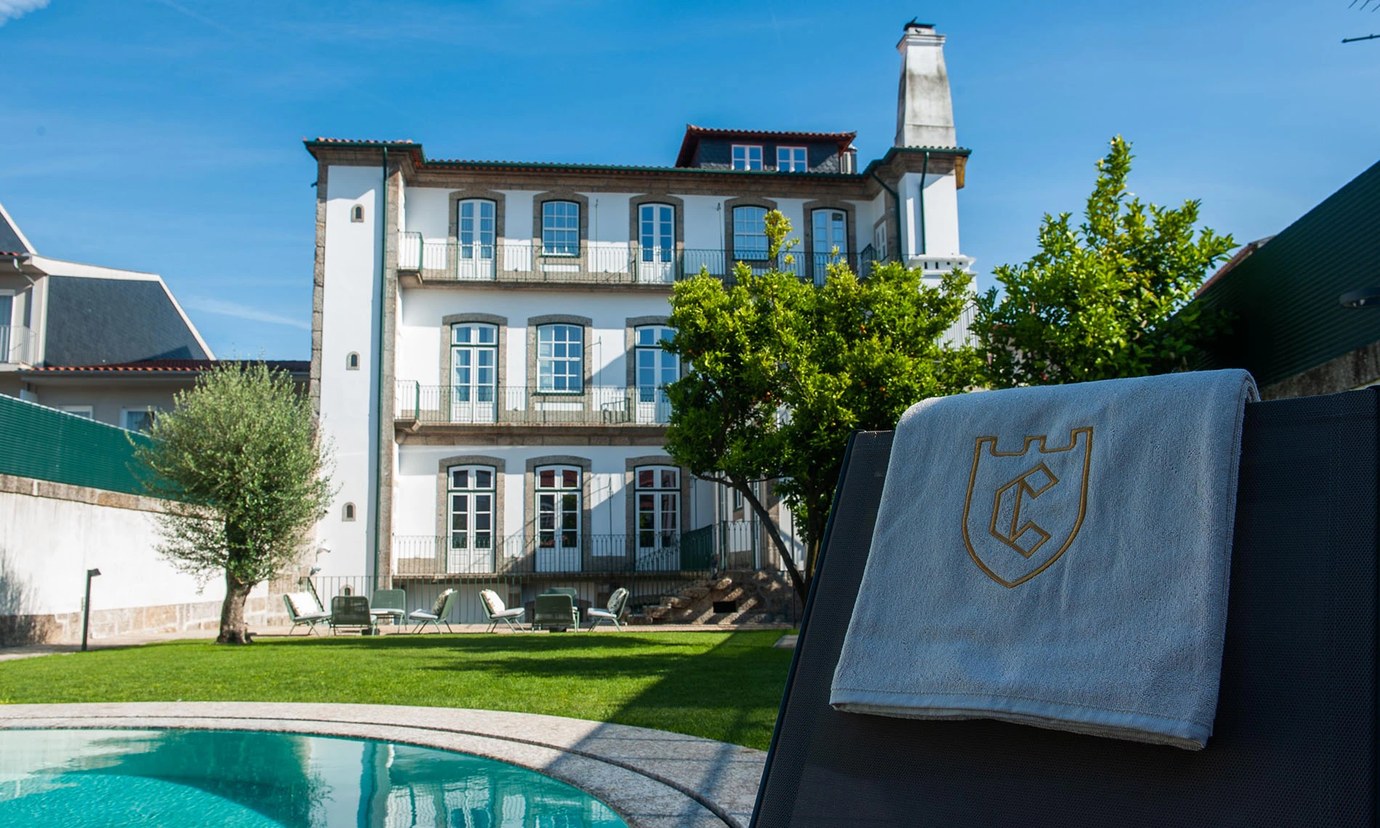
Torel Royal Court. Photo: Torel Royal Court
The nearest major airport is Porto’s Francisco Sá Carneiro, roughly 58 kilometres away. Private flyers land there and drive the rest.
Getting there, and getting around
From Porto, Guimarães is about 45 minutes by car. By train it takes just over an hour from Campanhã station. From Lisbon, allow roughly three and a half hours on the road. Our guide to Lisbon to Porto by private driver is a useful starting point for a longer northern trip.
The old town is compact and best explored on foot. A car matters for everything else: the cable car base, Briteiros, the wine estates and the pousada. A chauffeur who knows where to stop saves the climbing, the parking and the guesswork.
A day in Guimarães. Take a car to the castle first, while the light is soft. Walk down through the old town for lunch. Spend the afternoon on Penha or at Casa de Sezim. Finish with dinner at A Cozinha or a quiet table in Largo da Oliveira. If you have a second day, add Briteiros and Braga.
Our Oporto tours cover the city and its surroundings, and we can build a Guimarães day around your own pace.
Choosing the right Amiroad vehicle for the north
| Group Size | Recommended Vehicle | Best For |
|---|---|---|
| 1–3 passengers | Mercedes S Class | A day from Porto with the castle, the old town and a Michelin lunch |
| 4–6 passengers | Mercedes V Class | Families or friends combining Guimarães, Briteiros and a wine estate |
| 8–15 passengers | Mercedes Sprinter | Small groups touring Braga and Guimarães together |
Amiroad’s Services
Amiroad arranges private transfers and tailor-made tours across northern Portugal, from Porto airport to Guimarães, Braga, the Douro and beyond. Your chauffeur plans the route, the stops and the timing. Every vehicle in Amiroad’s fleet has air conditioning, GPS, Wi-Fi and complimentary water. See our transfers page to start planning.
Cover image: the Palace of the Dukes of Braganza and the statue of Afonso Henriques. Photo: CEphoto, Uwe Aranas / Wikimedia Commons (CC BY-SA 3.0).
Frequently asked questions
Why is Guimarães called the birthplace of Portugal?
Guimarães is linked to the foundation of the country. Afonso Henriques, the first king, is traditionally said to have been born in the castle, though the evidence is traditional. In 1128 he won the Battle of São Mamede nearby, which many historians treat as the start of Portuguese independence.
Is Guimarães a UNESCO World Heritage Site?
Yes. The historic centre was inscribed in 2001. In 2023 the listing was extended to include the Couros Zone, a former tanners’ district, and renamed the Historic Centre of Guimarães and Couros Zone.
How far is Guimarães from Porto?
It is roughly 58 kilometres, about 45 minutes by car. By train it takes just over an hour from Campanhã station.
How many days do you need in Guimarães?
One full day covers the castle, the palace and the old town. Add a second day for the cable car, the Citânia de Briteiros, a wine estate and Braga.
Does Guimarães have a Michelin-starred restaurant?
Yes. A Cozinha, by chef António Loureiro, has held a Michelin star since 2019 and keeps it in the 2026 guide. Norma holds a Bib Gourmand.
What is the best time to visit Guimarães?
Spring and early autumn have the mildest weather. June brings the Feira Afonsina, late July and early August the Festas Gualterianas, and November the Guimarães Jazz festival and the Festas Nicolinas.
Can I visit Guimarães and Braga in one day?
Yes. The two towns are close. A private driver lets you combine the castle and the old town in the morning with Bom Jesus in Braga in the afternoon.

For tailor-made tours or other programs, please get in touch with us through the telephone below or by filling out the form.