
Fado in Lisbon: what it is, where to hear the real thing and how to avoid the tourist show
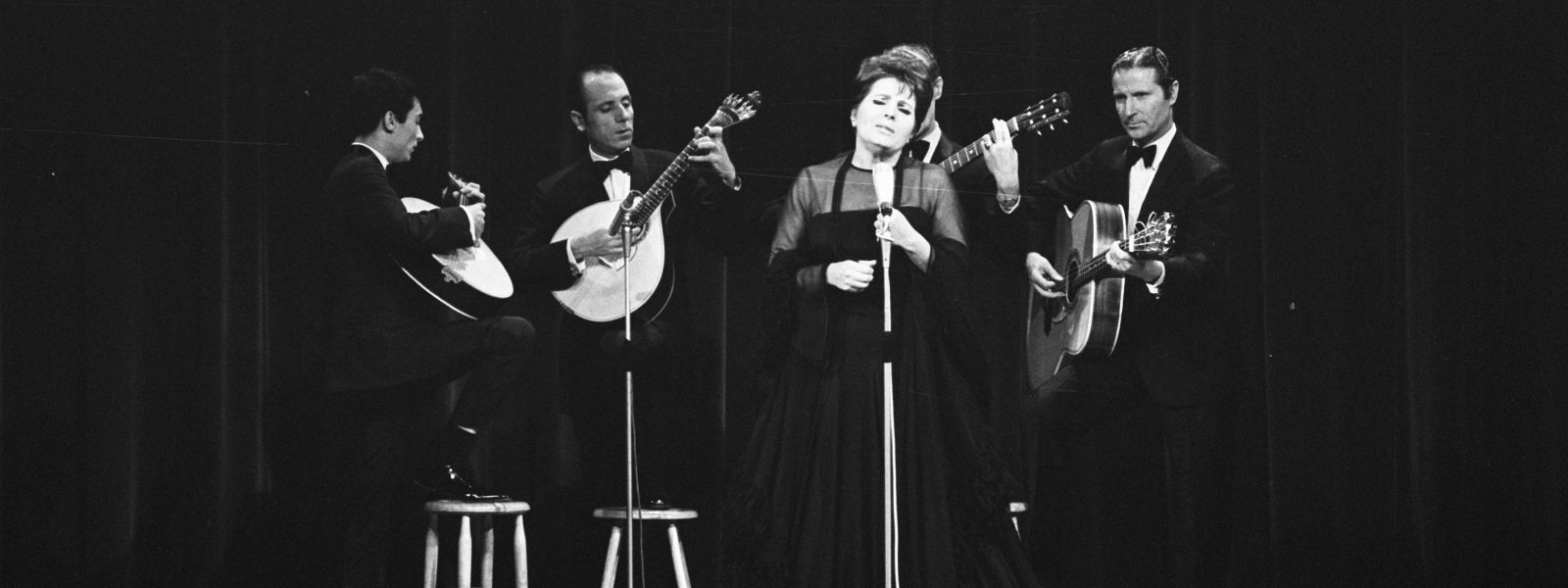
In a good fado house, the room goes quiet before the first note. The waiter stops pouring. Conversations die mid-sentence. Then a singer in black steps forward, a twelve-string guitar starts to ring, and for the next three minutes nobody speaks.
That hush is part of the music. The word fado comes from the Latin fatum, fate. On 27 November 2011, UNESCO added it to the Representative List of the Intangible Cultural Heritage of Humanity.
It is also the most misunderstood music in Portugal. Lisbon is full of “fado shows”. Some are wonderful. Others are a set menu with a singer at the next table. This guide explains what fado really is, how to tell the two apart, and where to go for the genuine article.
What fado actually is
Fado is the song of Lisbon’s old port districts. Its themes are longing, the sea, love, jealousy and the neighbourhood itself. The Portuguese word for that mixture of nostalgia and loss is saudade. It is rarely a happy music, but it is not always a sad one. Some fados praise a city, a street or a home.
It took shape in the early 19th century, in Alfama and Mouraria. The roots are mixed: Afro-Brazilian dances, rural songs and the urban songs of the day. The first great name was Maria Severa, a tavern singer who lived from 1820 to 1846 and died of tuberculosis at 26. Her legend inspired a novel, a play and the 1931 film A Severa, the first Portuguese sound film.
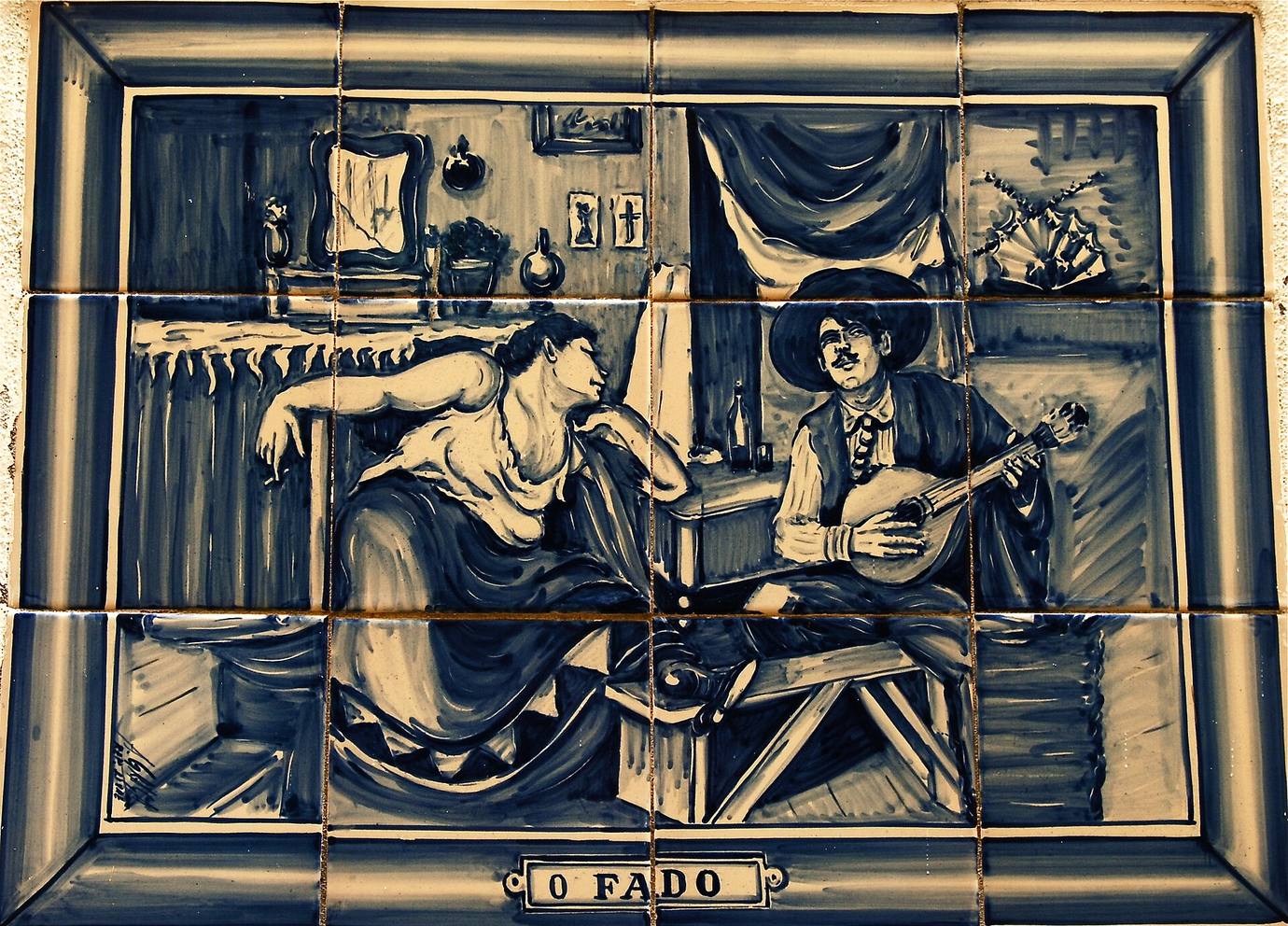
An azulejo panel titled “O Fado” in Sintra. Photo: Pedro Simões / Wikimedia Commons (CC BY 2.0)
The sound rests on two instruments. The guitarra portuguesa has twelve steel strings in six pairs and a teardrop-shaped body. It descends from the English guitar, brought to Portugal through the British trading community in Porto in the second half of the 1700s. The viola, an ordinary classical guitar, supplies the bass line. The singer is the fadista, who usually sings in a minor key, with stillness rather than theatre.
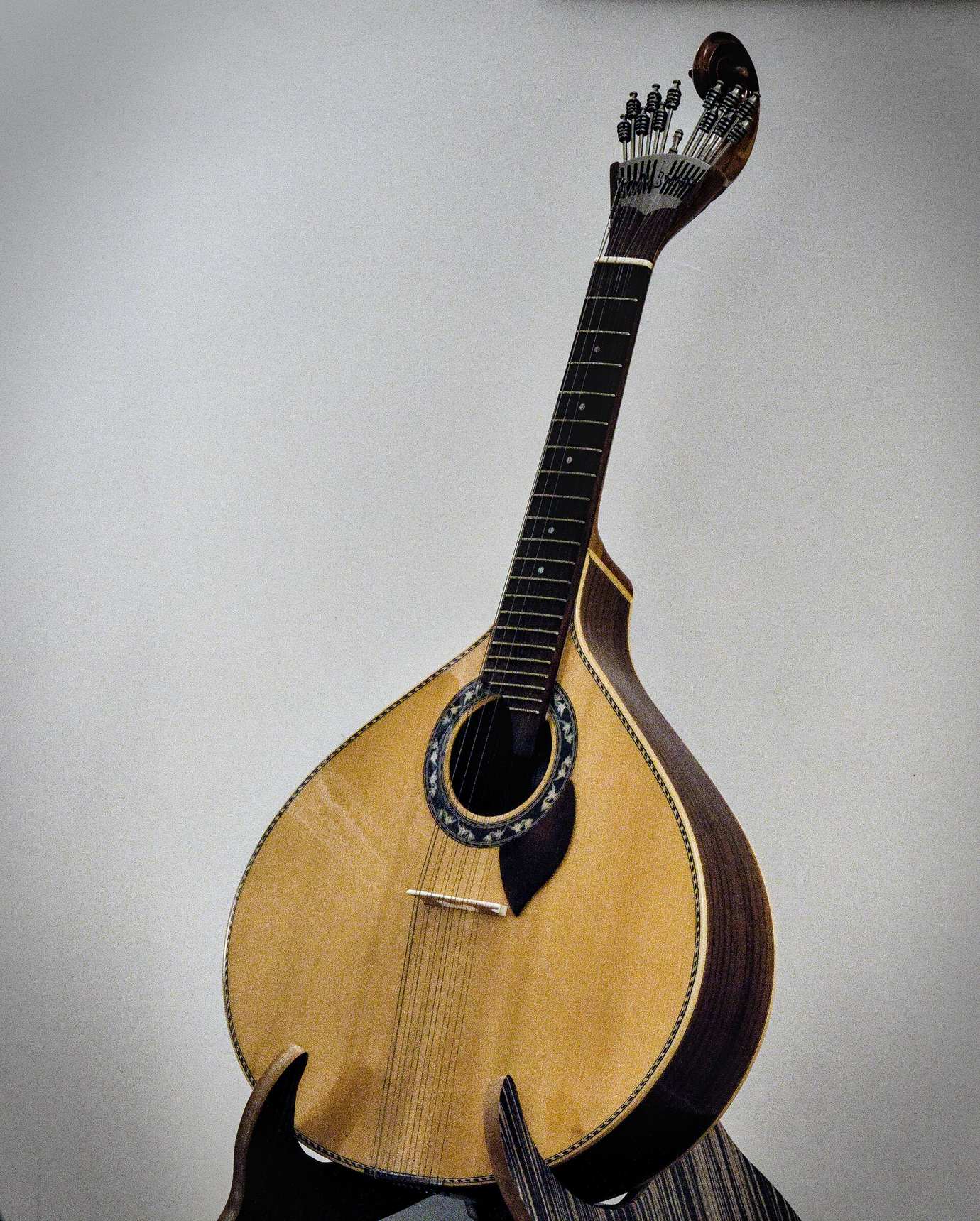
A guitarra portuguesa. Photo: Šarūnas Burdulis / Wikimedia Commons (CC BY-SA 2.0)
Fado vadio or dinner house: know what you are booking
Lisbon has two kinds of fado venue, and neither is fake. They simply offer different evenings.
| Type | What you get | Booking | Examples |
|---|---|---|---|
| Fado vadio | Amateur, spontaneous fado sung by neighbourhood regulars. No fixed programme. Small, crowded rooms. | Walk in, or book ahead if the room is tiny | Tasca do Chico (Bairro Alto), A Baiuca (Alfama) |
| Dinner house | Professional singers and guitarists, set sessions and a full meal. | Reserve one to two weeks ahead from April to October | Clube de Fado, Mesa de Frades, Parreirinha de Alfama |
Vadio means idle or wandering. It is the word for fado sung for the love of it, with no stage and no fee. A dinner house is closer to a concert with food. If you want polish and a reliable evening, book the second. If you want the unpredictable magic of a neighbour suddenly standing up to sing, look for the first.
How to spot a tourist show
A show built for tour groups is not automatically bad. A few are good. But several warning signs repeat in every local guide.
The tout. If a promoter in Alfama promises “the best fado in the city”, walk on. Good houses do not need touts.
The fine print. Check for a minimum consumption or a “fado fee” before you book. Overpriced drinks are the classic trap.
The set list. Listen to the guitarist. In a real performance the guitar answers the singer, and the singer shapes each phrase. In a weak one, both run through a fixed set list on autopilot.
The silence. In the genuine houses, voices drop when the music starts. If staff clatter through the songs and the room keeps talking, you are watching background music.
The timing. Mouraria is generally less touristy than Alfama, and a late slot after 11 p.m. is usually more local than the early dinner seating. Dinner houses typically start around 9 p.m.
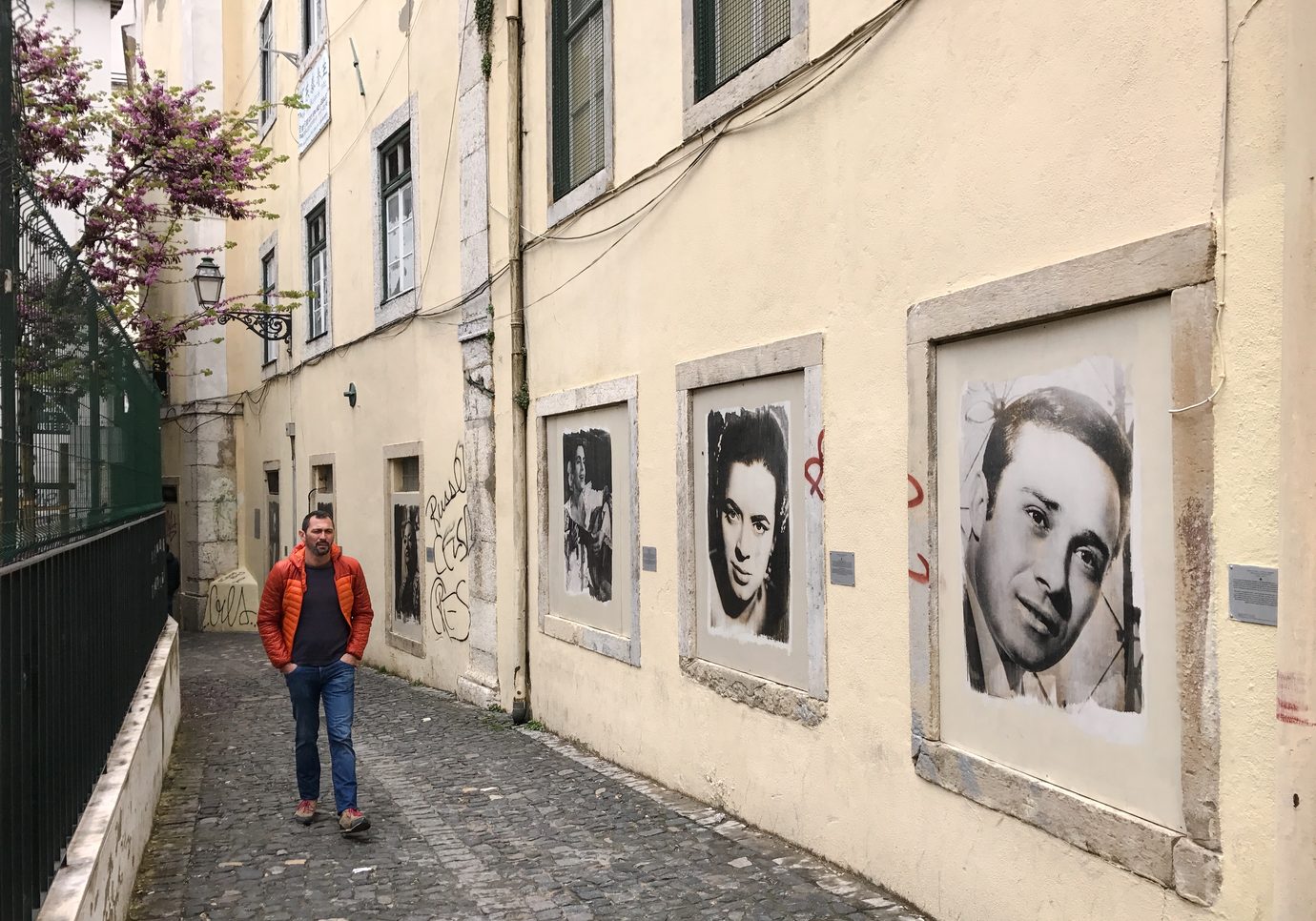
Portraits of fado legends on a lane in Mouraria. Photo: Vernaccia / Flickr / Wikimedia Commons (CC BY 2.0)
What a fado night looks like
Expect a late, slow evening. In a small house, simple food arrives first: grilled sardines, bread, cheap house wine. Then the lights dim, and the first singer steps up. Each fadista usually sings a few songs, accompanied by the two guitars, and then yields to the next. Between sets, the room breathes and the plates are cleared. Sometimes the whole room joins the chorus.
Listen for how a singer starts. A fadista often builds into the first word of a verse and then lets the guitar carry the line. If you do not understand Portuguese, that is fine. The voice, the guitar and the silence do most of the work.
| Term | Meaning |
|---|---|
| Fadista | The singer, whether a professional or a regular from the neighbourhood |
| Guitarra portuguesa | The twelve-string guitar that gives fado its shimmering sound |
| Viola | The classical guitar that supplies the bass line |
| Saudade | Longing and nostalgia, the emotional centre of many songs |
| Fado vadio | Spontaneous amateur fado, sung for love and not for a fee |
| Casa de fado | A restaurant or club that stages professional fado sessions |
Where to hear fado in Lisbon
Opening days, prices and programmes change. Treat this as a shortlist and confirm before you go.
In Alfama. Most of the dinner houses cluster here. Clube de Fado sits in the shadow of the Sé Cathedral, under vaulted stone ceilings that suit the guitar well. It is the most reliable choice for a first night. Mesa de Frades occupies a former 18th-century chapel covered in azulejos, with dinner included and reservations essential. Parreirinha de Alfama keeps an old-school feel, and the fadista Argentina Santos once ran it. Sr. Fado is known for its guitarists.
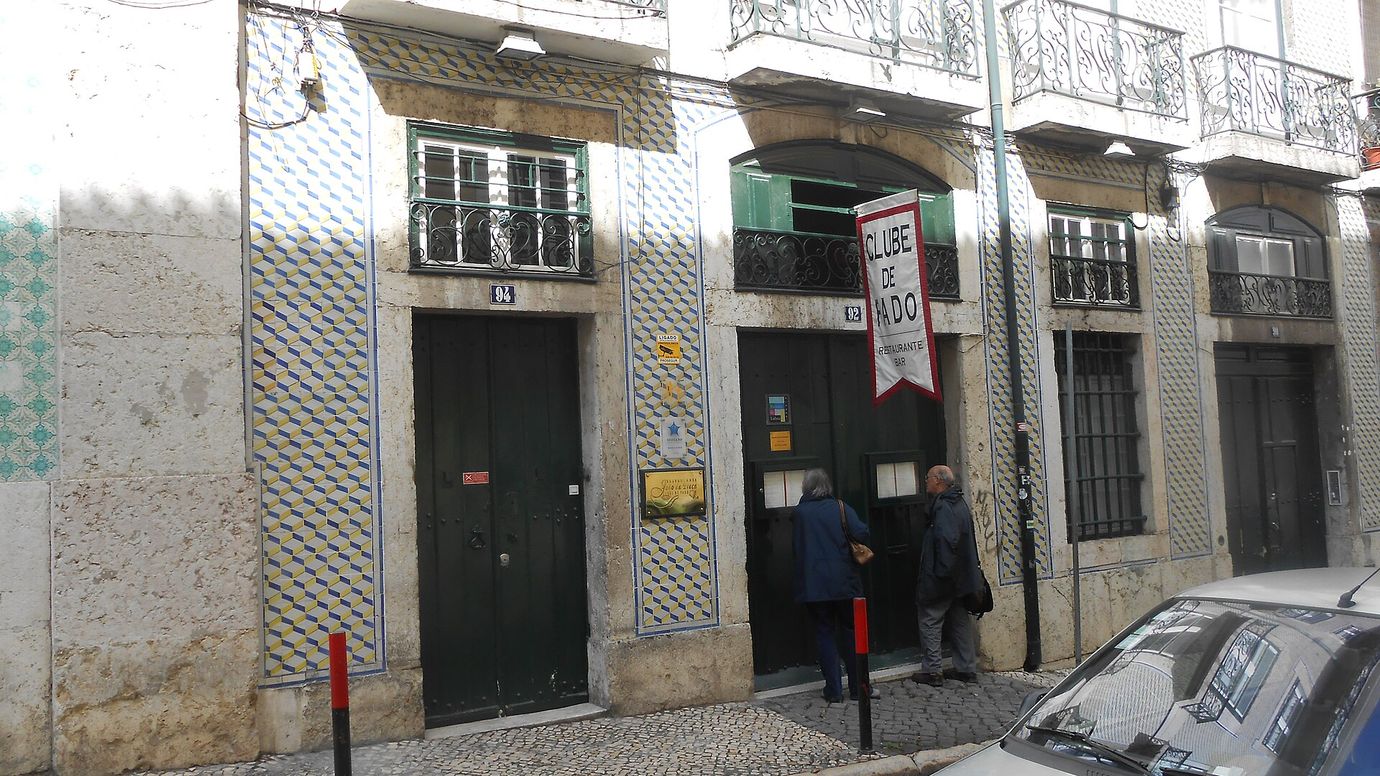
Clube de Fado, Alfama. Photo: 69joehawkins / Wikimedia Commons (CC BY-SA 3.0)
The smallest room. A Baiuca is tiny and family-run, with fewer than 30 seats at six tables. The staff often join the singing. Book ahead, because it fills in minutes.
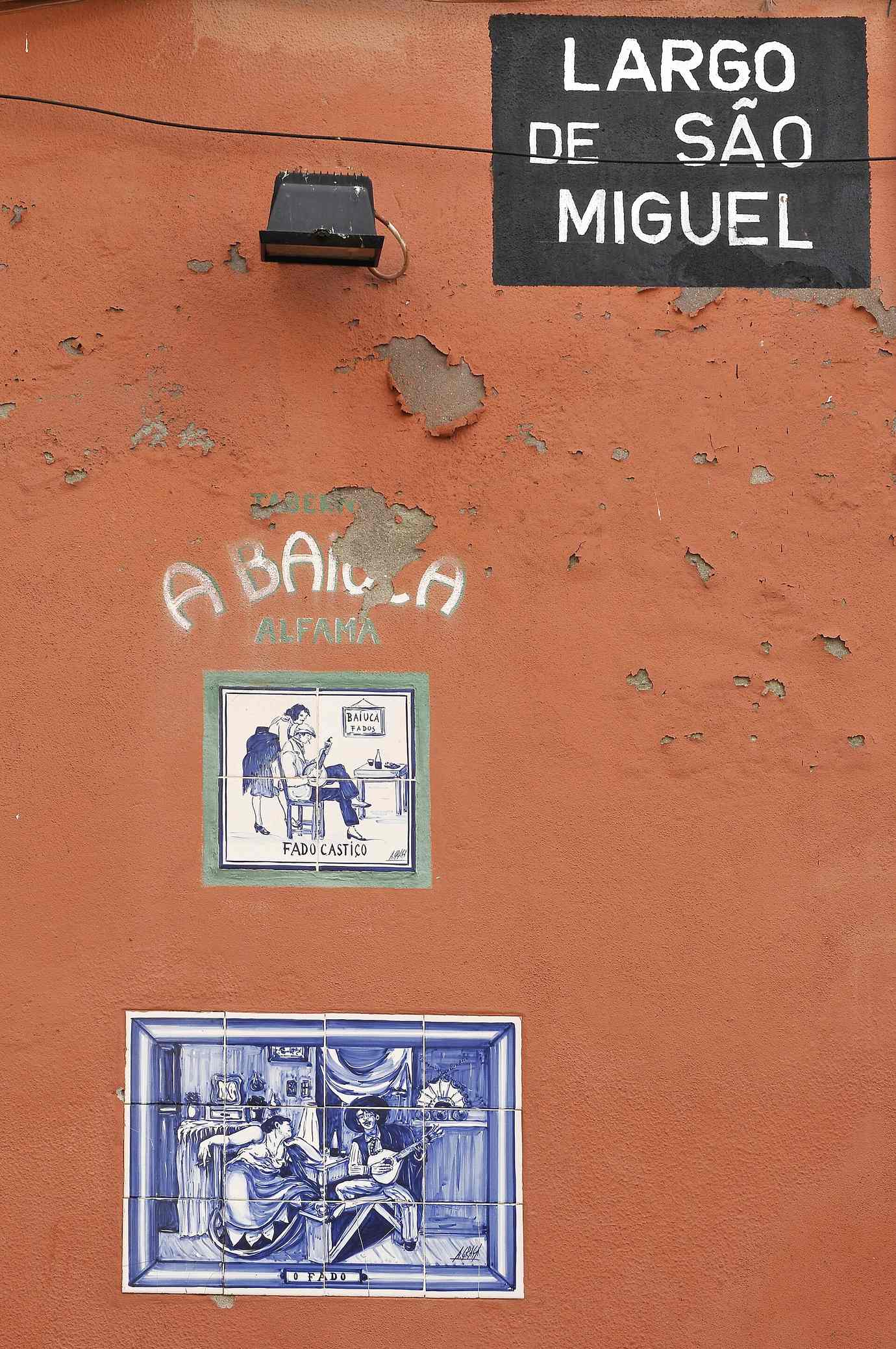
The street sign and azulejo plaques of A Baiuca, Largo de São Miguel, Alfama. Photo: LBM1948 / Wikimedia Commons (CC BY-SA 4.0)
In Bairro Alto. Tasca do Chico is the classic home of fado vadio. It is crowded, informal and high-energy, and people queue before it opens. O Faia is a professional dinner house in the same district.
Getting there. Alfama’s lanes are too narrow for large vehicles, and many are steep. Tell your driver which house you booked. The car will drop you at the nearest point and collect you at a time you set.
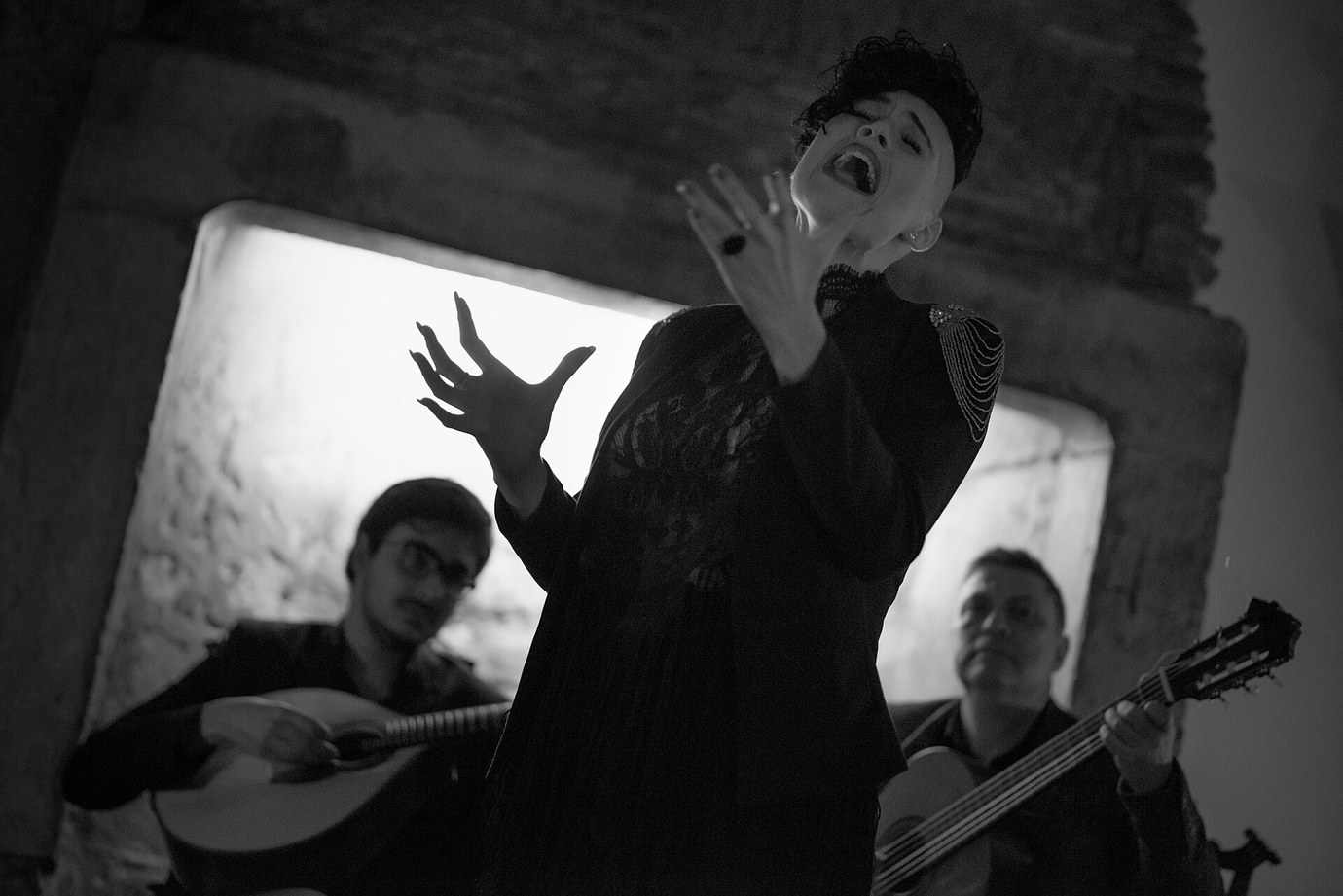
The fadista Fábia Rebordão at the Casa de Linhares, Lisbon. Photo: Jimmy Baikovicius / Flickr / Wikimedia Commons (CC BY-SA 2.0)
The voices to know
Alfredo Marceneiro (1891 to 1982) gave up his trade as a joiner for the stage. Fado enthusiasts crowned him the “King of Fado” in 1948, at an event attended by Amália Rodrigues. Singers are still measured against him.
Amália Rodrigues (1920 to 1999) is the name everyone knows. She remains the best-selling Portuguese recording artist in history. When she died on 6 October 1999, the government declared three days of national mourning. In 2001, on 8 July, her remains were moved to the National Pantheon.
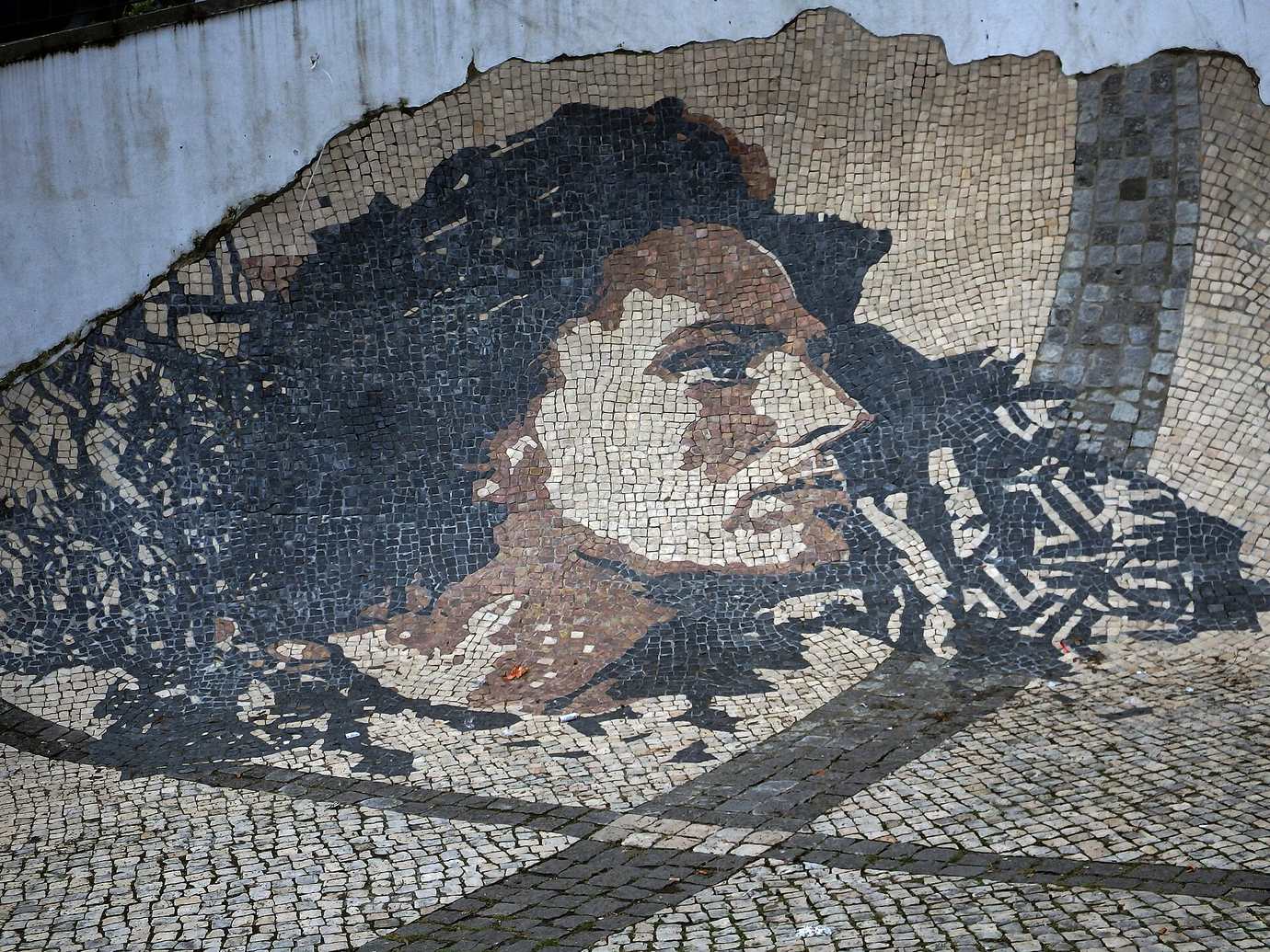
A pavement portrait of Amália Rodrigues, below Castelo de São Jorge. Photo: Mike Steele / Wikimedia Commons (CC BY 2.0)
Carlos do Carmo and Mariza served as ambassadors for the UNESCO bid. Today’s names include Carminho, Camané, Ana Moura, Gisela João, Katia Guerreiro, Ricardo Ribeiro and Raquel Tavares. Look them up before you travel, because several of them play Lisbon’s big concert halls rather than the small houses.

Understand it first: two museums and a tomb
The Museu do Fado opened on 25 September 1998 in a former water-pumping station from 1868, at Largo do Chafariz de Dentro 1, in Alfama. Its three levels trace the history of the genre and its stars, and an audio guide plays recordings. Allow about an hour. Sources list it as open Tuesday to Sunday, 10:00 to 18:00, so confirm the hours.
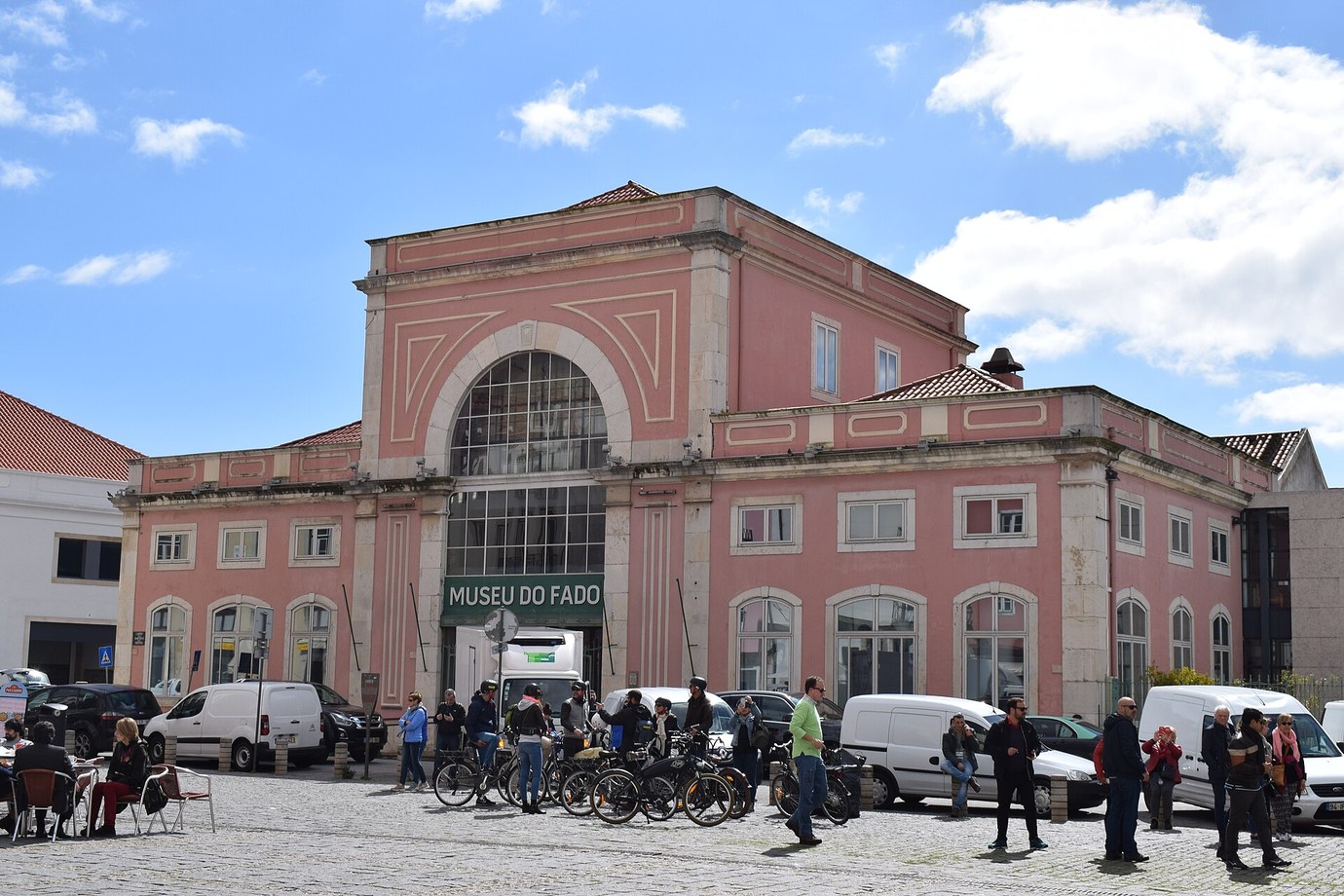
The Museu do Fado, Alfama. Photo: AntoineJoub / Wikimedia Commons (CC BY-SA 4.0)
The Casa-Museu Amália Rodrigues, at Rua de São Bento 193, preserves the singer’s home. Visits are guided only and last about 40 minutes, so book ahead. Her tomb is in the National Pantheon, covered by our National Pantheon page.
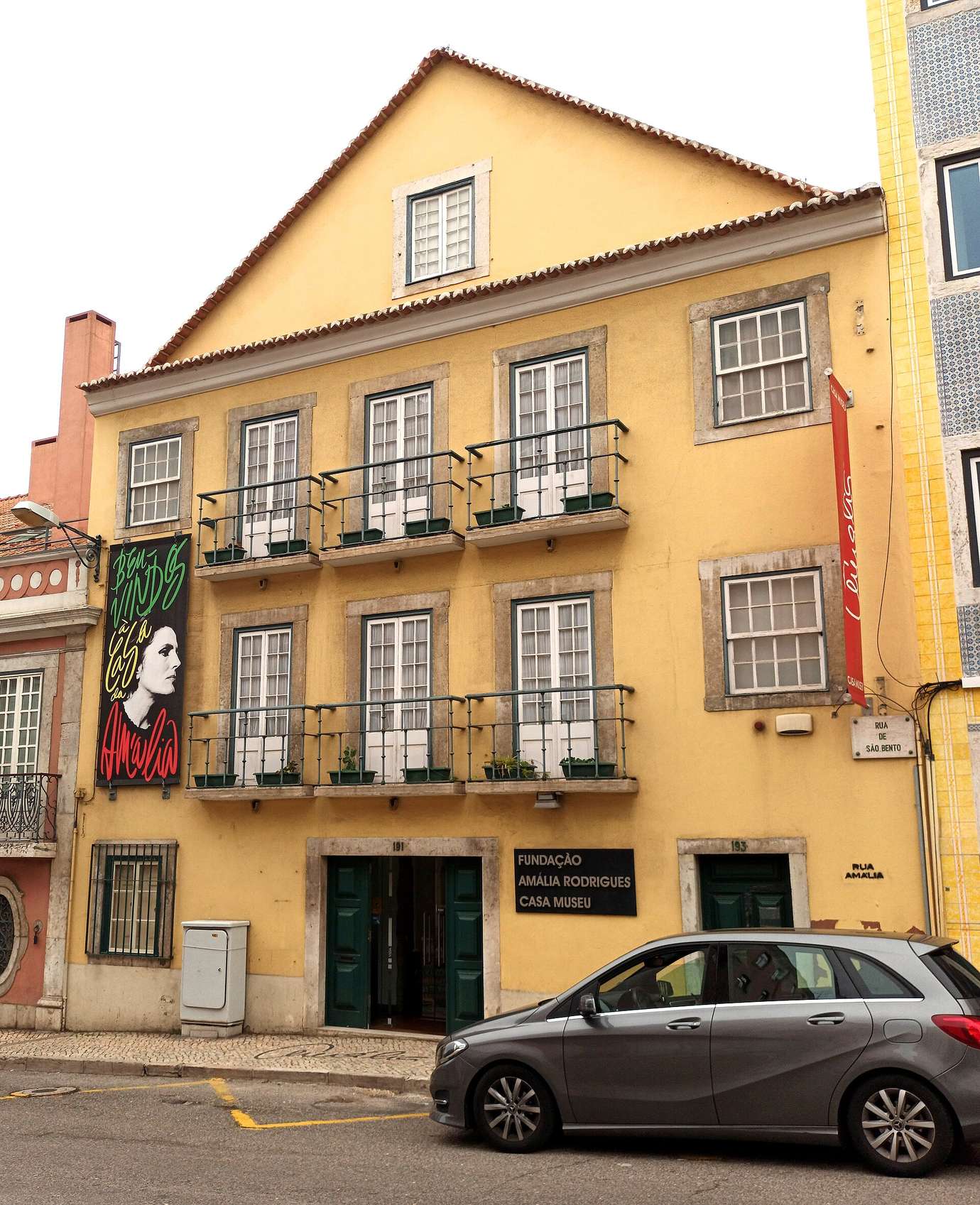
The Casa-Museu Amália Rodrigues. Photo: Acediscovery / Wikimedia Commons (CC BY 4.0)
Coimbra fado: a different tradition
Everything above is Lisbon fado. Coimbra has its own. It grew in the university city, and it is traditionally sung by men, students or former students, in black capes. It sounds more formal and its themes include youth, knowledge and the passing of time. The Coimbra guitar is a different model, with a different body and tuning.
Etiquette differs too. In Lisbon, people applaud. In Coimbra, applause is traditionally withheld in favour of silent appreciation.
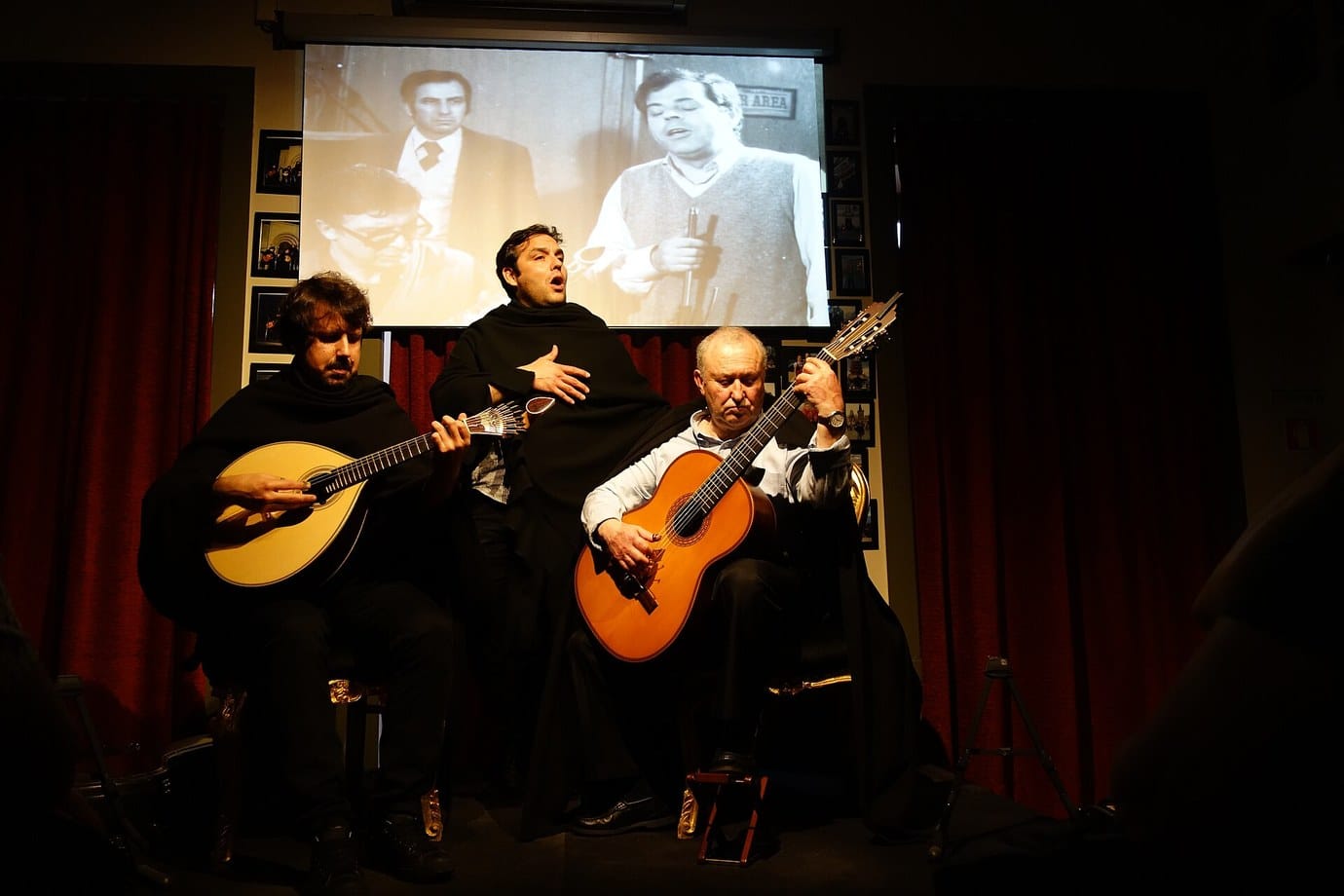
Fado de Coimbra at Fado ao Centro. Photo: FlyingCrimsonPig / Wikimedia Commons (CC BY 2.0)
Fado ao Centro runs daily sessions, around 6 p.m. in recent listings, with explanations in English. Café Santa Cruz, in a former chapel on Praça 8 de Maio, often hosts free fado nights. À Capella, in a 14th-century chapel, starts later in the evening. For the rest of the city, see our Coimbra guide and the Coimbra tourism fado page.
The fado calendar
Fado is a nightly affair in Lisbon, but a few dates are worth planning around. The Caixa Alfama festival fills the streets of Alfama with ten stages and a main stage over the Tagus. In 2026 it ran on 11 and 12 September, and in 2025 on 26 and 27 September, so expect early autumn.
Lisbon’s June festivals, the Festas de Lisboa, also bring fado into the programme, including the traditional Trezena of Saint Anthony. And 27 November marks the anniversary of the UNESCO listing, a good excuse for a night out.
A fado night, done well
A good evening is mostly logistics. Dinner houses begin around 9 p.m., the best seats go early, and Alfama is no place to hunt for parking. Our Live Fado Show service takes you to the best fado clubs in Alfama, Mouraria and Bairro Alto. We also know venues away from the tourist areas.
Make a night of it. Start with a sunset at the Portas do Sol viewpoint, then dinner and fado, and a late ride back. Our guides to Alfama, the best restaurants in Lisbon and Lisbon’s historic cafés fill in the rest. The cafés guide includes the one where Fernando Pessoa’s statue sits.
Choosing the right Amiroad vehicle for a fado night
| Group Size | Recommended Vehicle | Best For |
|---|---|---|
| 1–3 passengers | Mercedes S Class | A dinner in Alfama with a drop-off at the nearest accessible point |
| 4–6 passengers | Mercedes V Class | A table for friends or family, with one return ride for everyone |
| 8–15 passengers | Mercedes Sprinter | A group dinner for a corporate or celebration programme |
Amiroad’s Services
Amiroad arranges private transfers and tailor-made evenings in Lisbon, Coimbra and across Portugal. Your chauffeur handles the narrow lanes, the timing and the late return. Every vehicle in Amiroad’s fleet has air conditioning, GPS, Wi-Fi and complimentary water. See our private transfers in Lisbon to start planning.
Frequently asked questions
What is fado?
Fado is a Portuguese song tradition born in Lisbon’s port districts in the early 19th century. A singer, the fadista, performs songs about longing, fate and the city, usually with a Portuguese guitar and a classical guitar.
What does fado mean?
The word comes from the Latin fatum, meaning fate. The songs often deal with saudade, the Portuguese word for longing and nostalgia.
Is fado a UNESCO heritage?
Yes. UNESCO inscribed fado on the Representative List of the Intangible Cultural Heritage of Humanity on 27 November 2011.
Where can I hear authentic fado in Lisbon?
In Alfama, houses such as Clube de Fado, Mesa de Frades and A Baiuca. In Bairro Alto, Tasca do Chico for fado vadio. Always check opening days and book small rooms ahead.
What is fado vadio?
Fado vadio is amateur fado, sung spontaneously by regulars in small taverns, with no fixed programme. Professional dinner houses offer scheduled sessions with paid singers and musicians.
Is there fado outside Lisbon?
Yes. Coimbra has its own tradition, sung by men in black student capes. Fado ao Centro, Café Santa Cruz and À Capella are places to hear it.
Do I need to book a fado night?
For dinner houses, yes, one to two weeks ahead from April to October. Tiny rooms such as A Baiuca fill quickly. Fado vadio venues often take walk-ins, but queues are common.

For tailor-made tours or other programs, please get in touch with us through the telephone below or by filling out the form.