
Cascais and Estoril, Portugal: the coast Europe’s exiled kings once called home
Long before it became a weekend escape for Lisbon residents, the stretch of coast between Cascais and Estoril sheltered a small crowd of dethroned European royals, and gave a British naval intelligence officer the idea for the most famous spy in fiction. Add a 16th-century fortress turned luxury hotel, a sea chasm that has been startling visitors for centuries, a marina where sailing royalty still drops anchor, and race weekends at one of Europe’s most storied circuits, and there is a lot more here than the beach.
This guide covers the real story behind Casino Estoril, the exiled royal families who settled along this coast, the Cidadela de Cascais, Boca do Inferno, the coast’s world-class golf courses, and the wider calendar of tennis, motor racing, sailing and equestrian events that keeps drawing a high-profile crowd back to this particular stretch of Atlantic coastline.
Why visit Cascais and Estoril with a private chauffeur
Cascais and Estoril sit about 30 minutes west of Lisbon along the coast, close enough for a half-day trip but layered enough to fill several full ones. A few practical reasons a private driver helps here:
- The coastal road connects Estoril, Cascais and Boca do Inferno in sequence, so the most efficient route follows the shoreline rather than doubling back.
- Parking near the marina and the historic center fills quickly, and gets considerably tighter during race weekends at the Autódromo, the tennis open, or the Cascais sailing regatta.
- This coast pairs naturally with Sintra and Cabo da Roca, and a chauffeur-driven day can link all three without anyone needing to plan the transitions.
- Cascais Aerodrome sits right on the coast, so guests flying in privately can go straight from the tarmac to a hotel or event without a detour through Lisbon.
Casino Estoril and the night that inspired James Bond
The foundation stone for Casino Estoril was laid in 1916, though the building most visitors recognize today only opened in 1931. It has since grown into one of the largest casinos in Europe, with gaming rooms, a theater and an art collection spread across the complex.
Its most famous story dates to 1941. Portugal’s neutrality during the Second World War turned Estoril into a rare meeting point for spies, diplomats and refugees from across the continent, and a British naval intelligence officer named Ian Fleming spent time at the casino tables during the war. According to Fleming’s own account, he watched a Yugoslav double agent, Dušan Popov, play a high-stakes game of baccarat there, an episode that later resurfaced almost scene for scene as the card game in Fleming’s first Bond novel, Casino Royale.
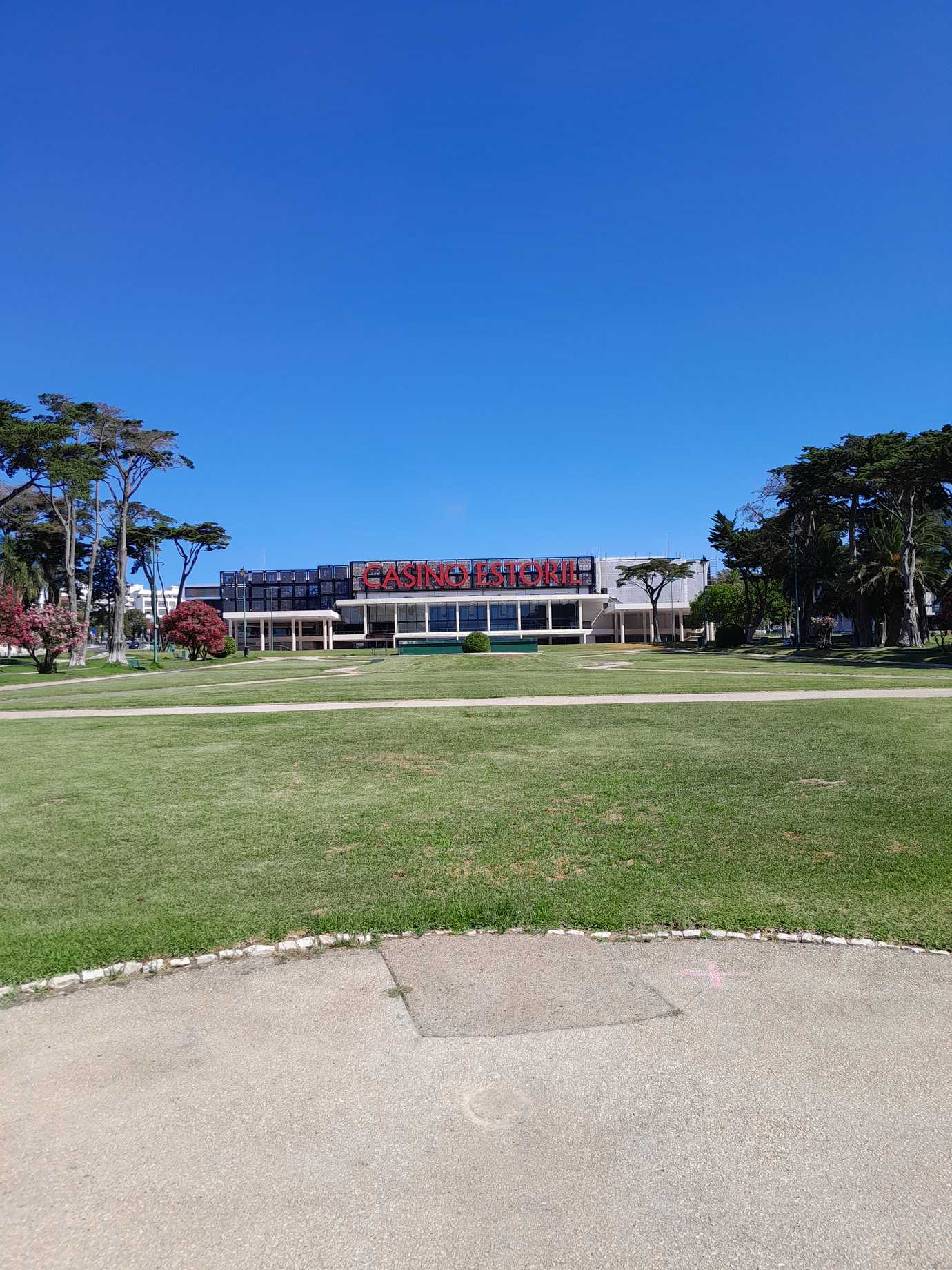
Visitors today can still walk through the same gaming rooms, and the casino’s own gardens and fountains out front are worth a slow lap even for anyone who has no interest in the tables.
The exiled kings of the Portuguese Riviera
Portugal’s neutrality did more than attract spies. It also made this stretch of coast, sometimes called the Portuguese Riviera, one of the few safe addresses left in Europe for royal families pushed out of their own countries. King Umberto II of Italy, the country’s last monarch, lived in exile at the Villa Italia in Cascais after the 1946 referendum that abolished the Italian monarchy. King Carol II of Romania settled nearby and died in Estoril in 1953. Juan de Borbón, Count of Barcelona and father of Spain’s future King Juan Carlos I, and Miklós Horthy, Hungary’s former regent, both spent time in exile along the same coastline.
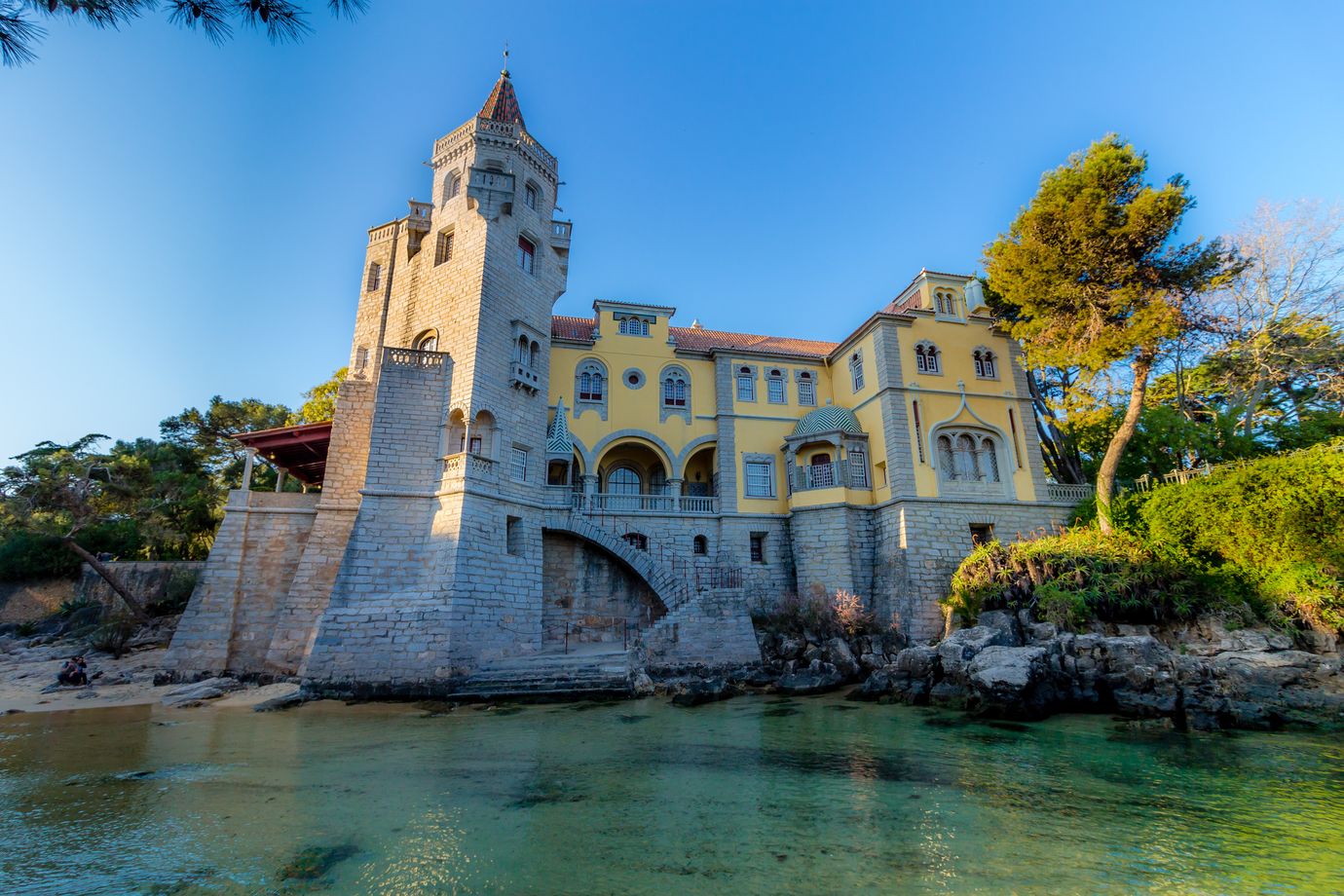
Their villas are mostly private residences today, so this is a piece of history best appreciated as a passing story on a drive along the coast rather than a stop with an entrance ticket. It is still one of the more surprising layers of a region better known for beaches, and it explains why the area’s grand early-20th-century mansions look the way they do.
Grass, clay and horsepower: Estoril’s sporting calendar
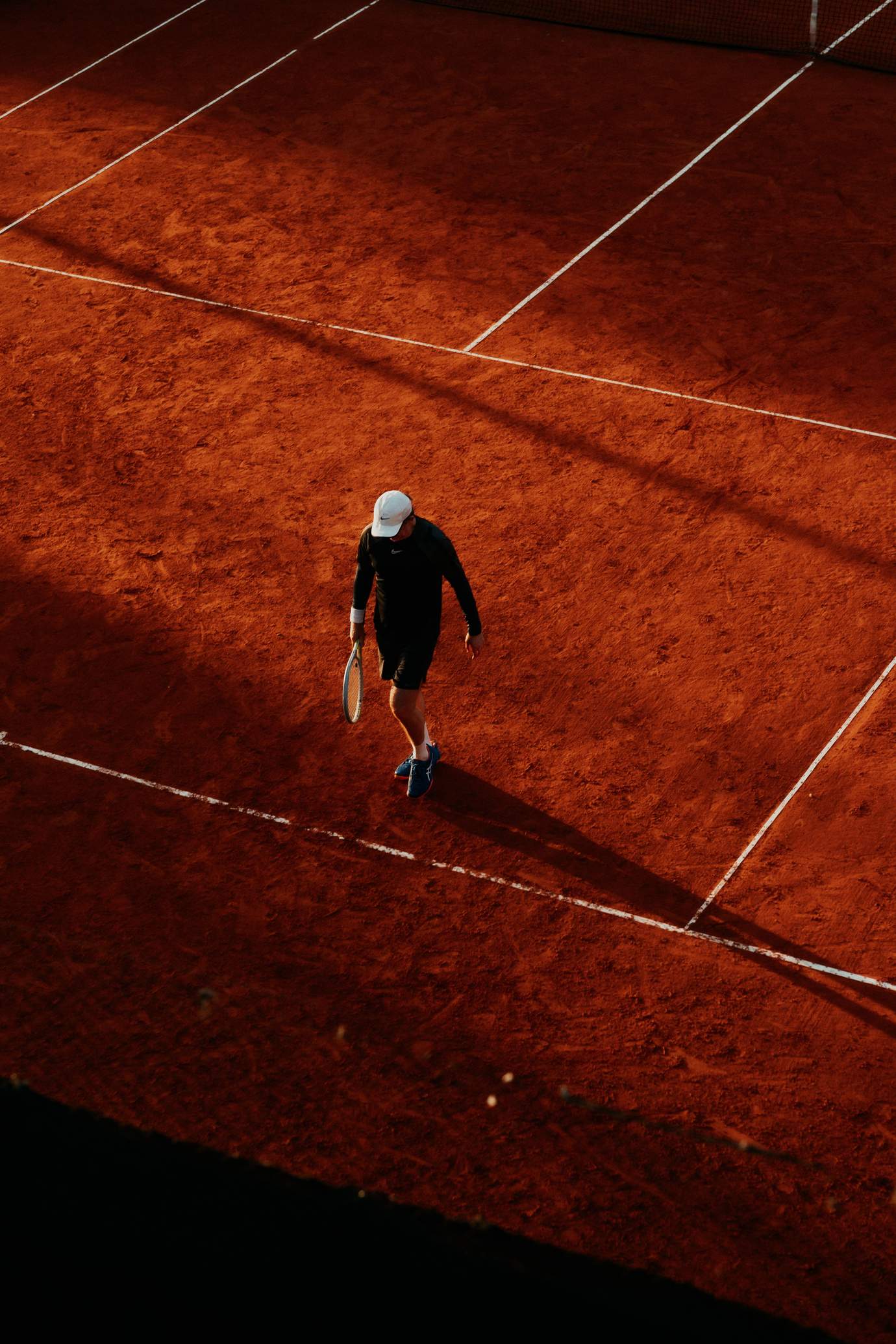
Estoril’s prestige extends well past the casino floor. The Clube de Ténis do Estoril hosts the Millennium Estoril Open, an ATP men’s tournament that returned to the main tour as an ATP 250 event after years on the Challenger circuit, drawing professional players and a well-dressed crowd to its clay courts every year. Amiroad regularly arranges transport for guests attending the tournament, and the full Millennium Estoril Open event details are worth checking before planning a visit around it.
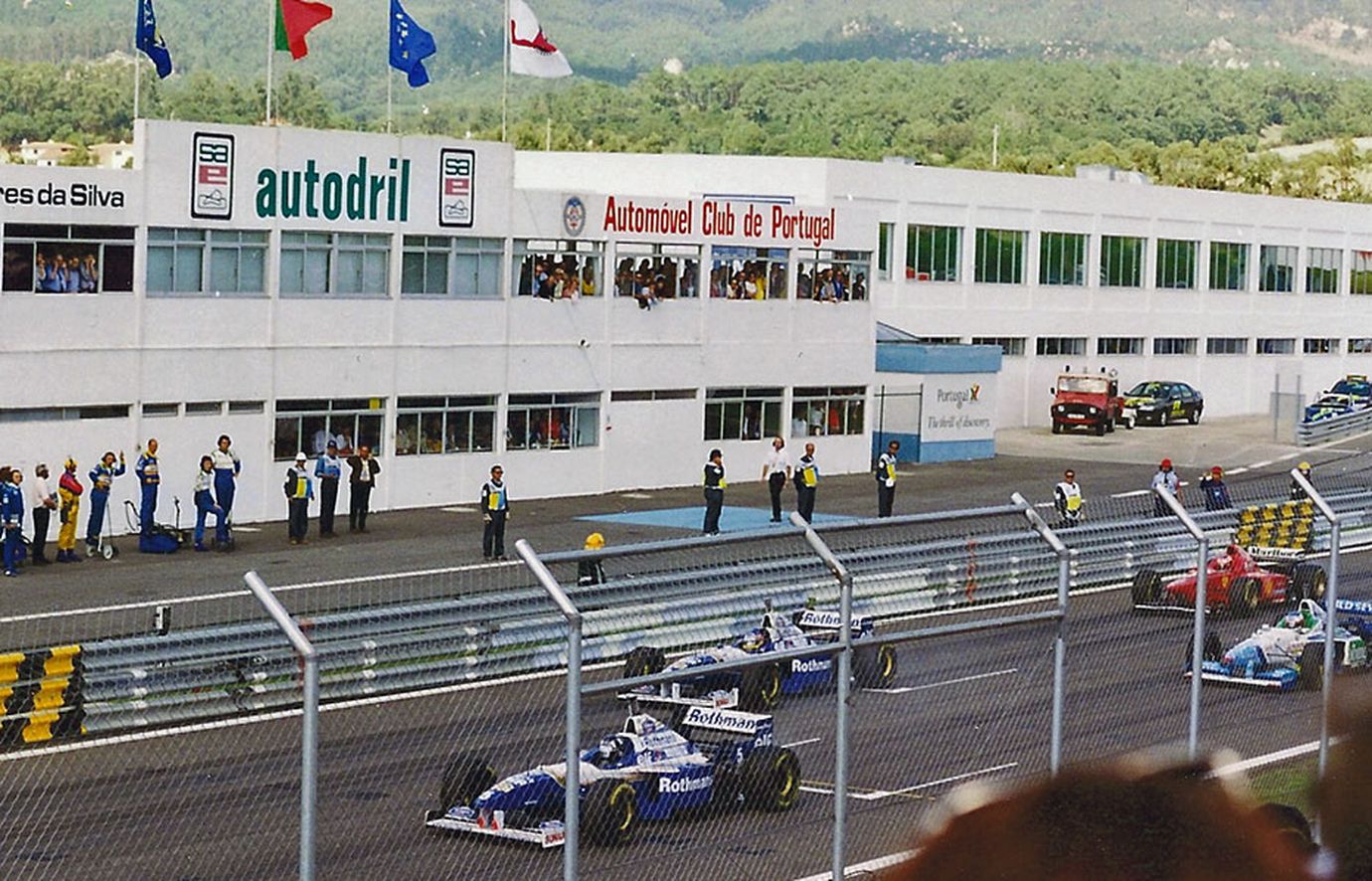
A few minutes inland, the Autódromo do Estoril has its own claim to motorsport history: it hosted the Formula 1 Portuguese Grand Prix from 1984 to 1996, the circuit where Ayrton Senna took his first F1 victory in 1985. The final Portuguese Grand Prix, in 1996, went to Jacques Villeneuve. These days the circuit stays busy with Estoril Classics, one of Europe’s largest classic car gatherings held each September, and a WorldSBK Superbike round in October, alongside national touring car and endurance racing throughout the year.
World-class golf on the doorstep
Golf is one of the coast’s quieter draws, and one of its most serious. Oitavos Dunes, part of the Quinta da Marinha estate just outside Cascais, is a links-style course designed by Arthur Hills that opened in 2001 on land right at the edge of the Sintra-Cascais Natural Park, and it regularly ranks among the best courses in continental Europe. It was also the first golf course in Europe to earn Audubon Gold Certification for environmental management, and it has hosted the Portuguese Open on multiple occasions.
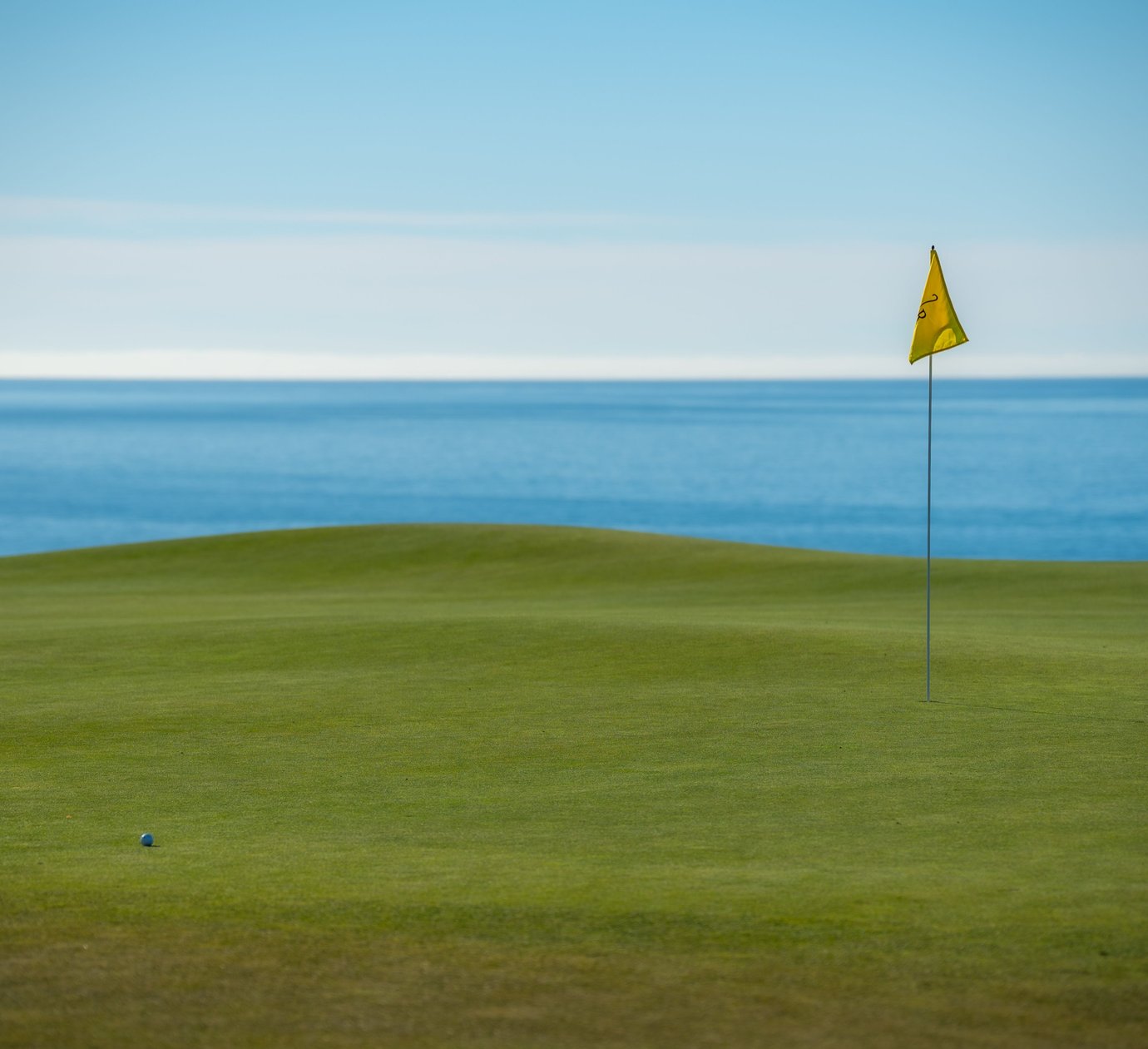
A short drive away, Estoril Golf Club is older still. Founded in 1929 and redesigned in 1936 by Scottish architect Philip Mackenzie Ross, it was one of four founding clubs behind the Portuguese Golf Federation in 1949 and hosted the Portuguese Open for two decades between 1953 and 1972, and again in 1987. For golf enthusiasts building a Portugal itinerary, pairing a round at one or both of these courses with a coastal day is entirely realistic, and a private driver takes the logistics of moving clubs and players between courses and hotels off the table entirely.
The Cidadela de Cascais, a fortress turned luxury hotel
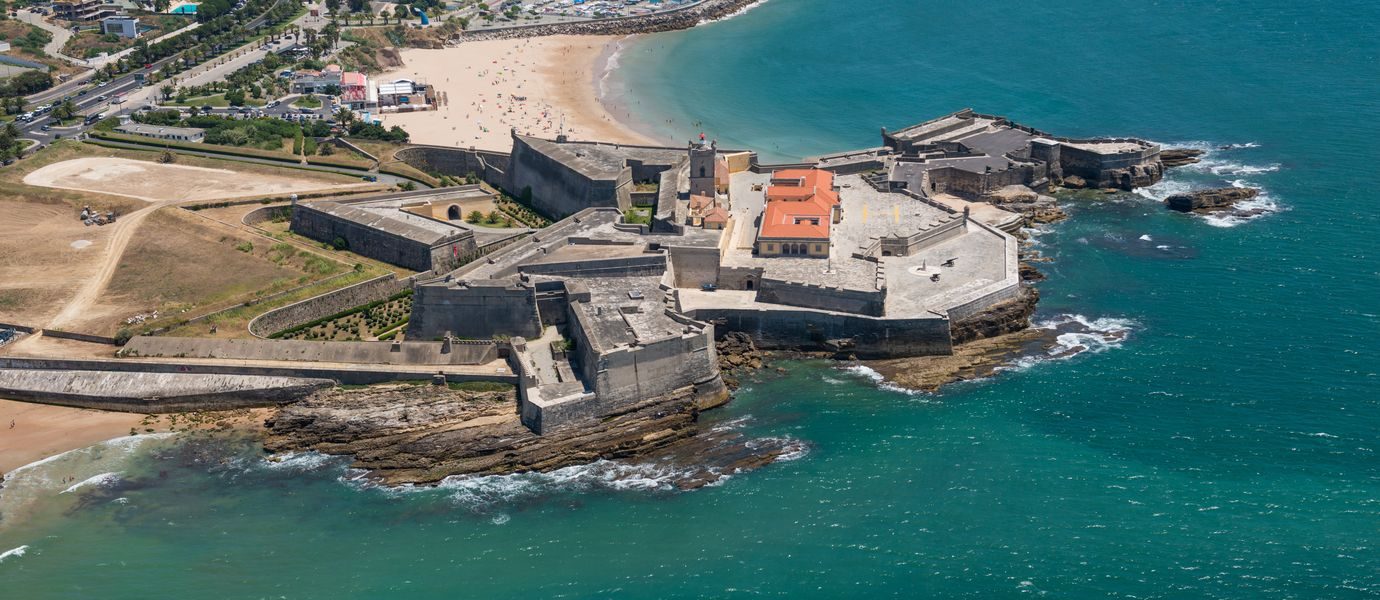
The Cidadela de Cascais began as a coastal fort in the 1580s, built under King Filipe I to defend the approach to Lisbon from the sea. It later served as a royal summer residence for the Portuguese monarchy in the 19th century, which is part of why Cascais grew into a resort town in the first place. Today the fortress walls enclose a Pousada, a luxury heritage hotel, along with a small arts district of shops and galleries built into the old military buildings.
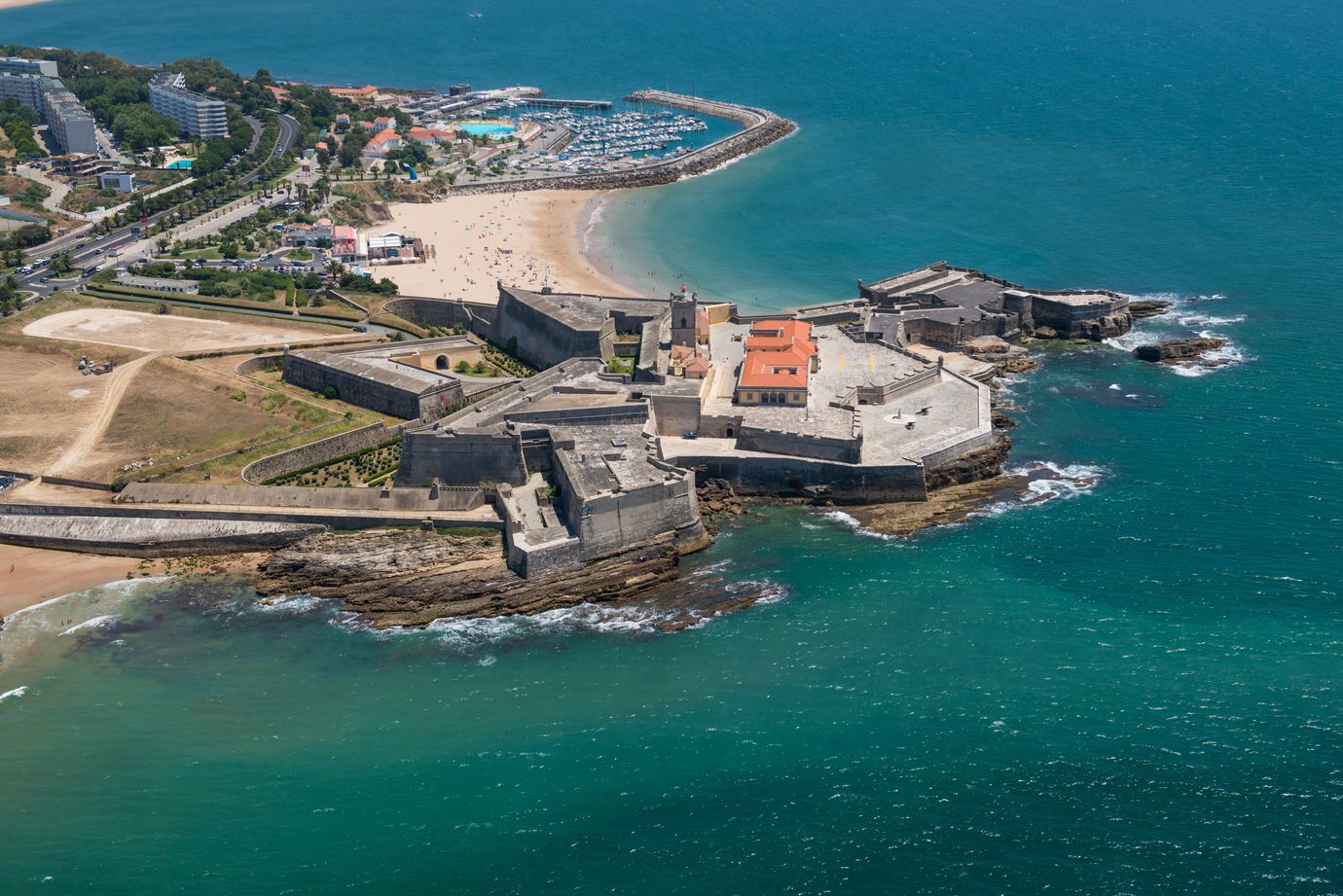
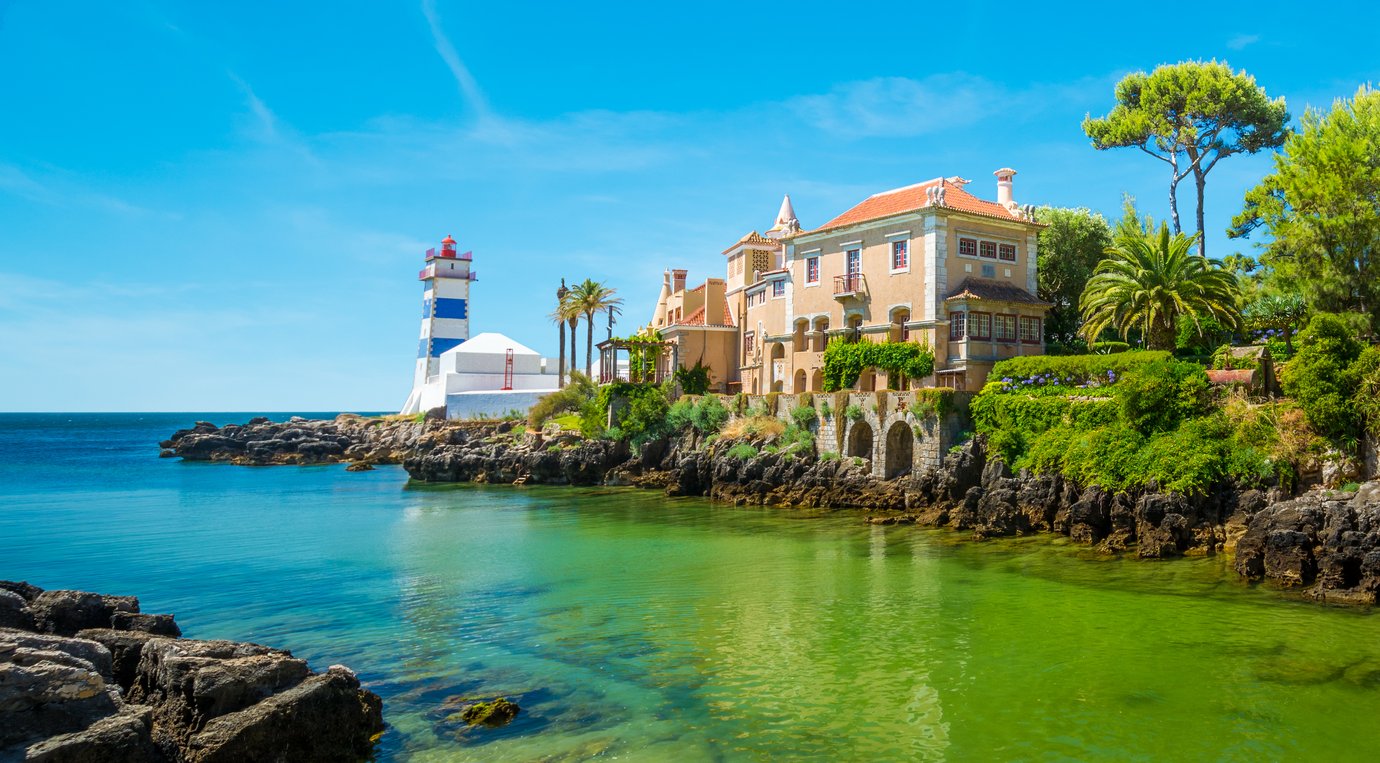
The Farol de Santa Marta lighthouse sits right beside the citadel, still active and paired with a small museum dedicated to the history of Portuguese lighthouses, a quiet stop most visitors walk straight past on the way to the marina.
Marina de Cascais, where sailing royalty still drops anchor
Right beside the citadel, Marina de Cascais holds around 650 vessels and includes a helipad among its facilities, built to accommodate everything from weekend sailboats to megayachts. Cascais has been a favorite stop for sailing-enthusiast royalty for decades, having previously welcomed figures such as King Juan Carlos I of Spain, King Constantine II of Greece and King Harald V of Norway, all keen sailors in their own right.
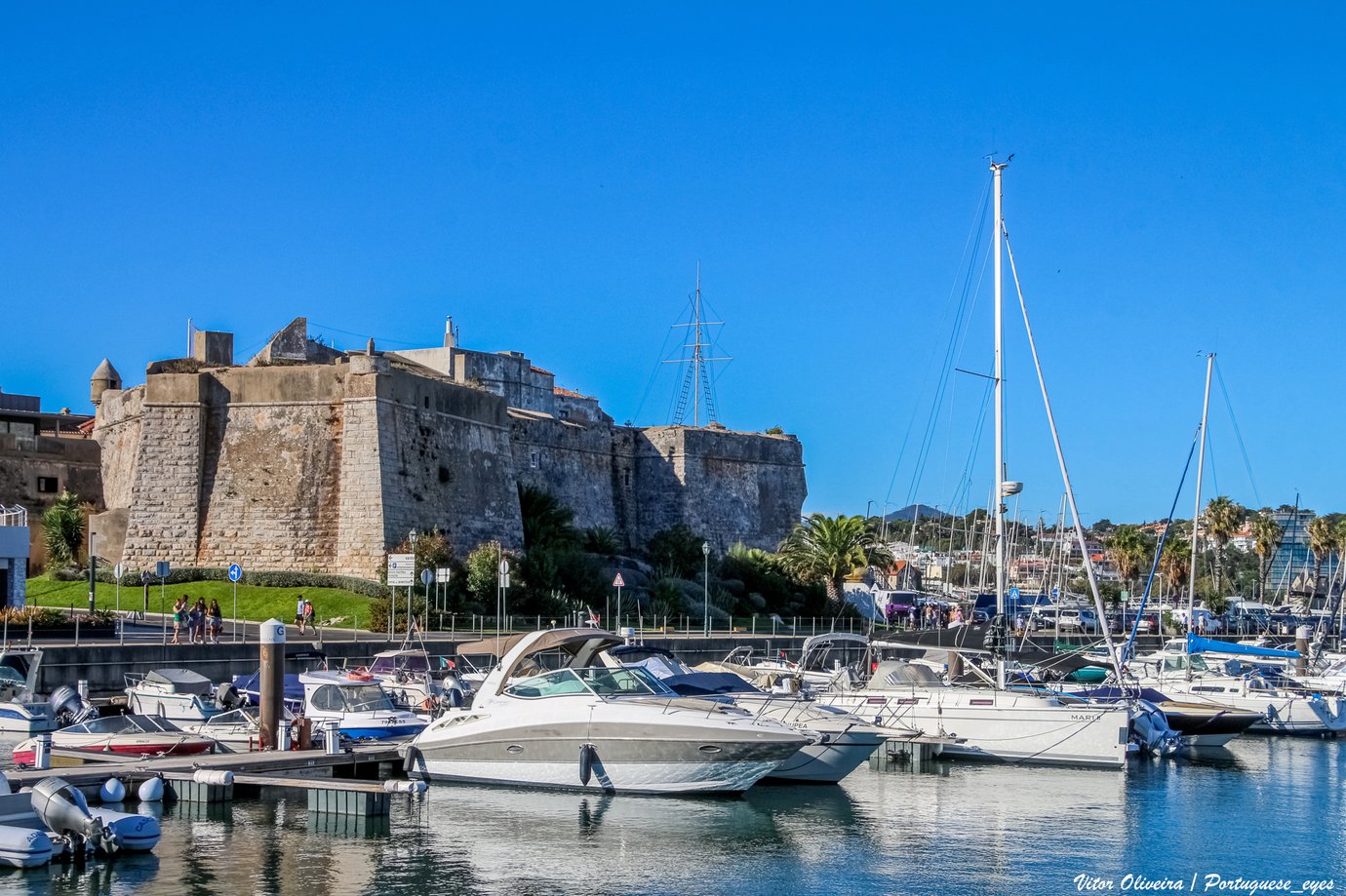
The marina’s biggest annual fixture is the Mirpuri Foundation Sailing Trophy, launched in 2020 with the Clube Naval de Cascais and recognized as an official UNESCO Ocean Decade event. Held on the first weekend of July, it now draws well over a hundred boats and sailors from close to twenty countries, with every entry fee going toward marine conservation. Details on this year’s edition are on Amiroad’s Mirpuri Sailing Trophy event page.
Rua Frederico Arouca and the everyday side of Cascais
Away from the landmarks, Cascais still runs on a genuinely local commercial center. Rua Frederico Arouca, the town’s main pedestrian street, mixes small Portuguese jewelry and ceramics workshops with international boutiques, cafés and restaurants spilling onto the wave-pattern pavement. The Mercado da Vila, the town’s produce market, sets up every Wednesday and Saturday with fresh fish, fruit and local cheeses, a good reminder that Cascais is a working town first and a resort second.
Hipódromo Manuel Possolo and elite show jumping
Cascais also has a serious equestrian pedigree. The Hipódromo Municipal Manuel Possolo hosts a CSI 5-star leg of the Longines Global Champions Tour, the top tier of international show jumping, bringing riders and horses ranked among the sport’s best to compete for a prize purse in the hundreds of thousands of euros. It is a niche event by mainstream standards, but for anyone following equestrian sport, or simply looking for a polished afternoon outdoors, it is one of the more overlooked reasons to time a visit to Cascais around the competition calendar.
Boca do Inferno, the coastline’s dramatic finale
A short drive west of Cascais, the Atlantic has spent thousands of years carving a chasm into the Cretaceous-era limestone cliffs known as Boca do Inferno, or Mouth of Hell. On rougher days, waves surge into the opening and burst upward through gaps in the rock, which is exactly the spectacle that gave the formation its name.
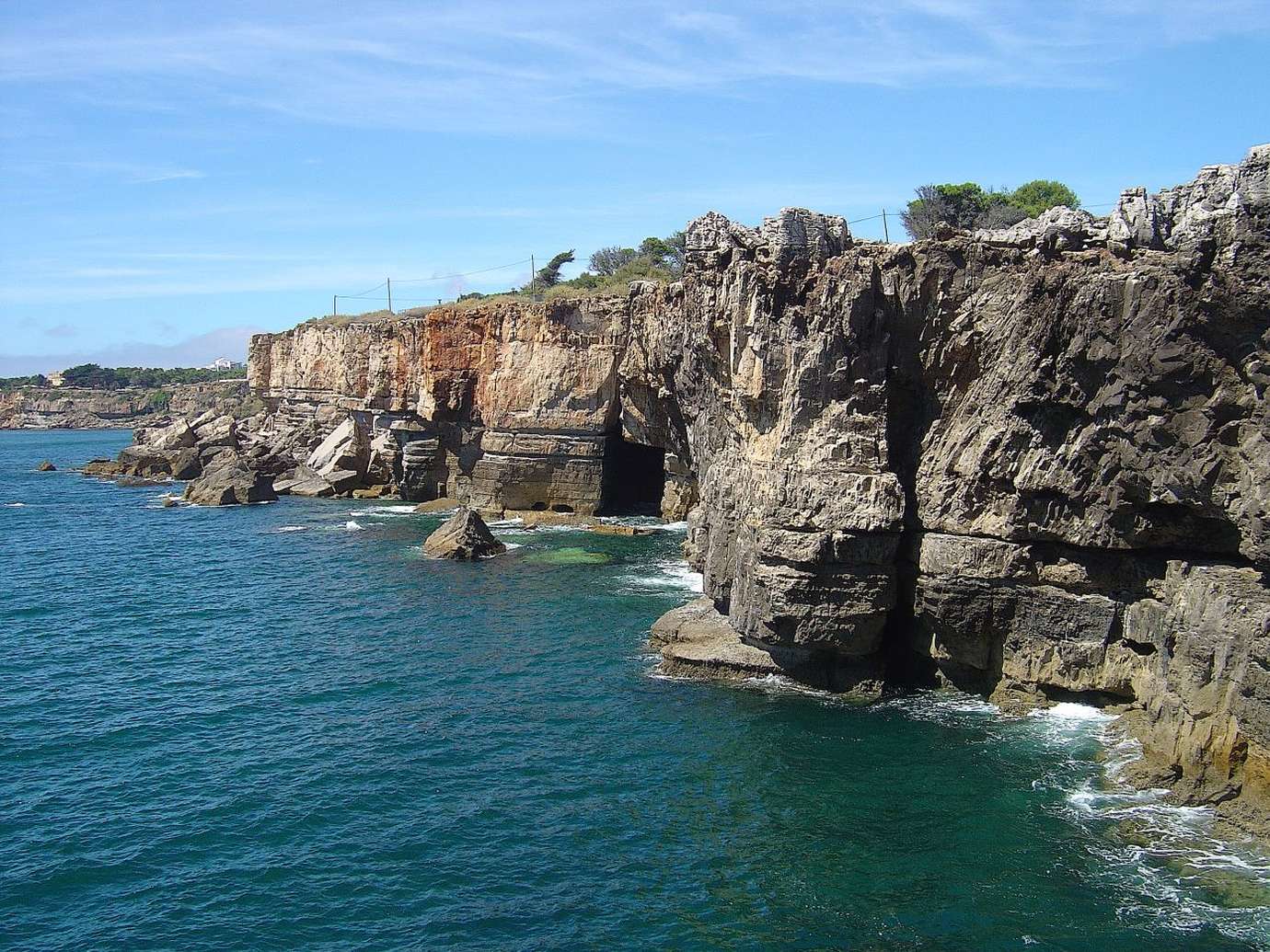
A viewing platform sits right at the edge, and the walk there along the clifftop path is as much a reason to visit as the chasm itself, with open Atlantic views the whole way.
The beaches, from Estoril’s promenade to Guincho’s waves
The coast between Estoril and Cascais changes character completely depending on where you stop. Praia do Tamariz, right along the Estoril promenade, is calm, sheltered and the easiest beach in the area to reach on foot from a hotel. Cascais itself has a run of small, similarly gentle beaches in the town center, Praia da Ribeira and Praia da Rainha among them, both a short stroll from the marina.
Praia do Guincho is a different beach entirely. Around five kilometers past Cascais, fully exposed to the open Atlantic, it has strong, reliable winds and serious swell that have made it a regular stop on the world surfing, windsurfing and kitesurfing championship circuits. It is a striking place to watch even without getting in the water, backed by dunes rather than buildings.
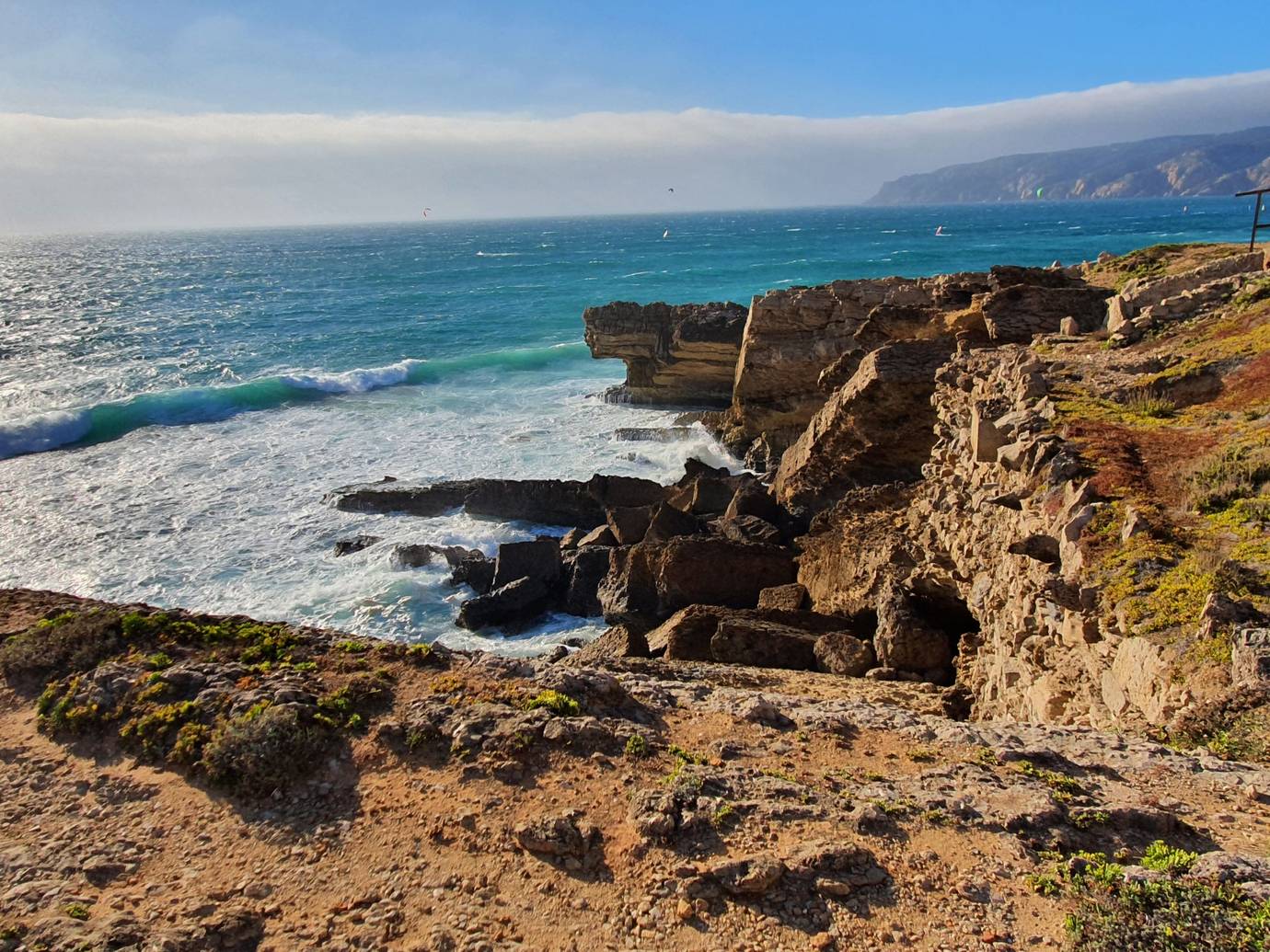
The coast road to Sintra, and the village of Malveira da Serra
Past Guincho, the coastal road climbs and curves through the Sintra-Cascais Natural Park on its way toward Sintra, with the Atlantic dropping away on one side and the forested slopes of the Serra de Sintra rising on the other. It is one of the more dramatic short drives in the region, and one that most Cascais-only visitors never see.
Roughly midway along it sits Malveira da Serra, a small village where local building restrictions have kept development to a minimum, preserving a rural character that is unusual this close to Lisbon. It is known locally for its bread, baked from wheat grown in the surrounding fields, and it makes a natural, quiet pause between the crowds at Guincho and the crowds at Sintra.
Cabo da Roca, the edge of continental Europe
A further twenty minutes or so along that same road, past Malveira da Serra, brings you to Cabo da Roca, the westernmost point of mainland Europe. A lighthouse and a stone marker inscribed with a line from the Portuguese poet Luís de Camões sit at the top of a sheer cliff dropping straight into the Atlantic. It pairs naturally with a Cascais and Estoril day rather than requiring a separate trip, and Amiroad’s Cabo da Roca tours cover exactly that combination.
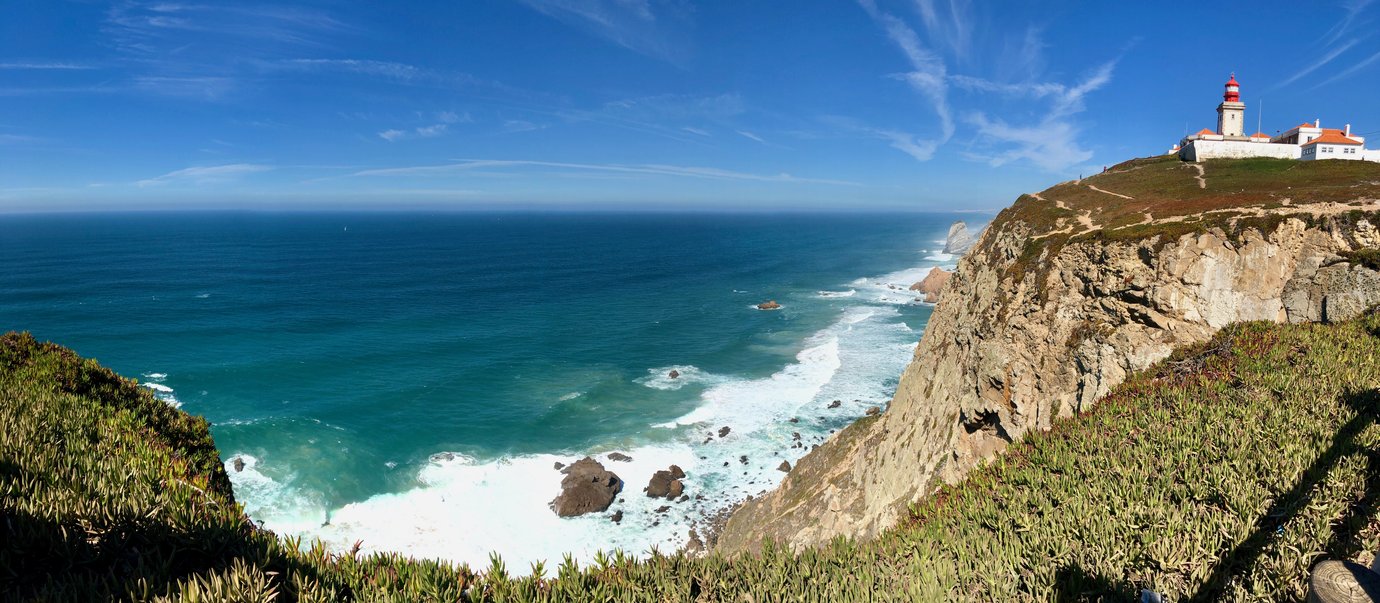
Cascais Aerodrome, a quieter way to arrive
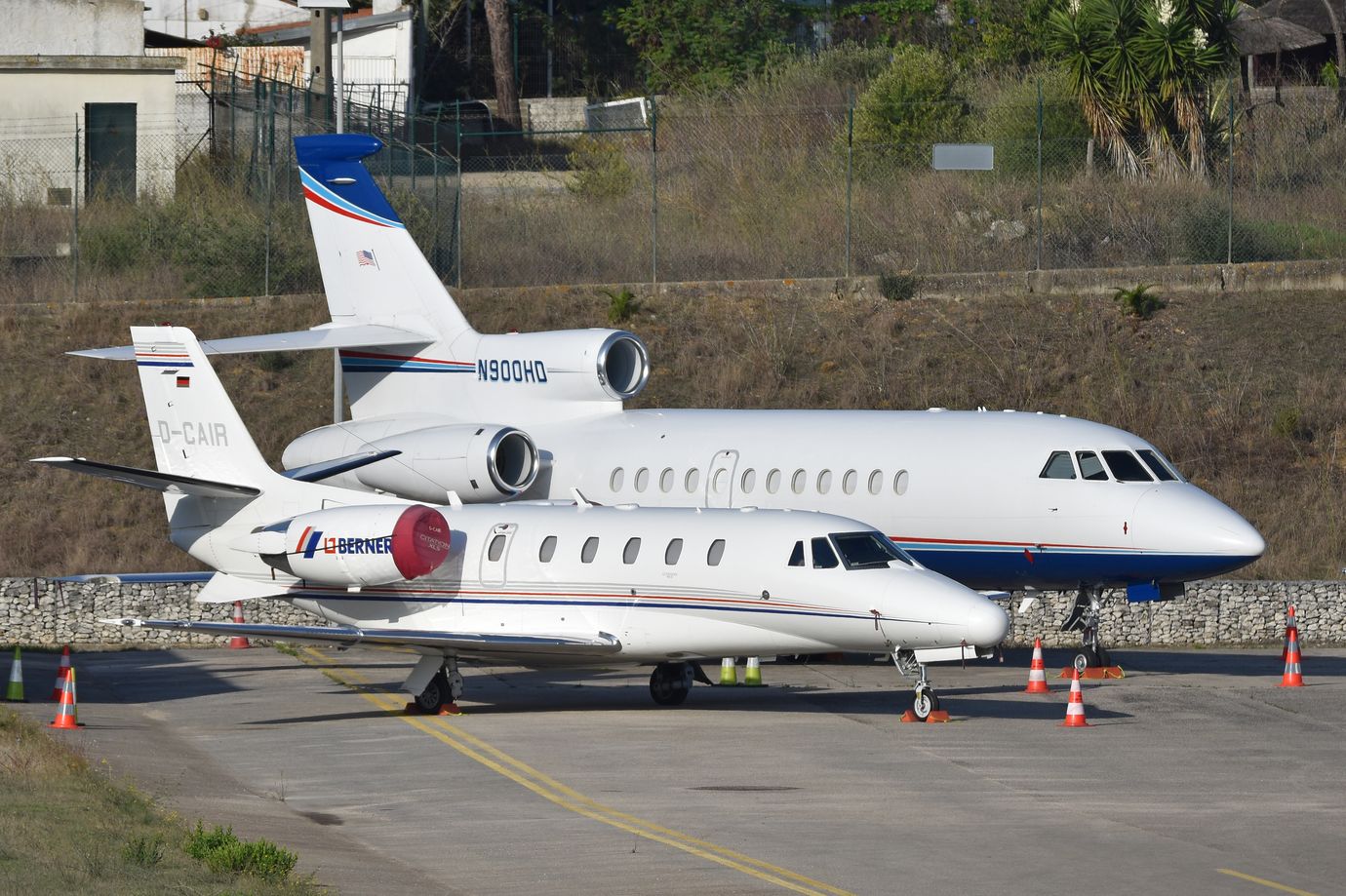
For travelers arriving by private jet, Cascais has its own advantage: Cascais Municipal Aerodrome (LPCS) sits directly on this stretch of coast, about 20 kilometers and 25 minutes from central Lisbon. It handles general aviation and business jets, with dedicated FBO facilities offering private lounges, swift customs clearance and hangar space, and it typically sees lighter traffic than Humberto Delgado Airport in Lisbon. For a segment of visitors this coastline is built for, arriving directly into Cascais rather than through the capital can shave real time off the first leg of a trip.
Choosing the right Amiroad vehicle for a Cascais and Estoril day
| Group Size | Recommended Vehicle | Best For |
|---|---|---|
| 1–3 passengers | Mercedes E Class / S Class | A relaxed coastal drive with a stop at Casino Estoril |
| 4–6 passengers | Mercedes V-Class | Families combining Cascais with Sintra in one day |
| 8–15 passengers | Mercedes Sprinter (Van) | Small groups touring the full Lisbon coast |
A couple after a quiet coastal drive fits comfortably in a sedan, while a group splitting the day between Cascais, Estoril and Sintra gets more room to spread out in the V-Class.
Amiroad’s Services
Amiroad Luxury Transports builds each Portuguese Riviera itinerary around the traveler, not a fixed script:
- Cascais and Estoril tours covering the coastline’s forts, casino and viewpoints in one custom day, extendable to Cabo da Roca and Sintra
- Event-day transport for the Millennium Estoril Open, the Mirpuri Foundation Sailing Trophy, race weekends at the Autódromo do Estoril, CSI show jumping at the Hipódromo Manuel Possolo, and tee times at Oitavos Dunes or Estoril Golf Club
- Coordinated stops between Estoril, the Cidadela de Cascais, Guincho and Boca do Inferno along the coastal road
- Multilingual chauffeurs familiar with the drive between Lisbon Airport and the coast, including private jet arrivals at Cascais Aerodrome
Every vehicle in Amiroad’s fleet comes equipped with air conditioning, GPS, Wi-Fi and complimentary water. For travelers arriving by private jet, our guide to seamless jet transfers between Lisbon and Cascais covers how to get from the tarmac to this coastline without any of the usual friction.
Frequently asked questions
How far is Cascais from Lisbon?
Cascais is about 30 minutes west of central Lisbon by car, making it an easy half-day or full-day trip.
Is the Casino Royale story about Casino Estoril true?
Ian Fleming worked in British naval intelligence during the Second World War and, by his own account, watched a real high-stakes baccarat game at Casino Estoril involving double agent Dušan Popov, an episode widely credited as the inspiration for the card game in his first Bond novel, Casino Royale.
Which exiled royals lived in Cascais and Estoril?
King Umberto II of Italy, King Carol II of Romania, Juan de Borbón (Count of Barcelona) and Miklós Horthy of Hungary all spent time in exile along this coast, drawn by Portugal’s neutrality during and after the Second World War.
What is the Cidadela de Cascais today?
The 16th-century fortress now houses a Pousada luxury hotel and a small arts district with shops and galleries, alongside the still-active Santa Marta lighthouse.
Why is it called Boca do Inferno?
The name means Mouth of Hell, describing how the Atlantic surges into the rock chasm and bursts upward through gaps in the stone, especially dramatic on rougher days.
Is Praia do Guincho suitable for swimming, or only watersports?
Guincho is fully exposed to the Atlantic, with strong currents and wind that make it better suited to experienced surfers, windsurfers and kitesurfers than casual swimming. For a calmer swim, Praia do Tamariz in Estoril or the central Cascais beaches are gentler options.
What is the Mirpuri Foundation Sailing Trophy?
An annual regatta held from Marina de Cascais on the first weekend of July, organized with the Clube Naval de Cascais since 2020 and recognized as an official UNESCO Ocean Decade event, with all entry fees supporting marine conservation.
Can private jets land close to Cascais?
Yes. Cascais Municipal Aerodrome (LPCS) sits directly on this coast, about 25 minutes from central Lisbon, and handles general aviation and business jet traffic with dedicated FBO facilities.
How far is Cabo da Roca from Cascais?
Cabo da Roca, the westernmost point of mainland Europe, is roughly 20 to 25 minutes past Praia do Guincho along the coastal road through the Sintra-Cascais Natural Park, making it an easy addition to a Cascais and Estoril day.
Are there good golf courses near Cascais and Estoril?
Yes. Oitavos Dunes, an Arthur Hills-designed links course at Quinta da Marinha, regularly ranks among the best in continental Europe, and Estoril Golf Club, founded in 1929, is one of Portugal’s oldest clubs. Both have hosted the Portuguese Open.

For tailor-made tours or other programs, please get in touch with us through the telephone below or by filling out the form.