
Art, antiques and design shopping in Portugal: a collector’s guide
Lisbon has an antiques street with 27 dealers on it. Porto has a gallery district that stages openings six times a year. An international contemporary art fair fills a converted 18th-century rope factory every spring. A tile workshop in Chiado has hand-painted azulejos since 1741. A ceramics factory in Caldas da Rainha turned cabbage leaves into a national design icon. A small Alentejo town holds one of the country’s largest traditional craft fairs every August. Portugal’s collecting scene rarely gets more than a passing mention in general travel guides. It is deep enough to fill a trip on its own.
This guide covers where that scene actually happens. Concept stores in restored Lisbon palaces, and the shop that has kept Portugal’s traditional brands alive since 2007. The auction house that has handled Portuguese antiques since 1996. Hand-painted tile workshops, ceramic factories and the museums built around both. The flea markets and traditional fairs of Lisbon, Porto and the Alentejo. A handful of workshops beyond the cities that still produce the objects collectors chase. For a look at Portugal’s living ateliers, the artisans still hand-weaving tapestries and forging filigree jewelry, our guide to luxury craftsmanship in Portugal covers that side of the story. This one is about where to look, bid and browse.
Why a private chauffeur changes how you collect
Serious collecting rarely follows a fixed itinerary. A morning at an antiques dealer can turn into an afternoon at an auction house viewing. Then a detour to a gallery that just opened a show worth seeing. A private chauffeur makes that kind of improvised routing possible. It also handles the part that public transport and rental cars cannot. Getting a framed painting, a crated sculpture or a set of dining chairs back to the hotel or the airport, without incident. For travelers more interested in fashion and designer retail, Amiroad also runs a dedicated private shopping tour through Avenida da Liberdade’s luxury boutiques and the Freeport outlet. This guide takes the other route: the one through galleries, antique dealers and workshops.
Lisbon: Príncipe Real and the Embaixada concept galleries
The Palacete Ribeiro da Cunha is hard to miss on Praça do Príncipe Real. It was built in 1877 for the businessman José Ribeiro da Cunha. Its neo-Moorish arches, horseshoe windows and painted domes look more like a small Andalusian palace than a Lisbon townhouse. Since 2013 it has housed Embaixada, a concept store built around a courtyard of small boutiques. Portuguese fashion, jewelry and homeware fill the ground floor, with rotating art exhibitions upstairs.
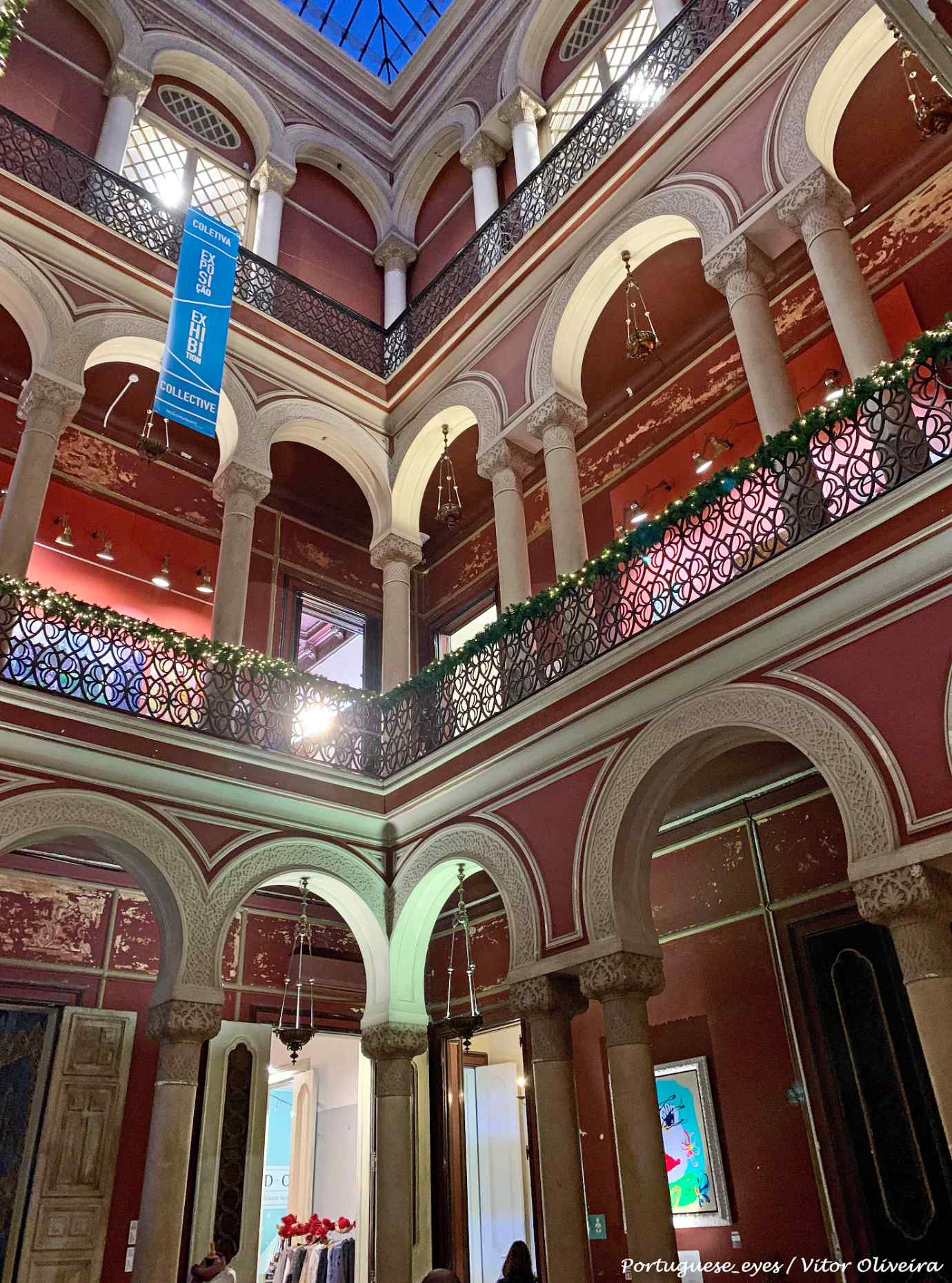
Photo: Vitor Oliveira, via Wikimedia Commons (CC BY-SA 2.0)
The surrounding streets of Príncipe Real hold a growing cluster of independent design shops and small galleries. It is an easy area to wander for an hour, or for an entire afternoon. Slow browsing suits it better than a checklist of addresses, which is exactly the kind of stop that benefits from a driver waiting outside rather than a parking meter running.
A Vida Portuguesa and Pelcor: Portugal’s traditional brands under one roof
Journalist Catarina Portas opened the first A Vida Portuguesa store in Chiado in 2007. Her idea was simple: rescue the household products of a Portuguese grandmother’s kitchen and bathroom cabinet before they disappeared for good. The shelves hold Claus Porto and Ach. Brito soaps in their original wrappers, Viarco pencils, and canned sardines with collectible artwork. A full wall is given over to Bordallo Pinheiro’s ceramic swallows, the andorinhas patented in 1896 and still one of the most recognisable objects in Portuguese design. A second Lisbon location sits inside Mercado da Ribeira, and a large flagship near Clérigos Tower serves Porto.
Pelcor, on Rua das Pedras Negras near the Sé Cathedral, offers a more contemporary take on tradition. It turns cork into bags, wallets and accessories, with a design sensibility sharp enough to have been carried in MoMA’s own design store. It is a useful stop for collectors whose interest runs toward Portuguese material culture rather than painting or antiques.
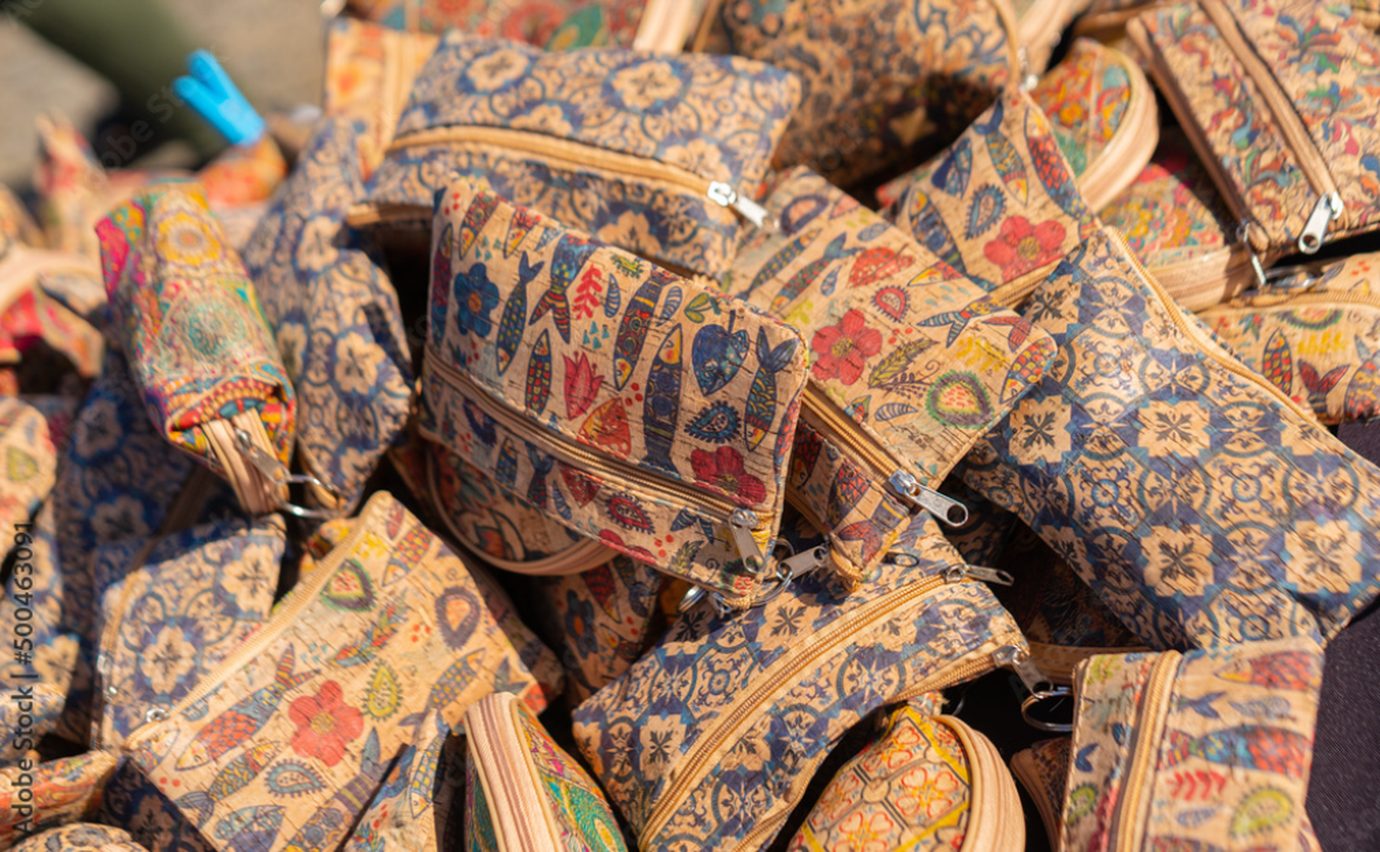
Smaller cork pieces, pouches, wallets and coasters printed with tiles, florals and other patterns, make an easier souvenir than a full bag, and turn up at shops and stalls across Lisbon at a fraction of Pelcor’s prices. Our guide to Portuguese cork covers the oak groves and harvest behind that material in full.
Rua de São Bento: Lisbon’s antiques row, and the auction house behind the scenes
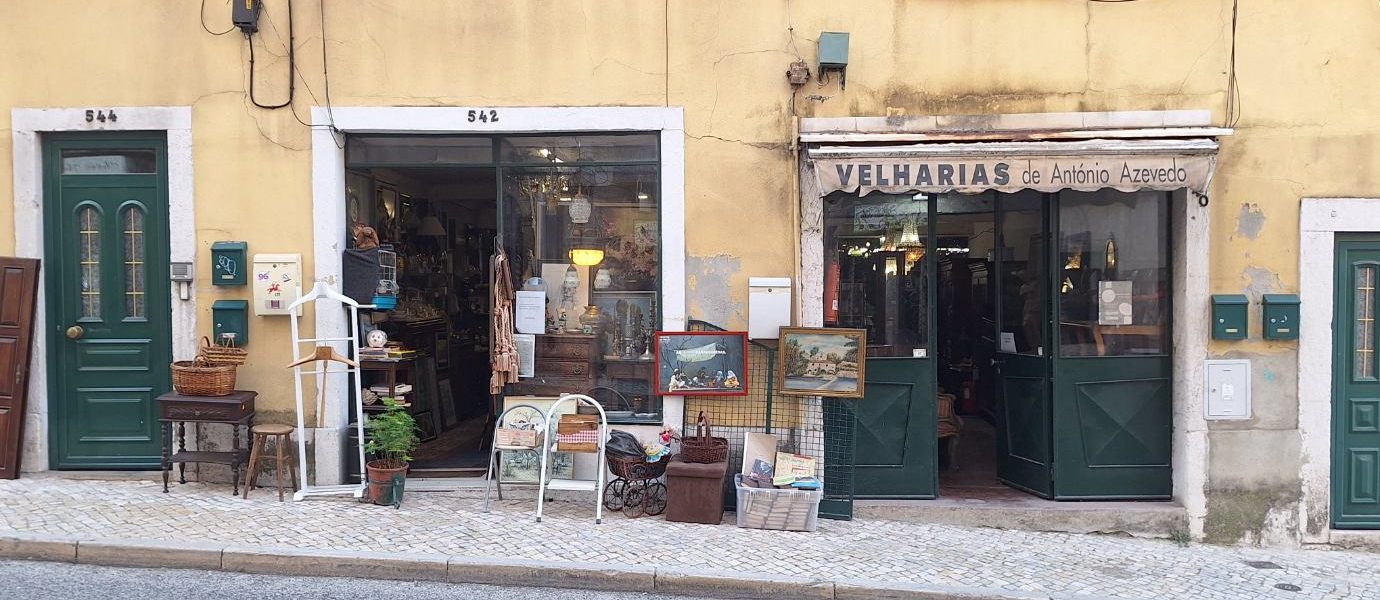
Rua de São Bento runs between Rato and the Assembleia da República. Around 27 antique shops line this single street. Dealers here trade in furniture, religious painting, silverware and Indo-Portuguese pieces from the colonial era. Velharias de António Azevedo and São Roque Antiguidades e Galeria de Arte, at number 199, are fair examples of the mix. Chairs, gilt-framed paintings and other pieces often spill onto the pavement outside, alongside 18th and 19th-century furniture, contemporary art, and naturalist and ethnographic objects inside.
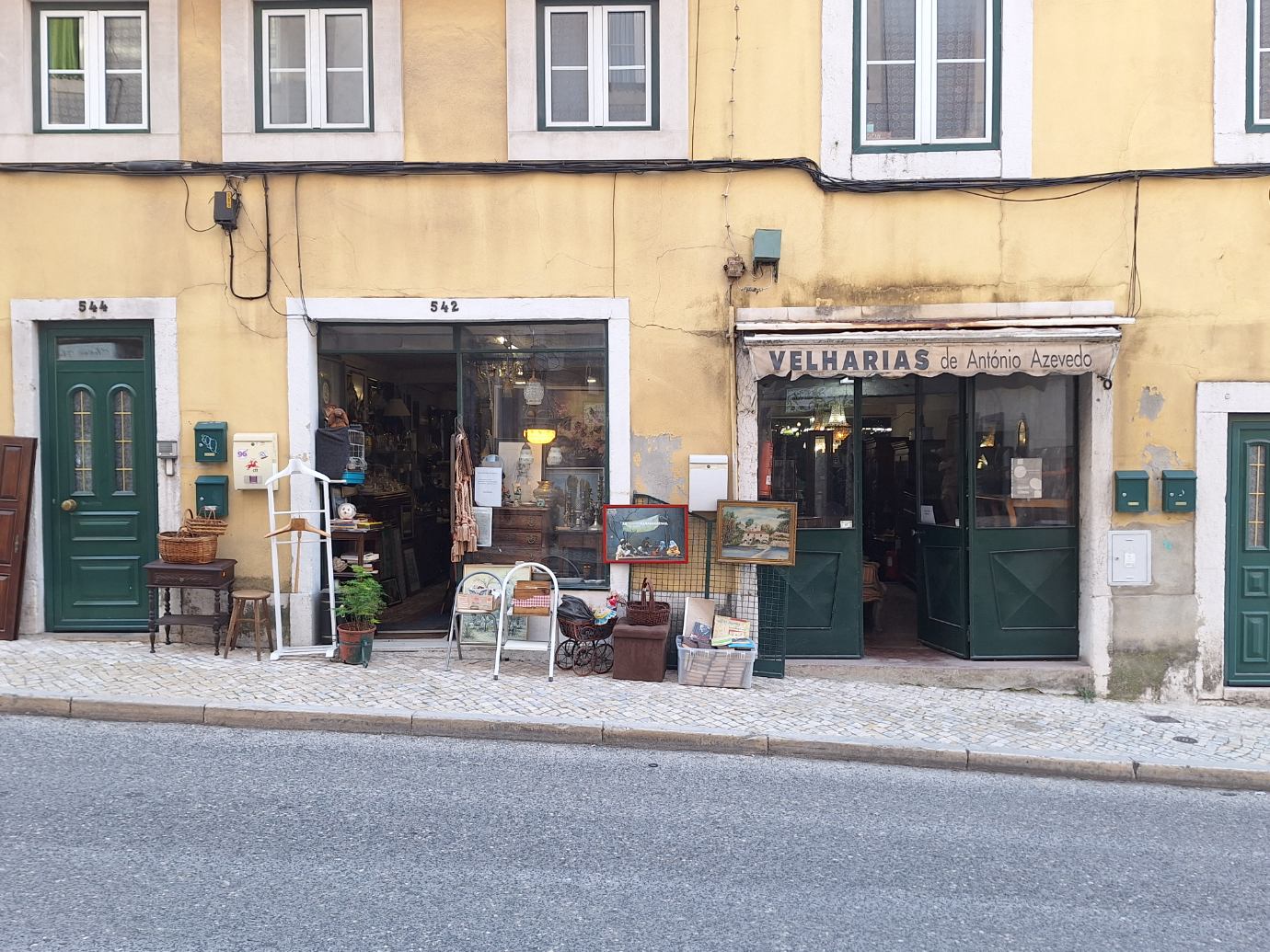
Photo: JnpoJuwan, via Wikimedia Commons (CC0)
For anyone buying rather than browsing, Cabral Moncada Leilões is worth knowing about. Founded in 1996 and based on Rua Miguel Lupi, it is Lisbon’s leading auction house for antiques and fine art. It runs around ten sales a year between October and June: seven generalist auctions of furniture, paintings, silverware and porcelain, and three dedicated to modern and contemporary art. Auction houses hold public viewing days before each sale, and that is where a chauffeur earns its keep twice over. First getting to a viewing that fits an odd time slot, then handling whatever gets won on the day.
Azulejos: Sant’Anna’s workshop and the National Tile Museum
Fábrica Sant’Anna has hand-painted tiles and ceramics on Rua do Alecrim, in Chiado, since 1741. Every piece still passes through the same steps: clay preparation, hand-forming, hand-painting, then firing. No two tiles come out identical. The showroom sells finished pieces, and the workshop takes custom orders and small tile-painting sessions for visitors who book ahead by email.
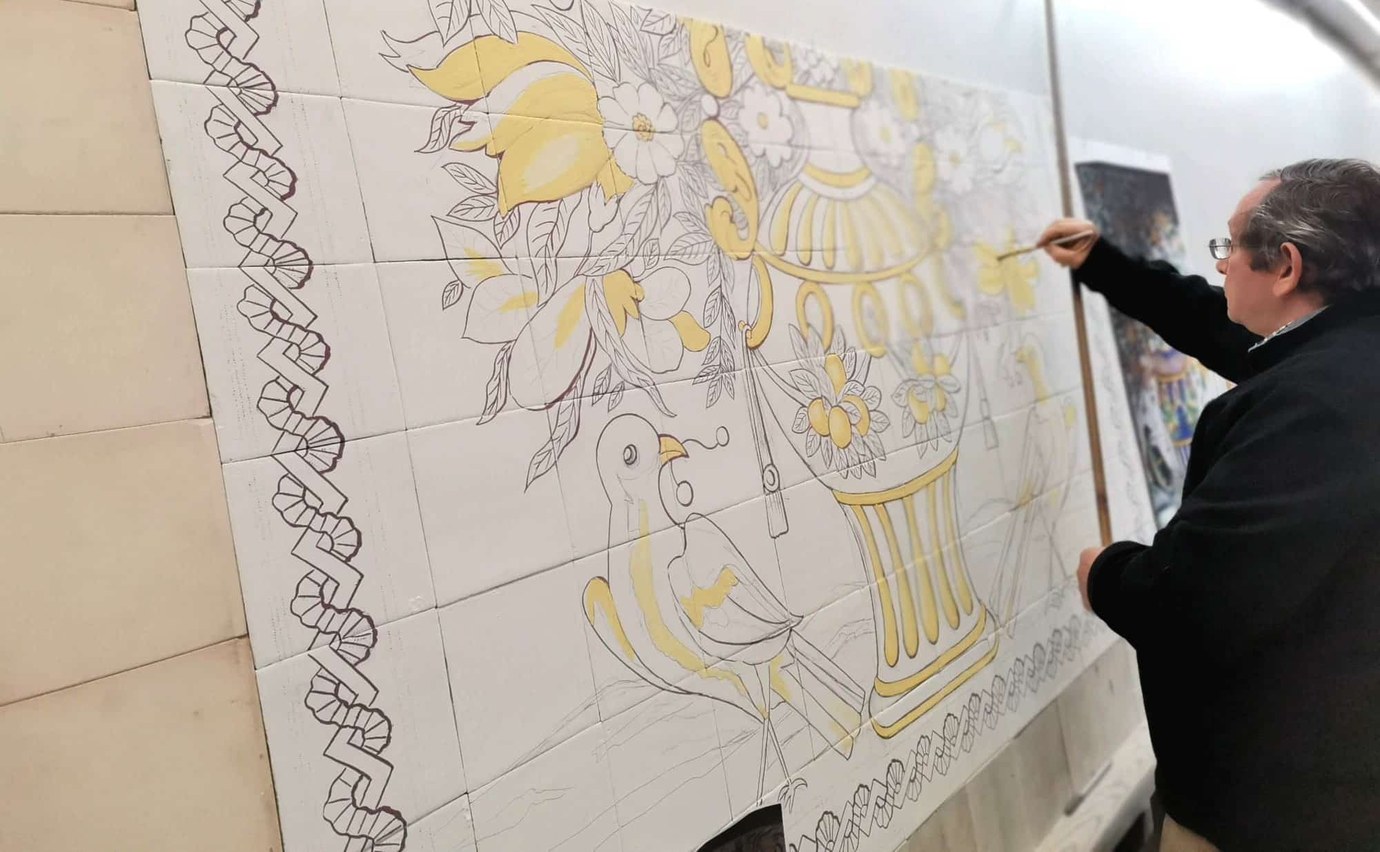
For the fuller story of the craft, the Museu Nacional do Azulejo is worth the detour into Xabregas, on Lisbon’s eastern edge. It occupies the Convento da Madre de Deus, founded in 1509 by Queen D. Leonor, who is buried at the chapel entrance. The 1755 earthquake damaged the original building, and the church that survived the rebuild is a gilded, tile-covered explosion of Portuguese Baroque, one of the most overlooked interiors in the city. The museum itself was carved out of the convent in 1965 and became fully independent in 1980.
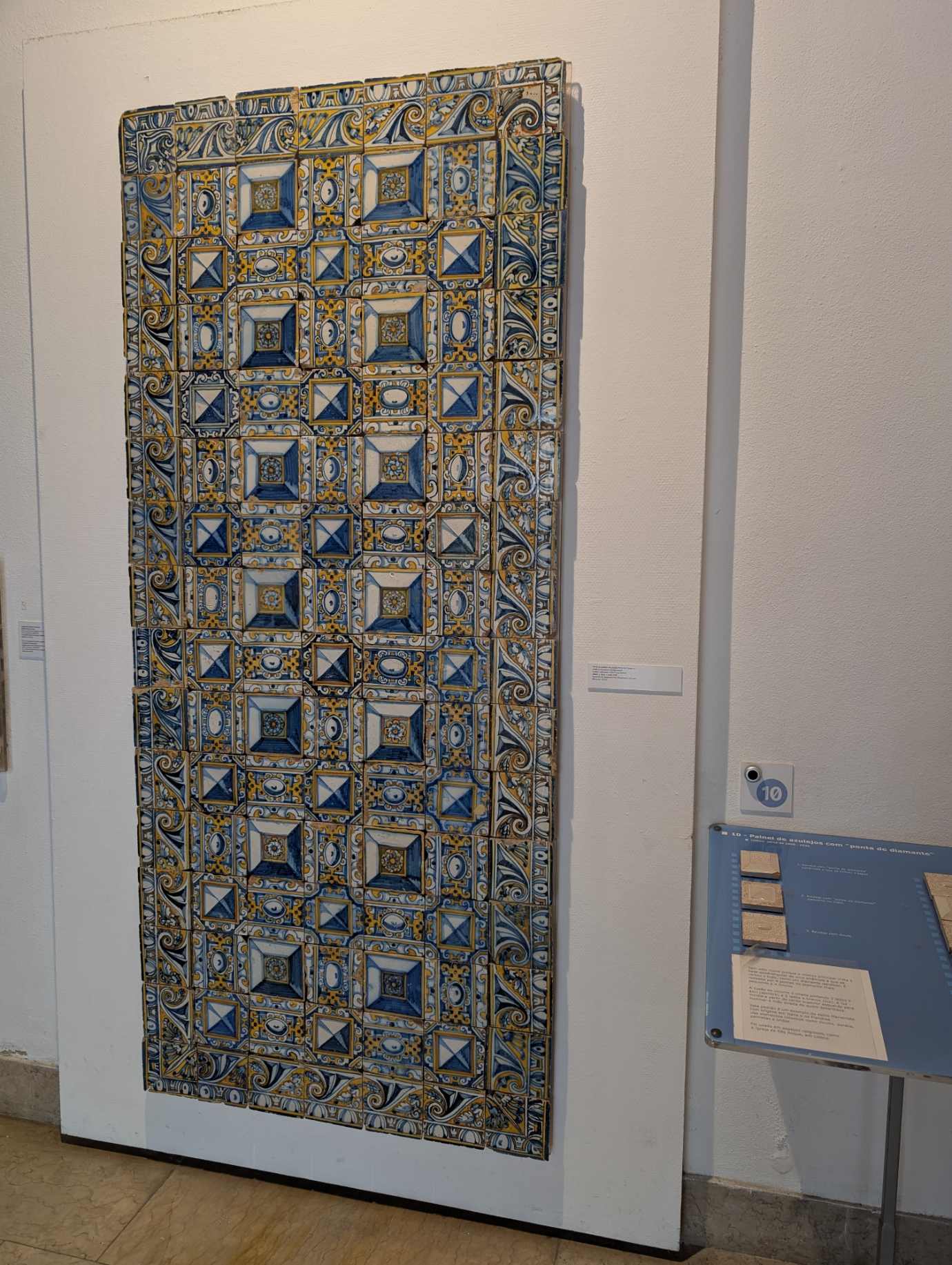
Photo: Philip Mallis, via Wikimedia Commons (CC BY-SA 4.0)
Five centuries of tile panels line the galleries, from 16th-century Sevillian imports to the diamond-tip patterns of Portugal’s own early workshops, all the way to 20th-century Art Nouveau. Few single stops do more to explain why this small country still treats a glazed ceramic tile as a serious art form.
LX Factory and MAAT: industrial Lisbon turned design quarter
LX Factory began in 1846 as a textile mill in Alcântara, on Lisbon’s western riverfront. It sat mostly idle for decades. A 2008 redevelopment turned the old halls into roughly a hundred independent studios, shops and galleries, alongside restaurants and bars. One of them is Ler Devagar, a well-known bookshop we cover in our guide to Portugal’s most remarkable bookshops. Graphic design studios, jewelry workshops and small furniture makers share the same corridors. Most are open to browse without an appointment.
MAAT, the Museum of Art, Architecture and Technology, sits a five-minute walk west along the river. Its curved, tiled roof has become one of the more photographed pieces of contemporary architecture in Lisbon. Its temporary exhibitions pair well with an afternoon that starts at LX Factory. For more of this side of the city, our guide to hidden gems in Lisbon covers other spots in the same spirit.
Feira da Ladra: six centuries of bargaining
Feira da Ladra has traded in secondhand goods and antiques since at least the 13th century. It moved several times before settling at Campo de Santa Clara, beneath the National Pantheon’s dome. The market runs every Tuesday and Saturday, from 9am to 6pm. Stalls swing from genuine finds, azulejo tiles, old coins, vinyl records, colonial-era objects, to things that are simply old rather than valuable. Half the appeal is not knowing which one you are looking at.
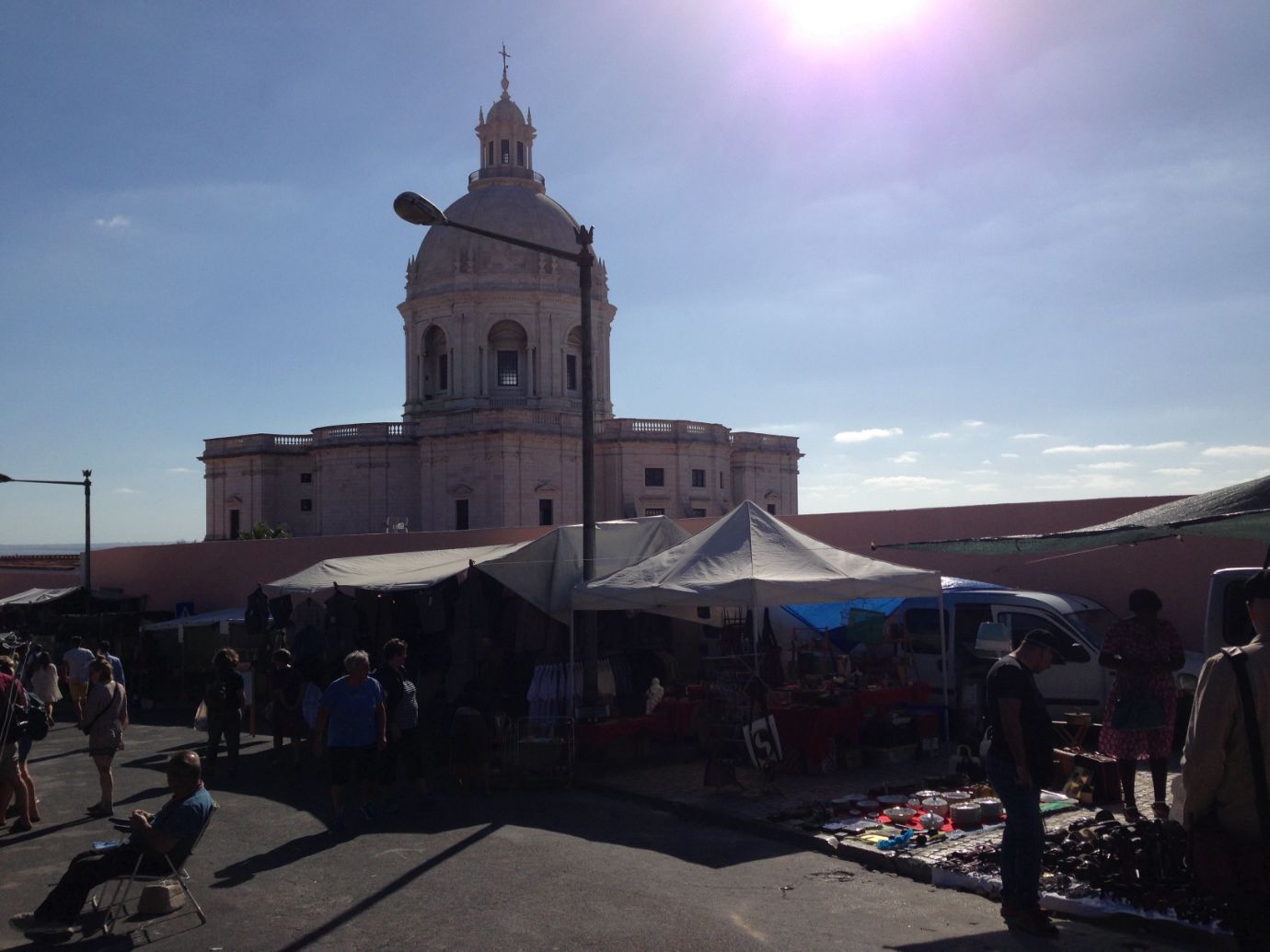
Photo: Kim Kash, via Wikimedia Commons (CC BY-SA 2.0)
Our guide to Portuguese markets and fairs goes into more depth on this market and the handicraft traditions behind it, so we will not repeat it all here. One practical note is worth adding: arrive early. Both the good pieces and the shade tend to disappear by midday.
Where collectors sharpen their eye: the Gulbenkian and its modern wing
The Calouste Gulbenkian Museum is not a shopping stop, but it belongs on any collector’s route through Lisbon. The oil magnate Calouste Gulbenkian assembled the collection over a lifetime, and bequeathed it to the city on his death in 1955. The Founder’s Collection ranges from ancient Egyptian funerary art to Rembrandt portraits, Persian ceramics and an unmatched set of René Lalique jewelry. All of it sits inside a quiet, garden-set building from 1969.
Next door, the Centro de Arte Moderna reopened in 2024 after a renovation led by Pritzker-winning architect Kengo Kuma. It holds close to 12,000 works of Portuguese modern and contemporary art, the largest collection of its kind in the country. It also gives a useful sense of what local galleries are drawing on when they talk about Portuguese modernism.
ARCOlisboa: Portugal’s international contemporary art fair
Once a year, the Cordoaria Nacional in Belém fills with contemporary art from across Europe and beyond. It was built between 1771 and 1779 as a naval rope factory under the Marquês de Pombal. Its long industrial halls and filtered overhead light turn out to suit contemporary art unusually well. The building is the main venue for ARCOlisboa, Portugal’s leading international art fair, organised by IFEMA Madrid with the Lisbon City Council since 2017.
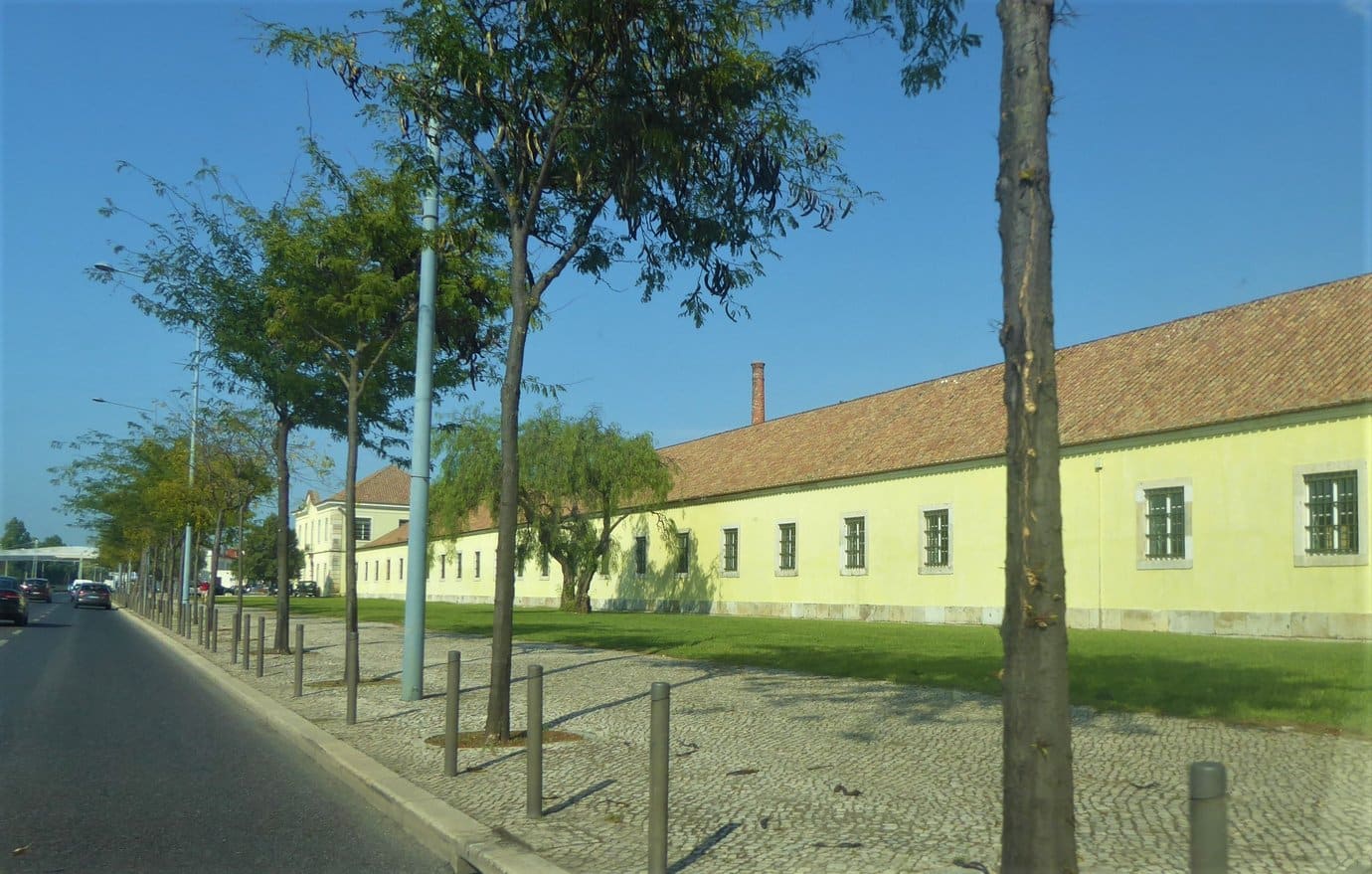
Photo: Senhormario, via Wikimedia Commons (CC BY-SA 4.0)
The fair runs in late May. It typically brings together somewhere around 80 galleries from close to 20 countries, split between an established General Programme and an Opening section for younger galleries and emerging artists. VIP preview days draw international collectors, curators and museum directors. The fair is a magnet for exactly the kind of high-profile visitor Amiroad’s fleet already serves at other events. If you are flying in specifically for ARCOlisboa, our event transport page covers airport-to-fair transfers, and combining the visit with other cultural stops in Lisbon.
Porto: Rua Miguel Bombarda’s gallery mile
Rua Miguel Bombarda is named after the physician and republican politician Miguel Bombarda. It runs about 650 metres through central Porto and has become the city’s answer to a gallery district. Galeria Fernando Santos opened here in 1993, the first gallery on the street. It has since grown into a 1,200 square metre space showing contemporary painting and sculpture. A short walk away, Presença Gallery keeps more limited hours: appointment-only on weekday mornings, open Tuesday to Saturday afternoons. It rewards checking ahead before a visit.
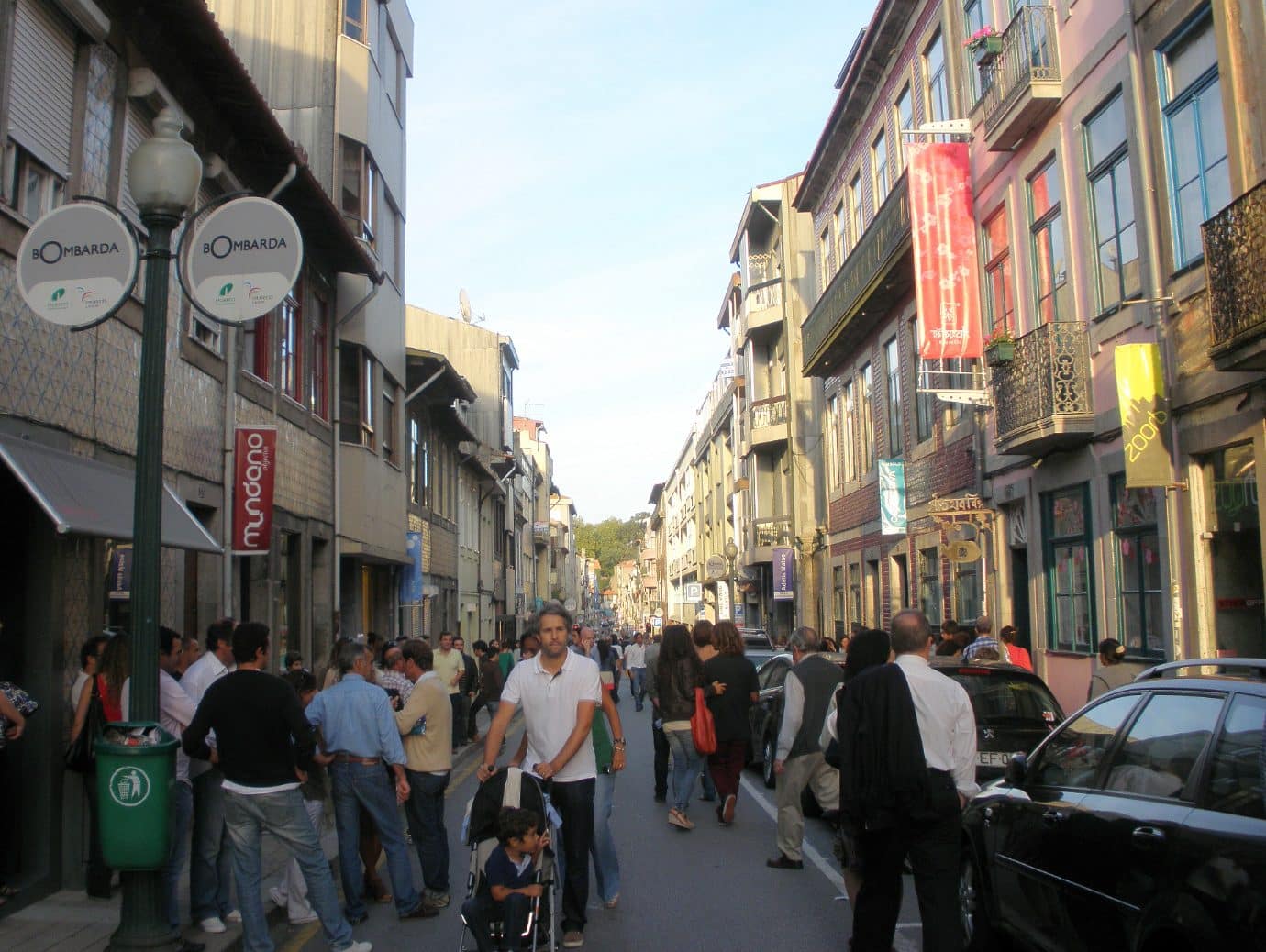
Photo: Manuel de Sousa, via Wikimedia Commons (CC BY-SA 3.0)
Several galleries stagger their openings on the same evenings, several times a year. An ordinary weeknight can turn into something closer to a street festival. The Centro Comercial Bombarda, a small shopping arcade partway down the street, adds secondhand clothing, vintage furniture and independent designers into the same short walk.
A ten-minute walk from Rua Miguel Bombarda, on Rua de Santa Catarina, the Capela das Almas gives Porto its own answer to the tile tradition covered earlier in Lisbon. Some 16,000 blue-and-white tiles wrap the entire chapel, designed in 1929 by Eduardo Leite and produced at Lisbon’s Viúva Lamego ceramics factory. The scenes depict the death of St. Francis and the life of St. Catherine, painted across a corner building sitting right in the middle of one of Porto’s busiest shopping streets.
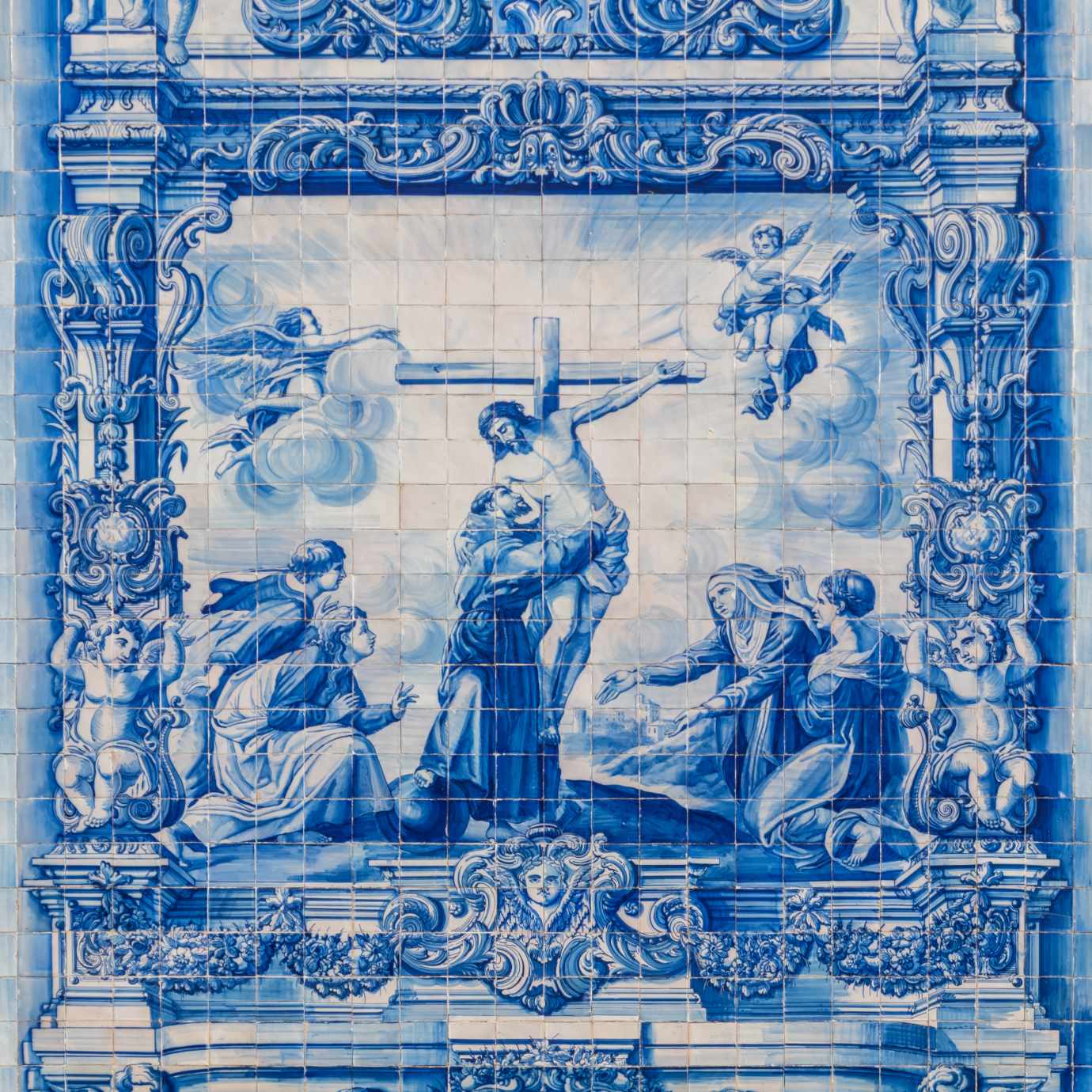
Photo: Adam Jones, via Wikimedia Commons (CC BY-SA 2.0)
Armazém and Feira da Vandoma: Porto’s other side of collecting
Armazém occupies a former Real Companhia Velha warehouse on Rua de Miragaia, directly across from the Alfândega on Porto’s riverfront. Roughly 1,500 square metres are split between antique and vintage dealers, an art space, a bar and a terrace. It opens daily from 11:30am to 8pm. On the third weekend of every month, the space hosts an “Old & Vintage” fair. It pulls in extra dealers and a livelier crowd than a normal weekday visit.
Porto also has its own flea market, Feira da Vandoma, running every Saturday morning from around 8am to 1pm on Avenida 25 de Abril. Students started it in the 1970s, selling used books and clothes. It now draws collectors after stamps, coins, postcards, ceramics and antique cutlery, alongside the usual secondhand clothing and furniture.
Serralves: where Porto’s collectors go for scale
The Serralves Foundation was established in 1989. Its museum, designed by Pritzker Prize-winning architect Álvaro Siza Vieira, opened a decade later in 1999. A new Siza-designed wing was added in 2024, extending the museum further into the surrounding park. That park covers 18 hectares of gardens and woodland, one of the largest green spaces in Porto. The museum’s rotating exhibitions of contemporary art are frequently paired with sculpture installed directly on the lawns.
Even for visitors who never step inside the galleries, the building itself is worth the detour. It is a masterclass in how contemporary Portuguese architecture handles light, geometry and green space at once.
Beyond the cities: buying marble at the source in the Alentejo
Estremoz, Borba and Vila Viçosa sit on what geologists call the Estremoz Anticline, and what everyone else calls the Alentejo’s marble triangle. People have quarried marble here since Roman times, and almost 500 quarry sites have been documented across the region. That scale of production supports something few collectors expect to find in rural Alentejo: stonemasons’ workshops that sell finished pieces directly to visitors.
Rota do Mármore, a Turismo de Portugal-licensed operator based in Vila Viçosa, runs guided tours that link the two halves of the story. A stop at the Marble Interpretive Centre covers the geology and history. From there, the tour moves on to a working quarry and a stonemason’s workshop, where blocks are cut and finished into bowls, sculptures and other decorative pieces. Visitors can buy directly from the workshops on the same visit, which turns a geology lesson into an actual shopping stop.
The clearest example of what the stone can become at full scale is Vila Viçosa’s Paço Ducal, seat of the House of Braganza. Begun in 1501, its 110-metre facade is faced almost entirely in cream-coloured local marble.
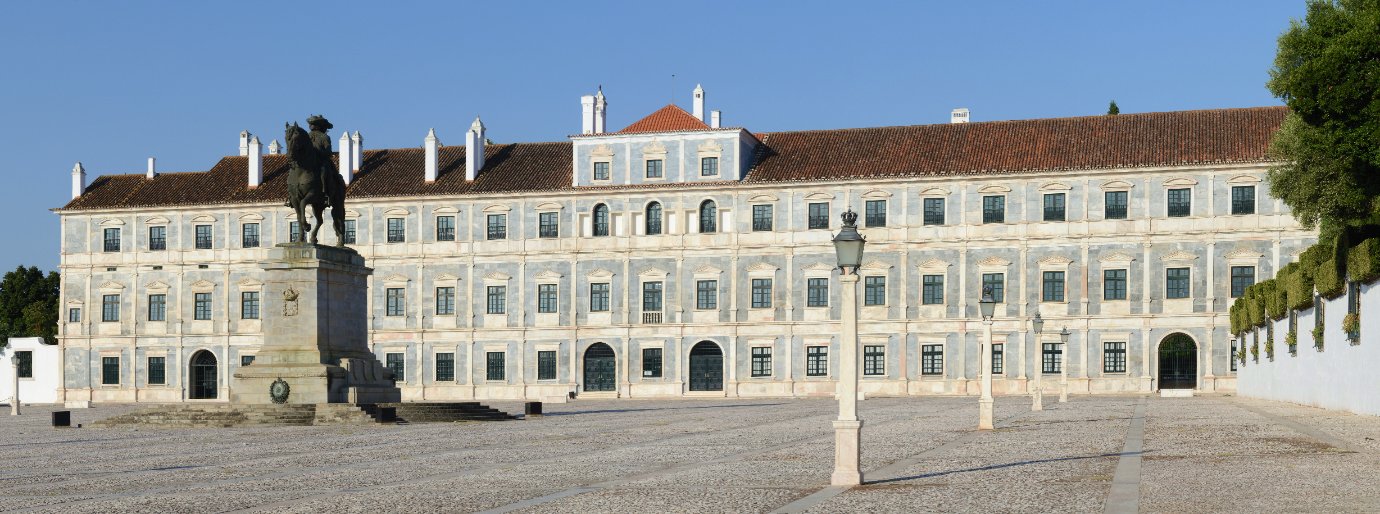
Photo: Alvesgaspar, via Wikimedia Commons (CC BY-SA 3.0)
Beyond the cities: Caldas da Rainha’s ceramic wit
Rafael Bordalo Pinheiro, better known today as a caricaturist and satirist, founded a ceramics factory in Caldas da Rainha in 1884. Its signature style took ordinary vegetables, cabbage leaves above all, and turned them into glazed tableware. The results are so realistic they are still occasionally mistaken for the real thing on a table. The factory closed briefly after Bordalo Pinheiro’s death in 1905, then reopened under his son, Manuel Gustavo Bordallo Pinheiro. The original factory building in Caldas da Rainha still holds a museum and factory shop today. Cabbages were only the start. Tureens shaped like broody hens, baskets piled with cod and onions, and frogs perched on lily pads all came out of the same workshop. Each piece was painted with the same naturalist eye, a style the brand still leans on for its tableware today.
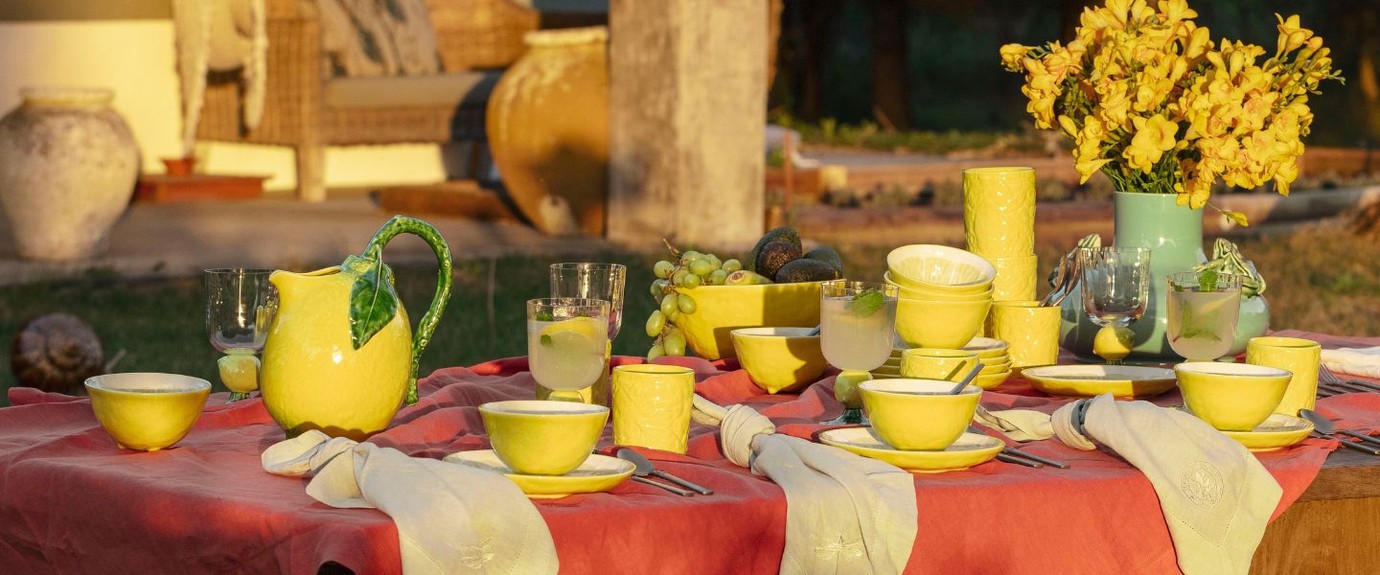
Photo: Bordallo Pinheiro
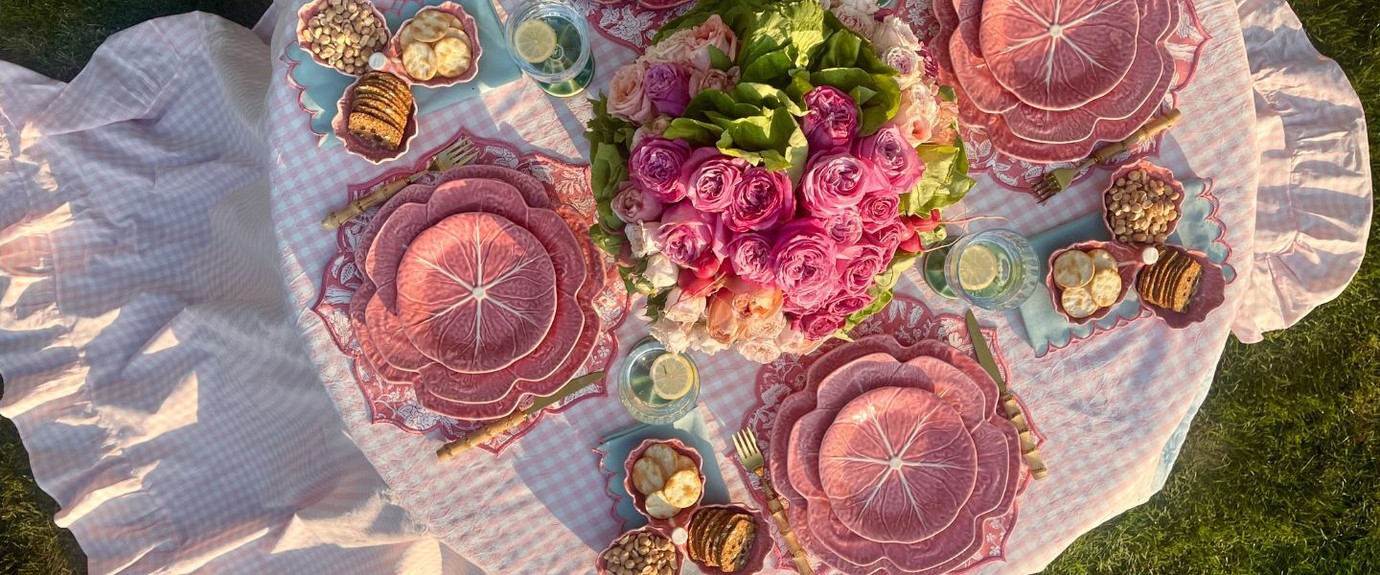
Photo: Bordallo Pinheiro
The style is naturalist rather than delicate, closer to a still life than a formal dinner service. Pieces from the same tradition now sit in Lisbon’s Museu Nacional de Arte Antiga, alongside centuries-older decorative art. It says something about how seriously Portugal takes its ceramics that a factory known for cabbage-shaped platters ended up in a national museum.
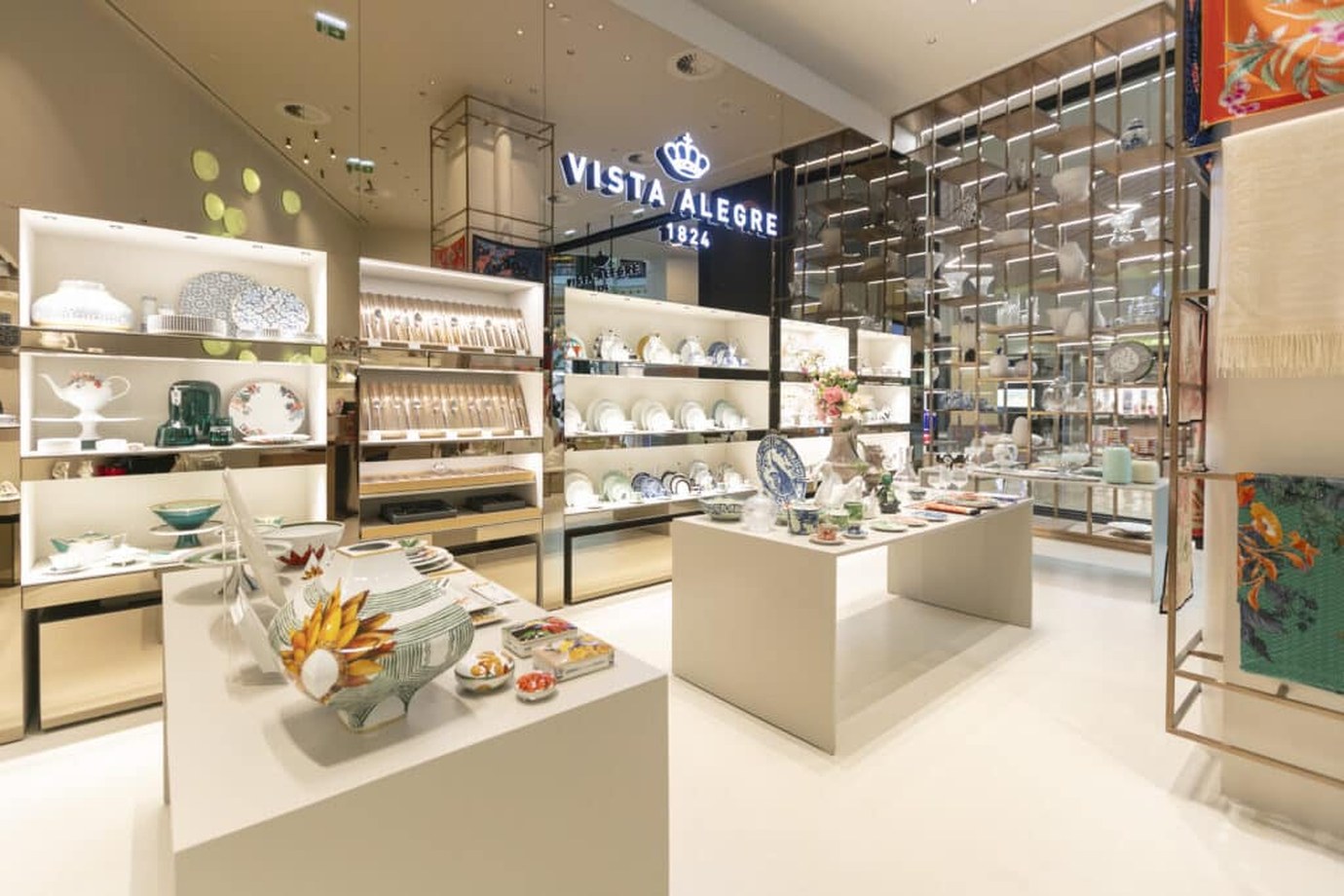
Bordallo Pinheiro is now part of the same corporate family as Vista Alegre, Portugal’s grand porcelain house, founded in 1824 in Ílhavo, near Aveiro. Vista Alegre bought Bordallo Pinheiro in 2023 for €48.5 million. The two brands have since released joint collections that pair Vista Alegre’s fine porcelain with Bordallo Pinheiro’s naturalist glazes.
Vista Alegre is not just a factory. It is a small self-contained estate, complete with a palace, formal gardens, a theatre and its own chapel. Worker housing surrounds it all, built for a workforce that once lived where it worked. The porcelain itself has decorated royal tables and embassies since the 19th century, and the factory museum still sells limited editions and hand-painted pieces to visiting collectors. For anyone not making the trip to Ílhavo, Vista Alegre’s own flagship boutiques in Lisbon and Porto carry the same collections, from everyday tableware to limited editions.
Our luxury craftsmanship guide covers Vista Alegre’s factory and museum in Ílhavo in more depth, for anyone building a porcelain-focused detour. Closer to home, both brands’ pieces turn up on the shelves of A Vida Portuguesa, covered earlier in this guide. That includes the ceramic swallow, for anyone who would rather not make the trip north.
Beyond the cities: Arraiolos rugs and Évora’s workshops
Arraiolos, a small town north of Évora, has produced hand-embroidered wool rugs since at least the 16th century. The technique is a dense cross-stitch known as ponto de Arraiolos, not the knotted weave used in Persian or Turkish rugs. A workshop founded in 1916 helped rescue the tradition from decline. Most rugs today are still made by hand, largely by women working from home rather than in a factory. It is a slower, more specialised craft than the Portalegre tapestries we cover in our luxury craftsmanship guide. It is also worth combining with a stop in nearby Évora. The town’s leatherwork and hand-painted pottery round out a day trip into the Alentejo’s ateliers.
Évora itself is also where Portugal’s cork industry has some of its deepest roots. Our guide to Portuguese cork covers that world in more detail, from the oak groves to the design objects it now ends up in. For the region’s tours and access, our Évora tours page is the place to start planning a visit.
Beyond the cities: Grândola’s traditional fairs
Grândola, the Alentejo coastal town made famous by the José Afonso song that became the Carnation Revolution’s anthem, holds one of the country’s largest traditional craft fairs every summer. The Feira de Agosto fills the town for several days each August. Artisans from the Alentejo, Ribatejo and Algarve work clay, copper, glass, textiles, felt, leather, iron and straw, side by side. It draws crowds far larger than the town’s size would suggest. Locals still call it one of the best summer fairs anywhere in Portugal.
On a smaller scale, Grândola also runs its own Feira da Ladra on the last Saturday of every month, trading secondhand goods and antiques at Largo Catarina Eufémia. The town sits within easy reach of Melides and Comporta, both covered elsewhere on this blog. That makes it an easy add-on for anyone already spending a few days on that stretch of coast.
The logistics collectors actually need
Buying art or antiques abroad comes with practical questions a normal sightseeing trip does not raise. How does a fragile or oversized piece travel? Will an appointment-only dealer even open the door? What paperwork does a purchase need to leave the country? Amiroad’s chauffeurs are used to working around these details rather than being surprised by them:
- Discretion. Chauffeurs stay in the background at private viewings, gallery previews and appointment-only dealers, without drawing attention to a client or a purchase.
- Space for what you buy. Vehicles are chosen with room for crated art, bubble-wrapped antiques or an armful of shopping bags. A good find does not have to wait until the next day to travel.
- Multi-stop routing. A single afternoon can cover an antiques dealer, an auction house viewing and a gallery opening, in whatever order actually makes sense, rather than a fixed schedule.
- Local knowledge. Drivers who know Lisbon and Porto well can also point toward shippers, packers and customs agents, for purchases that need to travel home by freight rather than by hand.
Planning a collector’s route through Portugal
Lisbon alone could fill three or four days. Príncipe Real, Embaixada, A Vida Portuguesa and Pelcor. Rua de São Bento’s antique dealers, an auction viewing if the calendar allows. Sant’Anna, the Museu Nacional do Azulejo, LX Factory and MAAT. Feira da Ladra on whichever Tuesday or Saturday fits. Porto adds Rua Miguel Bombarda, the Capela das Almas, Armazém and Serralves, all comfortably reached from Lisbon in the same trip. The Alentejo detour, marble towns, Arraiolos, Évora, Grândola’s fairs, and the ceramics stop in Caldas da Rainha, works best as a loop by car. It is exactly the kind of route where a private chauffeur turns half a dozen separate day trips into one continuous one. Whichever combination suits the visit, the constant is the same. Arrive without worrying about parking. Leave without worrying about what you are carrying.

For tailor-made tours or other programs, please get in touch with us through the telephone below or by filling out the form.