
The Comporta effect: why Portugal’s rice fields beat the Algarve
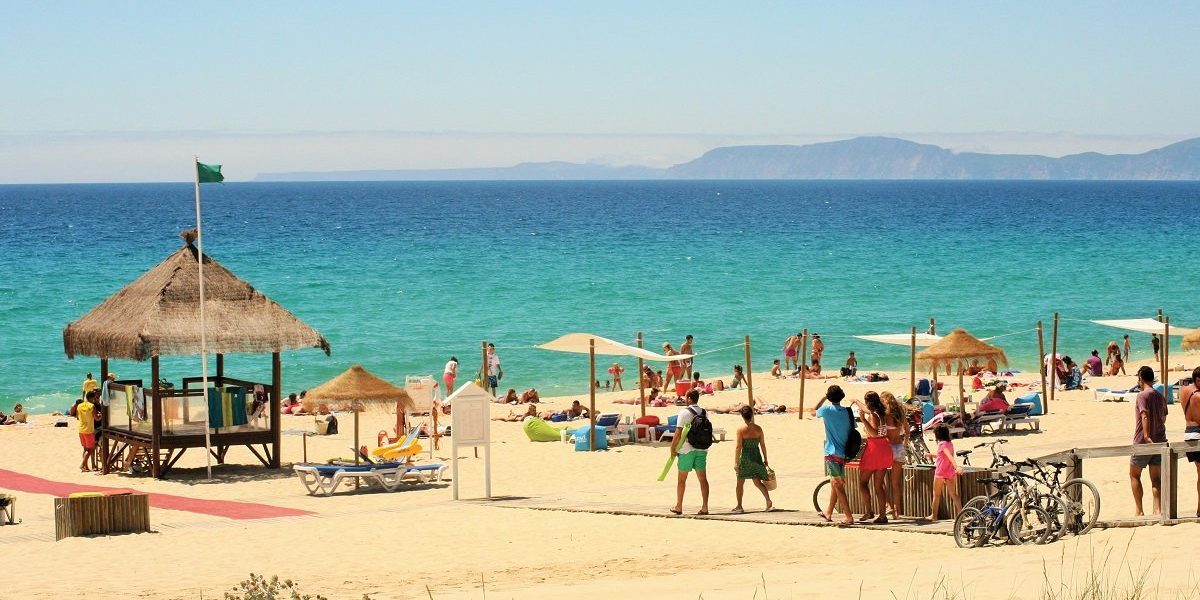
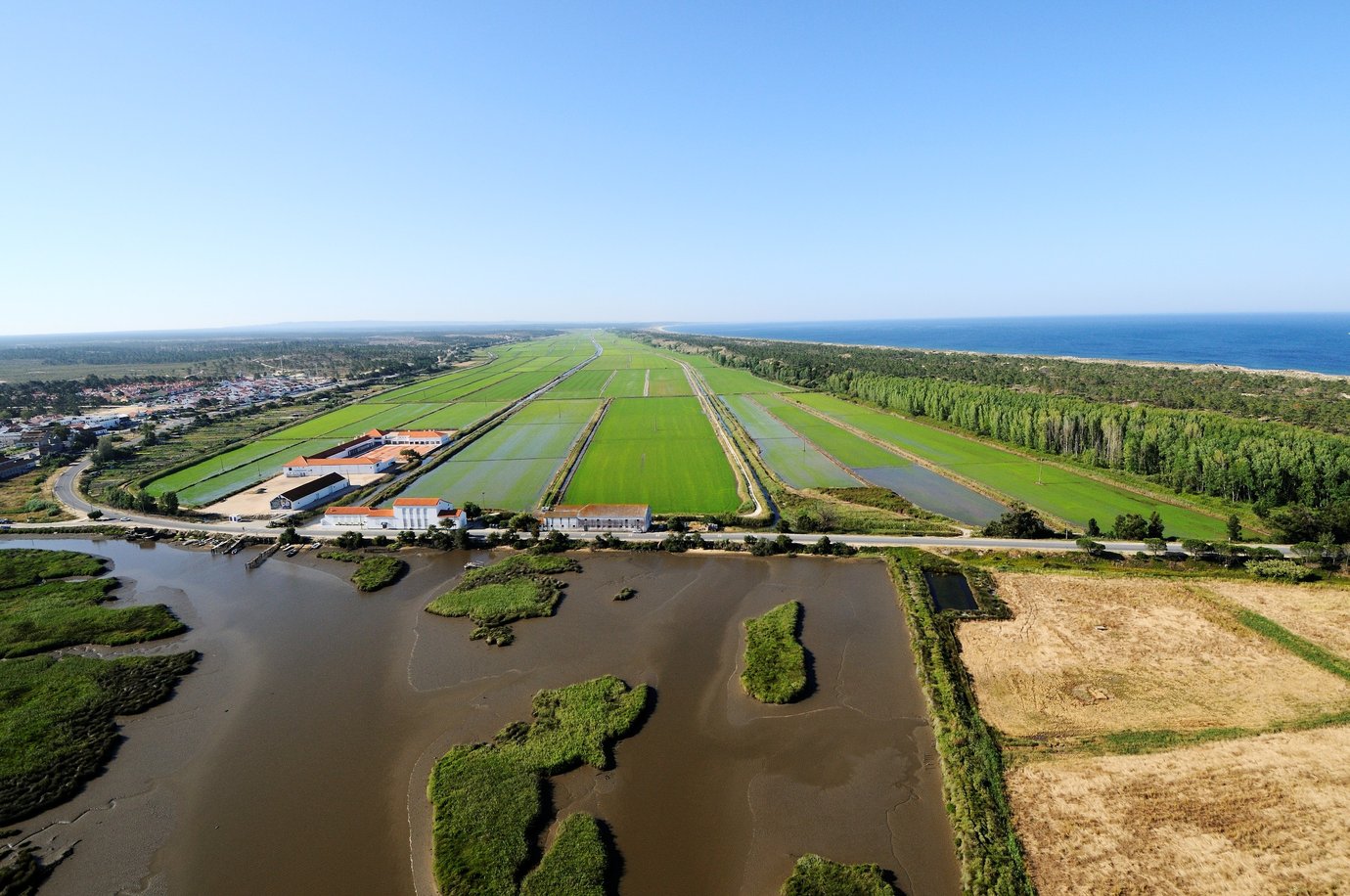
For most of the 20th century, one banking family owned 12,500 hectares of rice paddies, pine forest and empty Atlantic coastline south of Lisbon. They simply refused to develop it. Decades later, that stubbornness is the whole story. No high-rises, no golf-resort sprawl, no marina lined with yachts. Just thatched roofs and rice fields. And a level of privacy that keeps pulling in some of the most private people on the planet.
This is not another beach-by-beach guide. Our Comporta travel guide already covers the sand, the hotels and the seafood. This is the story behind it. The family that shaped the land. The bank collapse that nearly ended it. The villas hidden from the road, the tables worth the drive, and the quiet list of people who found this coast first.
The family that said no to development
Rice farming began here in 1836, under a company tied to the Portuguese Crown. In 1925, the estate passed to a British firm, the Atlantic Company. Then, in the summer of 1956, José Manuel Espírito Santo spotted the land from his sailboat. Rice fields, pine forest, a scatter of workers’ huts. His family bought it soon after, and simply left most of it alone.
For most of the 20th century, Herdade da Comporta belonged to the Espírito Santo family, Portugal’s most powerful banking dynasty. They farmed the rice and built infrastructure for the people who worked it. Outside that, development stayed close to zero. A recreational club they built for the estate’s community still stands today, its facade dated 1 March 1951. A rare physical trace of just how little changed here for so long.
The rice mill you can still walk through
The estate’s industrial history did not vanish along with the Espírito Santo fortune. In 1952, the family built a rice-husking mill, complete with workshops for carpentry, metalwork and an ironmonger’s forge. That mill still stands. It is now the Museu do Arroz, its old machinery preserved. A restaurant on site serves the same rice the estate has grown for nearly two centuries. Museum visits run by appointment, for groups of ten or more. Herdade da Comporta now also bottles its own wine, grown in the same sandy coastal soil. The rice fields, it turns out, were never the estate’s only crop.
The bank collapse that put a private paradise up for sale
In 2014, Banco Espírito Santo collapsed, one of Portugal’s largest corporate failures in decades. The family’s fortune went down with it, and so did its grip on Comporta. For several years, the estate’s future sat in legal and financial limbo. A 12,500-hectare question mark on the edge of the Atlantic.
The sale finally closed in November 2019. A consortium of Amorim Luxury and Vanguard Properties bought Herdade da Comporta for 157.5 million euros. Paula Amorim led one company, French businessman Claude Berda the other. The new owners pledged to preserve the estate’s agricultural and forestry character rather than simply build on it. The Amorim name would shape this coast twice over, not just at the sale. More on that shortly.
Why this coast never became the Algarve
The Algarve’s coastline carries forty years of resort development: golf courses, marinas, infrastructure built for full occupancy. Comporta’s owners, past and present, chose a different path from the start. Construction within 500 meters of the beach is forbidden. Only cottages, bungalows and villas are allowed, and no high-rises anywhere. Much of the coastline sits under Natura 2000 protection, off-limits to anything more ambitious than a footpath.
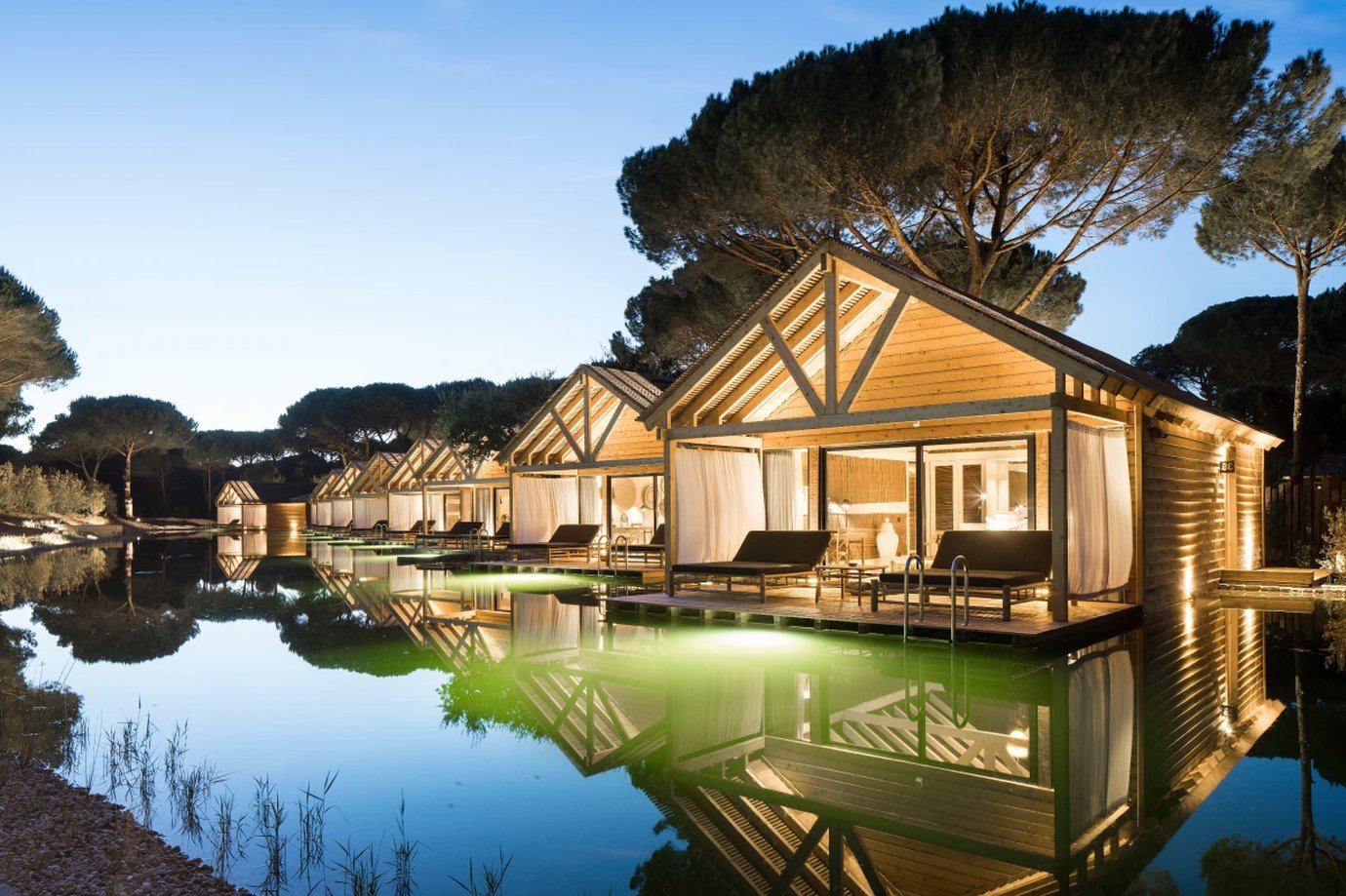
The architecture follows the same restraint: low, timber-framed buildings with thatched or dark-stained roofs. They echo the huts once used by local fishermen, not anything resembling a resort. It is a deliberate kind of scarcity. It also happens to be exactly what a certain kind of traveler has spent years looking for.
The accidental hotel that started the whole thing
Before 2014, Comporta had almost nowhere for outsiders to actually stay. In 2004, Gonçalo Pessoa, a TAP Air Portugal captain, bought 42 acres of woodland here to build his family a beach house. Partway through, he changed his mind. He built a small boutique hotel instead.
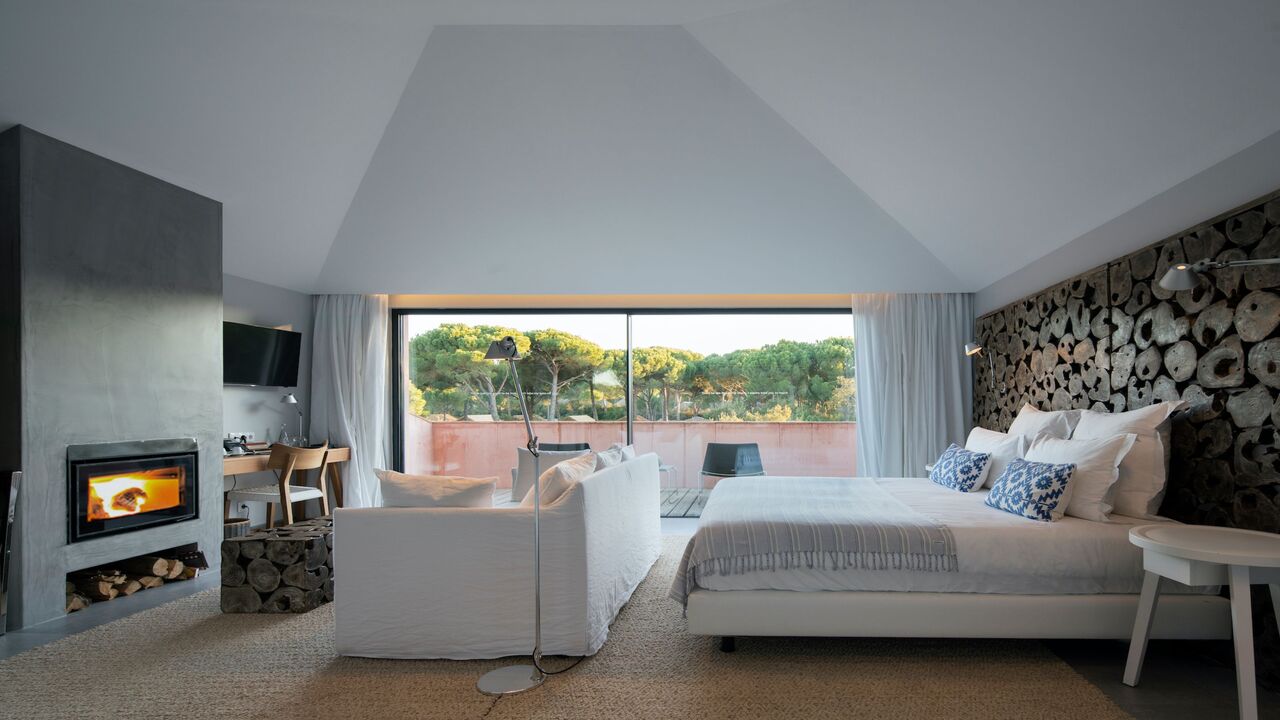
Sublime Comporta opened in 2014 with 14 rooms, a restaurant and a spa. It has since grown to 23 rooms and 22 cabana-style villas. It now holds a MICHELIN Key, the guide’s hotel-equivalent of a star. Inside the grounds, Food Circle serves dinner around an open fire pit, seating just twelve guests a night. It is widely credited with turning Comporta from an under-the-radar farming region into an international boutique-hotel destination. A second Sublime property opened nearby in May 2026, designed by architecture firm Fragmentos with interiors by Andringa Studio. The wave this one small hotel started clearly still has momentum.
Villas nobody sees from the road
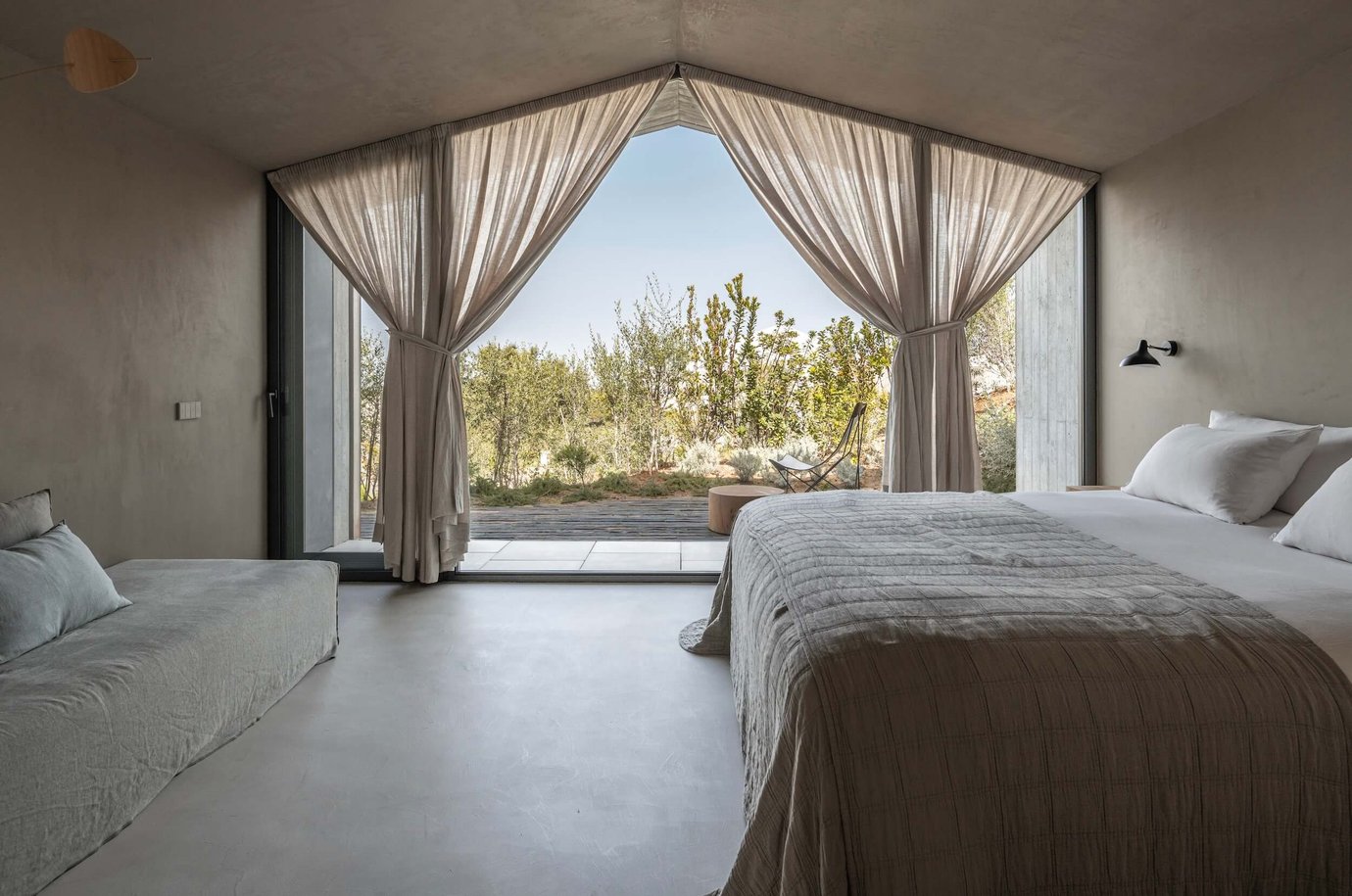
Sublime is only the visible part of Comporta’s accommodation. Most of the region’s real luxury sits behind pine screens and sand tracks. These are private villas that rarely appear in any listing. The architecture follows the same restraint as everything else here: concrete, timber and glass, built low. It faces inward toward a pool, not outward toward the road.
O Pateo, a small retreat in neighboring Melides, captures the style well. It was designed by the internationally celebrated Lisbon firm Aires Mateus. Bare concrete walls, an infinity pool cut into the dunes, interiors stripped back to almost nothing. This is the kind of understated design that costs considerably more than it looks like it does.
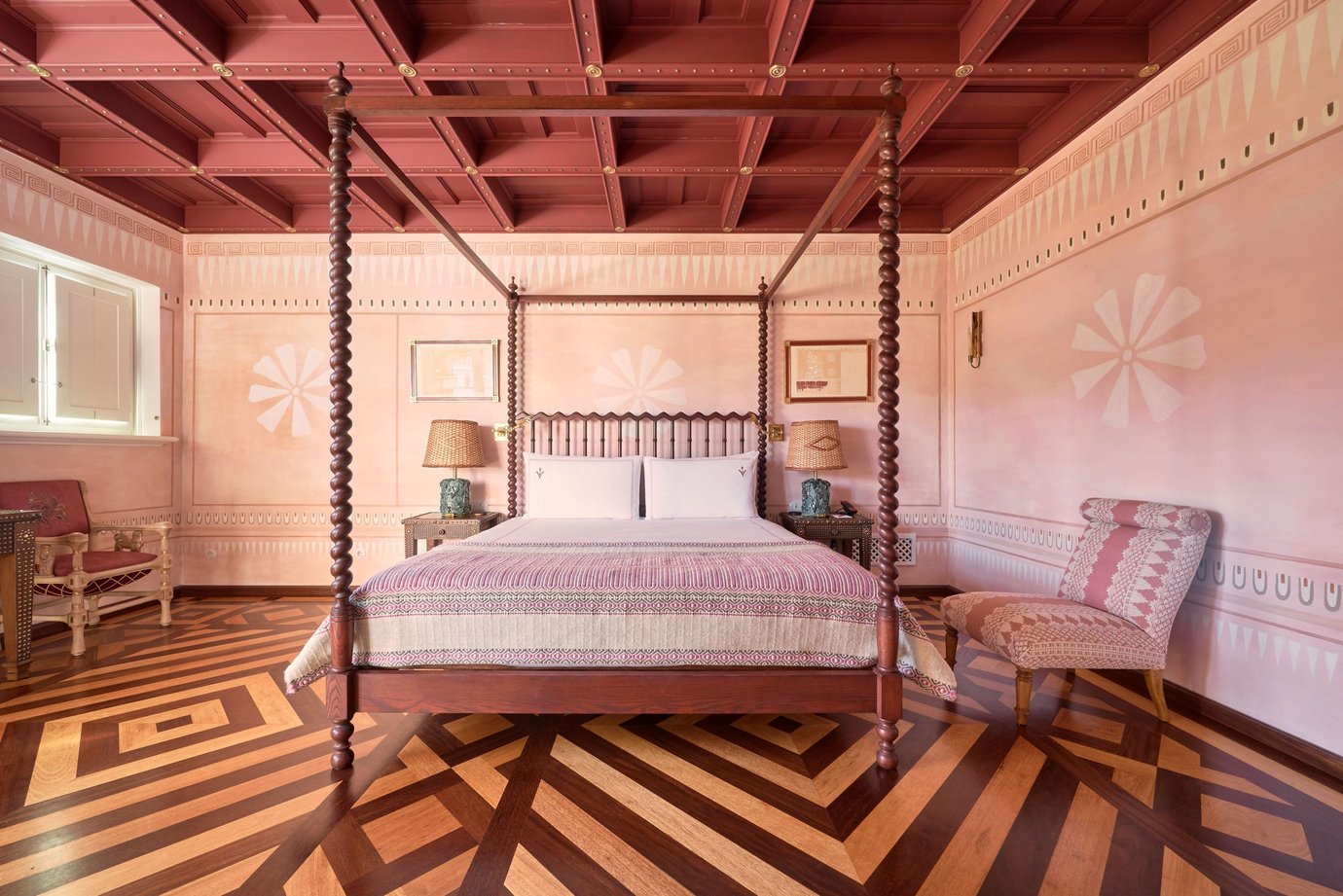
A short drive south, the Melides guide covers Christian Louboutin’s own hotel in detail. The Vermelho is painted in the designer’s signature red, with an in-house restaurant led by chef David Abreu. Between Comporta and Melides, this stretch of coast has quietly become one of Portugal’s highest concentrations of architect-designed private hospitality. Almost none of it is advertised, which is rather the point.

The beaches that stay quiet on purpose
Praia do Pego is the closest this coast gets to a scene, and even that is relative by international standards. For real solitude, the coastline keeps going in both directions. Our Comporta travel guide covers Praia da Galé-Fontainhas, a fossil-cliff beach. It’s possible to walk for miles here without seeing anyone. The Melides guide covers Praia da Vigia and Praia de Aberta Nova, both further south and even less visited. Across the Sado estuary, Tróia’s beaches and golf course round out the same quiet stretch of coastline. Our Setúbal guide covers it from the other shore.
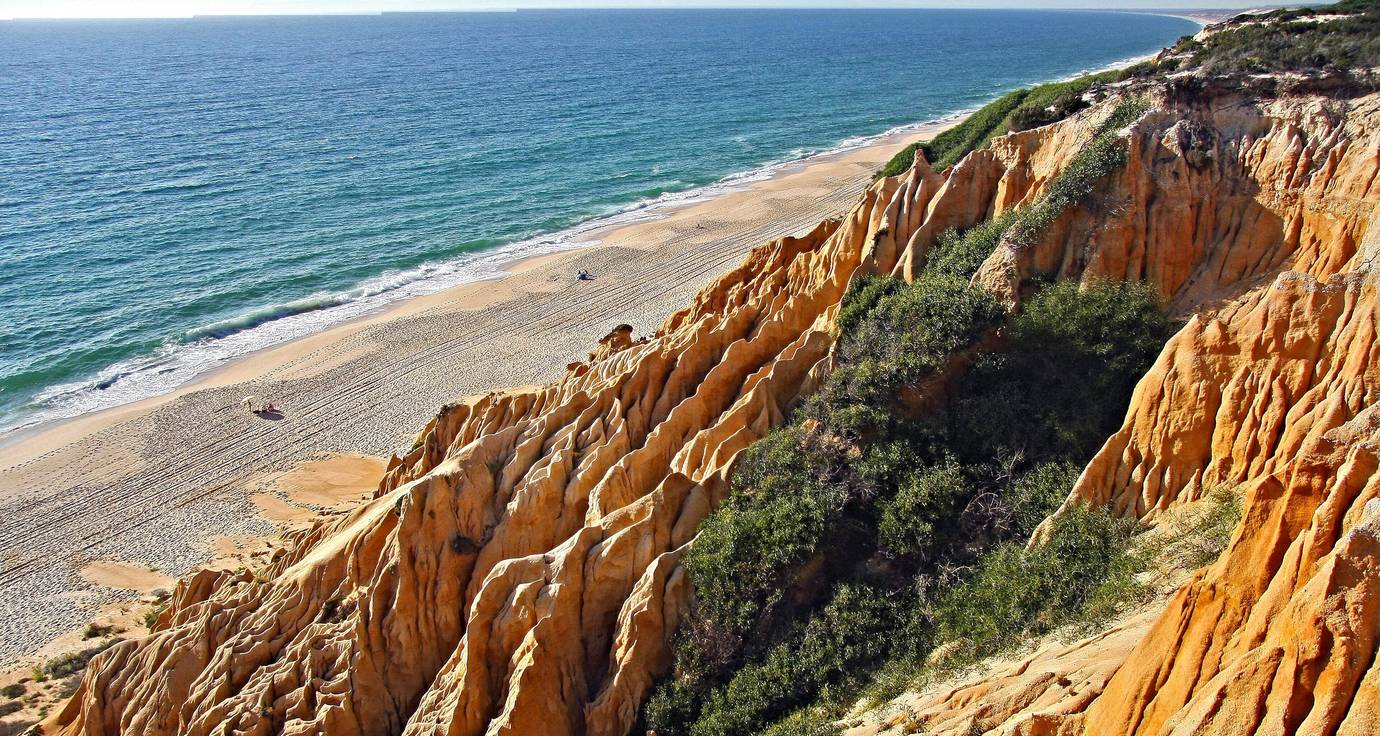
Praia da Galé-Fontainhas. Photo: Vitor Oliveira / Wikimedia Commons (CC BY-SA 2.0)
Where Comporta actually eats
On Praia do Pego, JNcQUOI Beach Club favors sand tones and low timber structures over anything resembling a resort. It was designed by Vincent Van Duysen. Fresh seafood and Portuguese paella from chef Jerónimo draw a crowd that skews international, and by regional standards, glamorous.
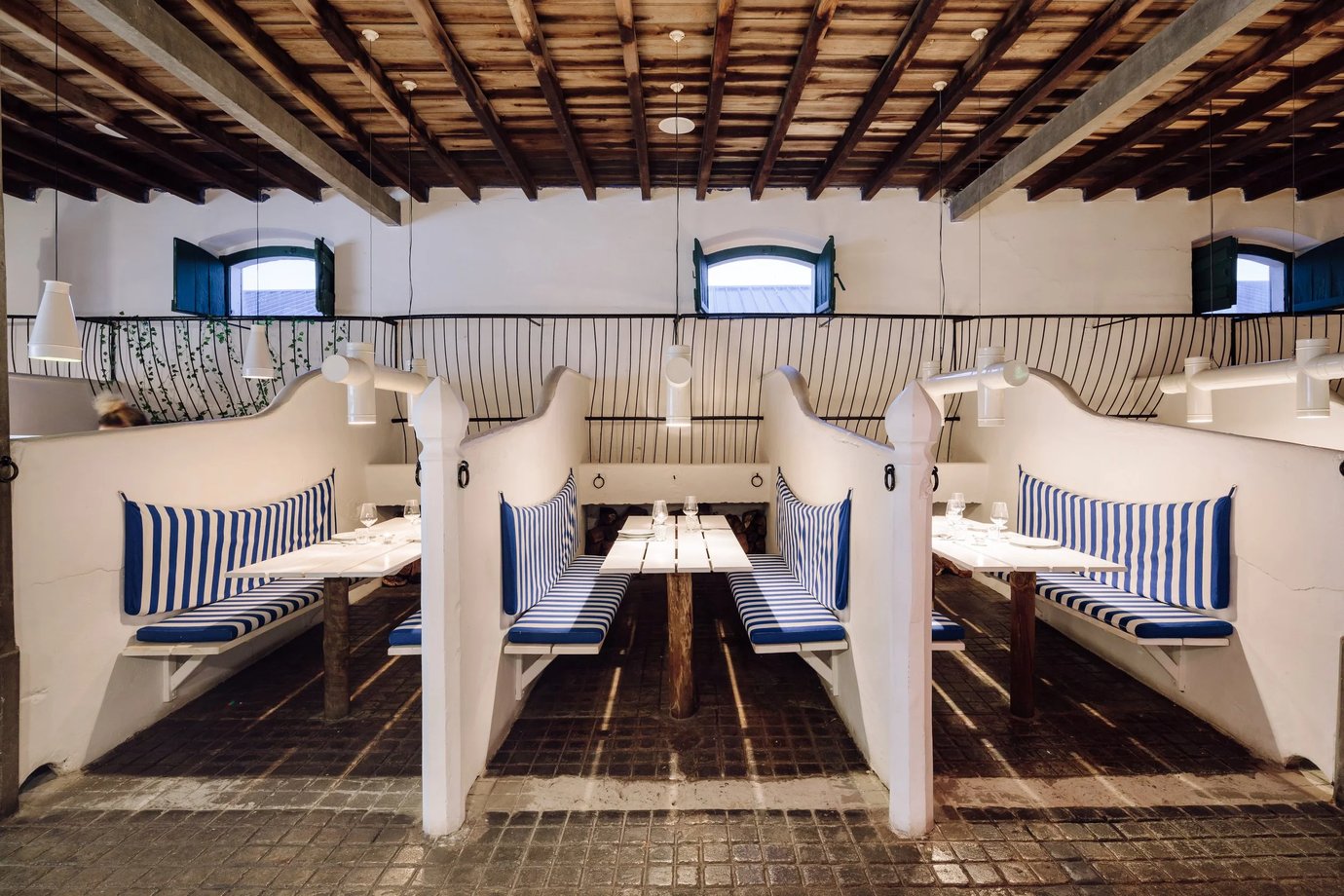
Inland, on Rua do Secador, Cavalariça has been quietly one of the best tables in the Alentejo since 2017. The name means “stable,” and it is one. A former horse stable, stone walls intact, timber beams overhead, dining stalls where the animals used to stand. Chef Bruno Contreras trained in England and builds sharing plates around Setúbal Peninsula and Alentejo ingredients. Think cured-meat croquettes with clam mayonnaise, or grilled brioche with chicken liver parfait. Cavalariça holds a MICHELIN Plate for both 2024 and 2025.
At Sublime Comporta, Sem Porta serves a Portuguese tasting menu inside a glass-fronted room modeled on the region’s old rice-storage buildings. Ingredients come daily from the hotel’s own garden and local producers. It holds a MICHELIN Plate for 2024 and 2025, not a star. Some travel guides call it “Michelin-starred.” That overstates things: on its own terms, it’s still an excellent kitchen.
For something less produced, Dona Bia sits roadside between Comporta and Carvalhal. It has been doing one thing well since long before any Michelin inspector showed up. Rice, cooked with whatever the day’s catch brought in: clams, monkfish, grilled fish. The tables still wear cotton tablecloths, and have never once chased a design award. It belongs on the same list as the two Michelin tables above, not below them.
The next chapter: a private members’ resort by 2028
JNcQUOI’s beach club at Praia do Pego was only the opening move. Its founders, Miguel Guedes de Sousa and his wife Paula Amorim, are now behind JNcQUOI Club Comporta. This private members’ project is due to open in 2028, across 164 hectares with a kilometer of private beachfront. The plan comes from Vincent Van Duysen, with landscaping by Vladimir Djurovic. It calls for 34 hotel pavilions, 64 residences, three clubs, a spa and a beach club. All of it is BREEAM-certified, built with the same restraint that already defines this coast.
There is a neat symmetry here that is easy to miss. Paula Amorim co-led the very consortium that bought Herdade da Comporta from the Espírito Santo family back in 2019. Nearly a decade on, she and her husband are the ones shaping what this coast becomes next. JNcQUOI, in that light, is less a beach club with a nice view. It is the latest chapter in the same ownership story that opened this article.
Riding the dunes at sunset
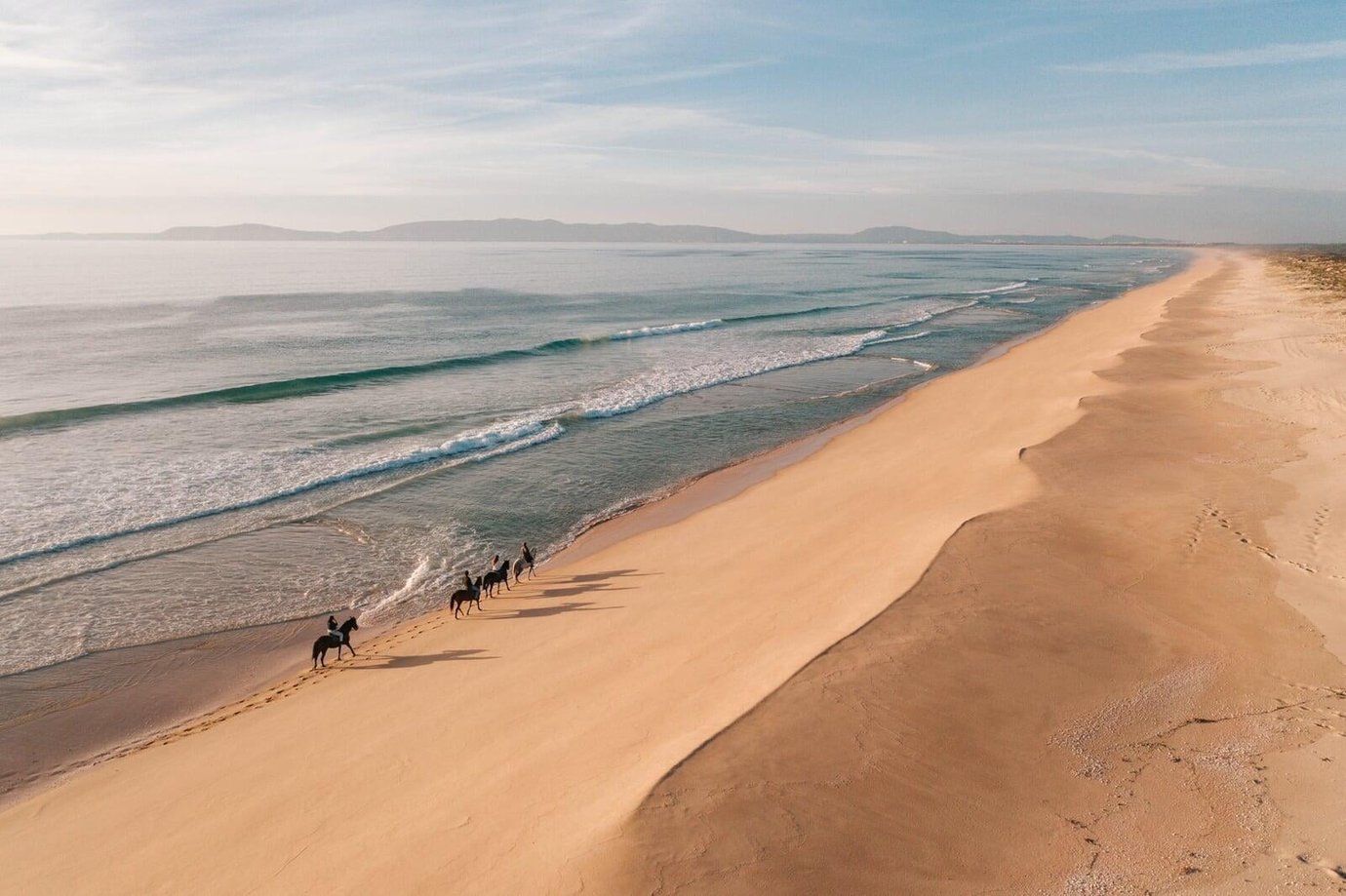
Comporta’s most photographed activity has nothing to do with hotels or restaurants. Cavalos na Areia is run by José Ribeiro, out of a stable a few kilometers inland. The 90-minute route crosses cork groves and neon-green rice paddies, over the dunes, and onto Praia da Torre. No riding experience is required. In summer, the last departure is timed so riders reach the beach as the light turns gold. Happy accident, or exactly the kind of detail this coast tends to get right.
Or trade the saddle for a buggy
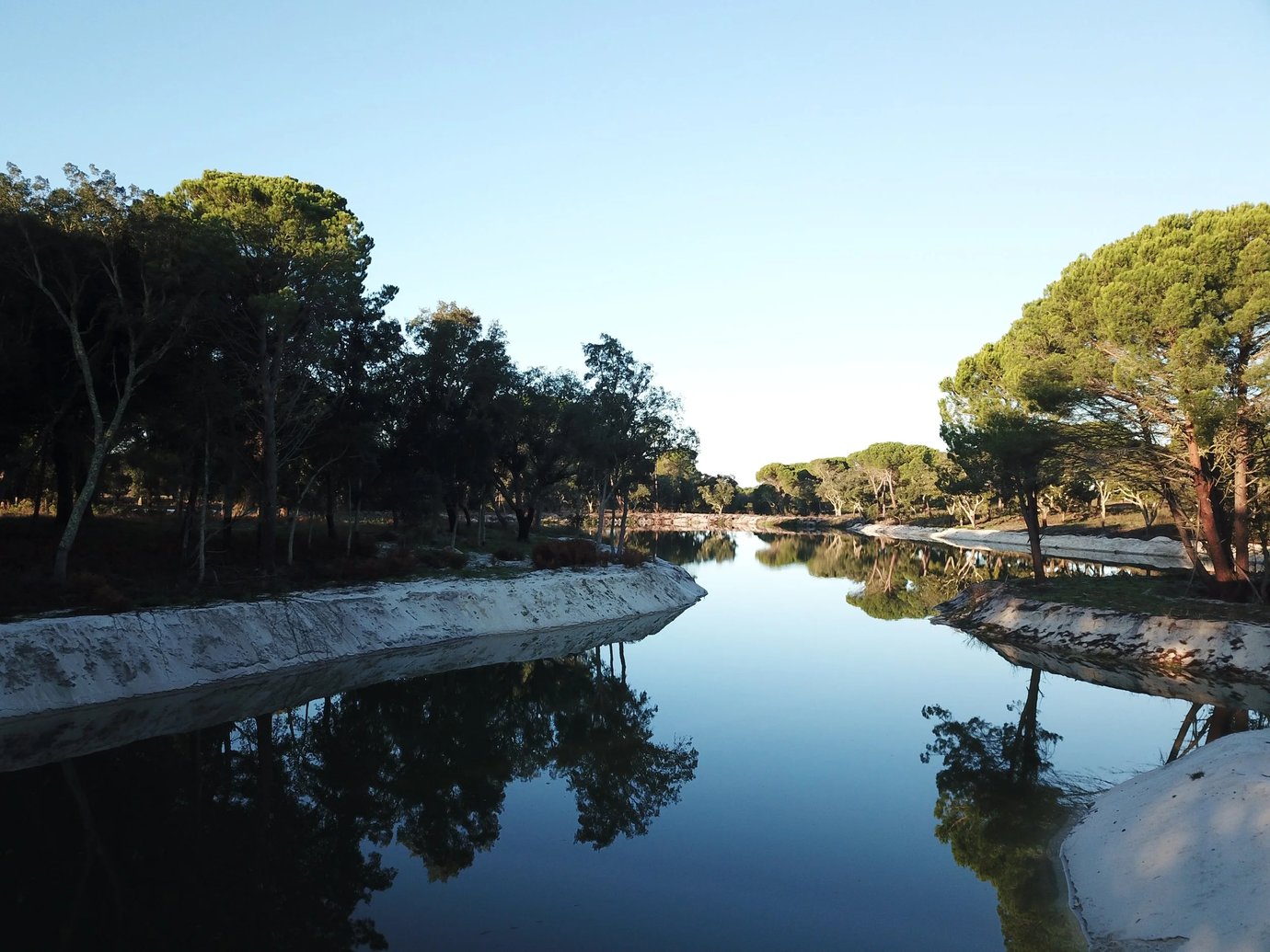
Not everyone wants to cover this ground on horseback. Feel Comporta runs 4×4 buggy tours out of the village center instead. The route crosses rice fields and fords the shallow reaches of the river. It also stops at the Cais Palafítico da Carrasqueira, the stilted wooden pier still used by local fishermen. Tours run about 90 minutes, with a drone-footage add-on for anyone who wants proof they were really there.
A quietly documented list of neighbors
Comporta’s reputation as a discreet retreat did not come from nowhere. Christian Louboutin first discovered the Alentejo coast as a teenager in the 1980s. He was staying at a friend’s family house in Comporta. He later set up a studio here, then bought a house of his own. That connection eventually grew into hospitality. In 2023 he opened the Vermelho hotel in neighboring Melides, decorated in his signature red.
Designer Philippe Starck has also invested in property in Comporta in recent years. Paula Amorim and Miguel Guedes de Sousa, covered above, are now among the coast’s most consequential residents in their own right. Neither Louboutin nor Starck’s presence has ever needed a press release, and that is largely the point. A meal at Cavalariça or a quiet villa behind the pines does not come with a guest list. It would not be especially surprising to find yourself seated near someone whose face you recognize. Comporta has spent decades building a reputation for exactly that kind of privacy, for residents and visitors alike.
A newer development has raised the profile further. CostaTerra Golf & Ocean Club sits on 800 acres in neighboring Melides. It is the American firm Discovery Land Company’s first project in Europe. Princess Eugenie and her husband Jack Brooksbank moved to Portugal in 2022 when Brooksbank took a marketing role there. Nicole Kidman and Formula 1 driver Max Verstappen have both been separately reported as buyers in the same development. Neither has confirmed it.
The estate’s newest investment: a golf course of its own
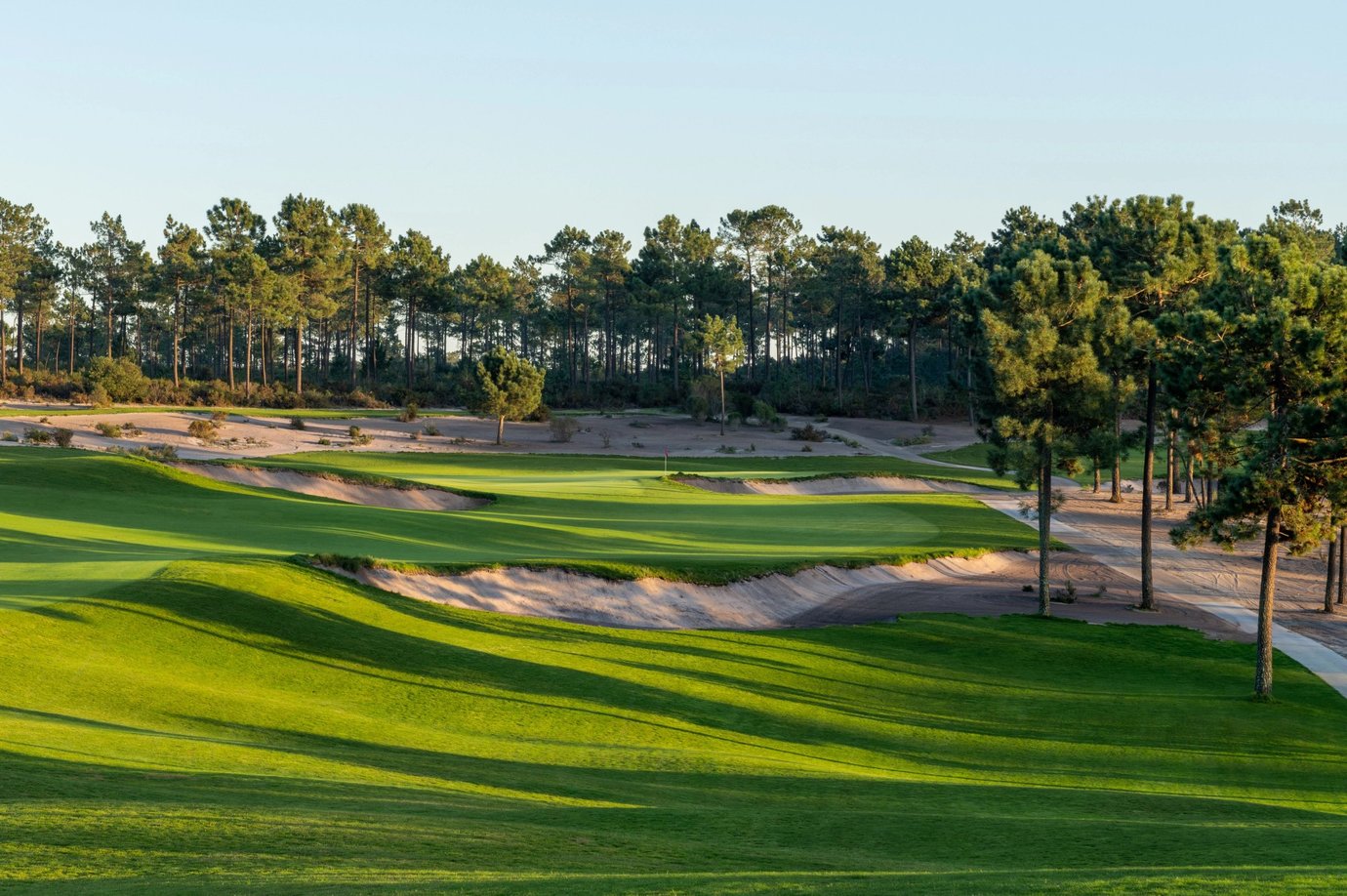
The same 2019 buyers eventually put part of that land to a new use. Vanguard Properties and Amorim Luxury built Dunas, a course carved into the dunes on the old estate. They opened it in the summer of 2023. David McLay Kidd designed it. He is the architect behind Bandon Dunes in Oregon, one of the most admired golf destinations in the world. One reviewer called Dunas the best course built in Continental Europe in years.
Where this leaves a visitor today
None of this history changes what there is to actually do in Comporta. It explains why the place still feels the way it does: unfinished, uncrowded. Genuinely an hour and a half from Lisbon, not a manufactured resort town.
For the wider estuary, our guide to Setúbal and the dolphins of the Sado covers its other shore. The estuary holds one of only five resident bottlenose dolphin populations in Europe, tracked for more than 40 years. It pairs naturally with a stay in Comporta, and rewards the detour on its own terms.
Getting there without the crowds noticing
| Group Size | Recommended Vehicle | Best For |
|---|---|---|
| 1–3 passengers | Mercedes E Class / S Class | A discreet transfer from Lisbon for a Sublime Comporta stay |
| 4–6 passengers | Mercedes V-Class | Families or friends splitting a villa for the weekend |
| 8–15 passengers | Mercedes Sprinter (Van) | Groups combining Comporta with Setúbal or Tróia |
Comporta has no train station, and limited signage by design. A private driver who already knows the sandy access roads helps keep it that way. Arriving without fuss, leaving the same.
Amiroad’s Services
Amiroad arranges private transfers from Lisbon to Comporta, and to villas throughout the estate. Our chauffeurs already know the region’s unmarked roads. Every vehicle in Amiroad’s fleet comes equipped with air conditioning, GPS, Wi-Fi and complimentary water.
Frequently asked questions
Who owns Herdade da Comporta?
Comporta itself is a public Portuguese village, not owned by anyone privately. What’s privately owned is Herdade da Comporta, the roughly 12,500-hectare estate that surrounds it. A consortium of Amorim Luxury and Vanguard Properties bought that estate for 157.5 million euros, closing in November 2019. It had belonged to the Espírito Santo banking family for decades before that.
Why are there no high-rises or resorts in Comporta?
The estate’s private owners, past and present, have enforced strict building rules: no construction within 500 meters of the beach, only low-rise cottages and villas, and much of the coast under Natura 2000 protection.
What started Comporta's boutique hotel scene?
Sublime Comporta, which opened in 2014 after a private family house was converted mid-construction into a small hotel. It now holds a MICHELIN Key and is widely credited with putting Comporta on the international map.
Do celebrities really own homes in Comporta?
Yes, well beyond design names. Christian Louboutin and Philippe Starck both have property in the area, and JNcQUOI’s founders live and build here too. Princess Eugenie and her husband Jack Brooksbank moved to Portugal in 2022 when he took a marketing role at CostaTerra, the Discovery Land Company development in neighboring Melides. Nicole Kidman and Max Verstappen have both been reported as buyers in the same area, though neither has confirmed it. Comporta’s culture of discretion means most owners keep a low profile.
How far is Comporta from Lisbon?
About an hour and a half by car, making it a realistic day trip or a natural stop when combined with Setúbal and the Sado estuary.
Where should you eat in Comporta?
Cavalariça, in a converted horse stable, and Sem Porta, at Sublime Comporta, both hold MICHELIN Plates for 2024 and 2025. JNcQUOI Beach Club on Praia do Pego is the choice for lunch on the sand.
Is a new luxury resort being built in Comporta?
Yes. JNcQUOI Club Comporta, a private members’ project with a hotel, spa and a kilometer of private beachfront, is due to open in 2028.
Can you go horseback riding in Comporta?
Yes. Cavalos na Areia runs guided rides through the rice paddies and dunes to Praia da Torre, with no experience required, and summer departures timed for sunset.
Is Comporta connected to Melides?
Yes, they sit on the same stretch of Alentejo coast a short drive apart, and share the same understated, architect-driven approach to hospitality, including Christian Louboutin’s Vermelho hotel in Melides.

For tailor-made tours or other programs, please get in touch with us through the telephone below or by filling out the form.