

Travelling to Portugal with Elderly Parents
Portugal is one of the most rewarding destinations in Europe for multigenerational travel. The country’s combination of warm weather, exceptional food, a genuinely welcoming culture and a pace of life that does not feel rushed makes it a natural choice for families bringing older parents or grandparents on a trip that everyone can enjoy. The Portuguese, as a culture, treat elderly people with instinctive respect and patience – a quality that extends to restaurants, hotels, attractions and daily life in a way that is quietly different from much of Northern Europe.
That said, Portugal comes with real physical challenges that are worth understanding before you arrive. Lisbon is built on seven hills. Alfama, Bairro Alto and Graça are characterised by steep, narrow streets paved with traditional calçada portuguesa – the beautiful but notoriously uneven black and white cobblestones that define the city’s aesthetic and complicate the mobility of anyone who does not have sure footing. Planning honestly around those challenges is what separates a wonderful trip from an exhausting one.
This article covers everything a family needs to know to plan a successful, enjoyable and genuinely relaxed trip to Portugal with elderly parents.
How Accessible is Portugal? An Honest Assessment
| Accessibility Rating | What to Know | |
|---|---|---|
| Lisbon – historic centre | Moderate | Steep hills, cobblestones, narrow pavements in older districts |
| Lisbon – Belém, Parque das Nações | Good | Flat, wide, purpose-built for pedestrians |
| Lisbon – Baixa / Chiado | Good | Relatively flat, metro accessible, lifts available |
| Porto – historic centre | Challenging | Very steep in places, cobblestones throughout |
| Porto – Foz do Douro, Matosinhos | Good | Flat coastal area, wide pavements |
| Algarve | Very good | Modern resort infrastructure, flat beaches, good roads |
| Alentejo | Good | Flat plains, small towns, relaxed pace |
| Douro Valley | Moderate | Beautiful but hilly terrain, best explored by car |
| Sintra | Challenging | Steep hills between palaces, uneven surfaces throughout |
The honest summary is this: Portugal rewards thoughtful planning more than most destinations. The places that look most spectacular in photographs – Alfama, the streets of Porto’s Ribeira, and Sintra – are also the most physically demanding. The places that are most comfortable and relaxed for older travellers – Belém, the Algarve coast or the Alentejo – are no less interesting or beautiful. The key is building an itinerary that sequences experiences correctly, mixes more demanding visits with restful days, and does not attempt to cover too much ground in too little time.
The Neighbourhoods and Attractions That Work Best
In Lisbon, the most comfortable neighbourhoods for older travellers are Baixa (Praça do Comércio) – the flat, grid-planned lower city with wide streets and easy access to shops, cafés and transport – and Belém, the riverside district west of the centre where the Jerónimos Monastery, the Belém Tower and the MAAT museum all sit in a flat, walkable area along the Tagus. Parque das Nações, the purpose-built expo district in the east of the city, is entirely flat and excellent for a relaxed afternoon.
The Alfama is worth seeing – its views, its Fado houses and its ancient atmosphere are irreplaceable – but it is best approached with a driver who can deliver you as close to the viewpoints as the streets allow, so that walking is minimised and chosen, rather than imposed. The Castelo de São Jorge sits at the top of a steep hill: the entrance itself is accessible if you are dropped at the gate, but the approach on foot from the lower city is genuinely demanding.
Sintra is one of the most popular day trips from Lisbon and one of the most challenging for older travellers. The palaces are spread across forested hills connected by steep roads, and the village itself is cobbled and hilly. A private driver who knows Sintra well makes the difference between a manageable and enjoyable visit and an exhausting one: dropped at each entrance, picked up at each exit, with no uphill walking between sites. For those with very limited mobility, the Quinta da Regaleira and the Palácio Nacional in the village are more accessible than the Pena Palace, which sits at the highest point of the Serra.
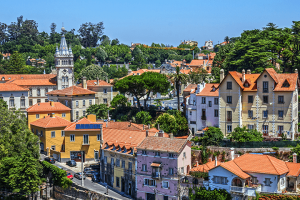
In Porto, the most accessible area is Foz do Douro – the coastal neighbourhood at the mouth of the Douro, flat and elegant, with seafood restaurants and Atlantic views. The Ribeira waterfront is manageable along the river itself, though the streets behind it rise steeply. The cable car from the Ribeira to the upper city at Vila Nova de Gaia is a practical and enjoyable solution for connecting the two levels without climbing.
Planning the Itinerary: How to Get the Pacing Right
The most common mistake families make when travelling with elderly parents is building an itinerary designed for younger travellers and then hoping it will work. It rarely does. A day that begins at 8 am, visits three sites before lunch, adds a day trip in the afternoon and ends with a late dinner at 10pm is a day that leaves older travellers – and often younger ones too – depleted rather than enriched.
Portugal’s culture actively supports a slower approach. Long lunches are the norm. Afternoon rest is widely practised. Restaurants serve until late, which means there is no pressure to eat early. A day that includes one main experience, a good lunch, a rest in the afternoon and a relaxed evening is not a day wasted – it is a day well spent in a country that understands that pace.
The following framework works well for most multigenerational trips to Portugal:
Two or three nights in Lisbon. Focus on Belém and the lower city, with one half-day excursion – either to Sintra by private car, or to the Alentejo if the group prefers landscape to palaces.
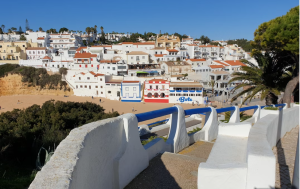
Two or three nights in the Algarve. The Algarve is the easiest part of Portugal for older travellers – modern hotel infrastructure, flat beaches, excellent restaurants and a relaxed pace. It provides an ideal counterbalance to the hills of Lisbon, and the coast between Albufeira, Lagos and Vilamoura has everything a multigenerational group needs.
One or two nights in Porto for those who want to include the north. Porto is steep but beautiful, and the combination of the wine cellars in Gaia, the Foz coast and a river cruise on the Douro creates a programme that is varied and not overly demanding.
Between each location, private transport makes the transition effortless – no luggage management, no platform changes, no station stairs.
Transport: Why This Is the Decision That Shapes Everything
For families travelling with elderly parents, the transport question is not a logistical detail – it is the structural decision that determines whether the trip is enjoyable or stressful from the first day to the last.
| Transport Option | Comfort | Flexibility | Luggage | Door to Door | Best For |
|---|---|---|---|---|---|
| Public transport | Variable | Low | Difficult | No | Budget / young and able |
| Rental car | Moderate | High | Good | Near | Confident drivers, flat areas |
| Taxis / rideshare | Moderate | Moderate | Limited | Near | Short urban trips |
| Private driver | Excellent | Total | Excellent | Yes | Multigenerational travel |
Public transport in Lisbon and Porto is reasonably good by European standards, but it is not designed for travellers with luggage, limited mobility or unfamiliarity with the system. Trams are charming but crowded and do not run to the most useful destinations. The metro requires stairs or lifts that are not always working. Buses require standing in queues on cobbled pavements in the sun.
Rental cars give freedom but place the navigation, driving and parking burden on one member of the group – typically the one person in the family who then cannot relax, drink wine at lunch or fully engage with the experience. In Lisbon and Porto, parking in the historic areas is extremely limited and expensive. In the Algarve and the Alentejo, a car is more practical, but the same trade-off applies.
For families travelling with elderly parents, a private driver resolves all of these tensions simultaneously. You are collected at your hotel entrance – not 400 metres away on a main road – and delivered to the entrance of wherever you are going. There are no stairs, no platform changes, and no standing in queues. Luggage is handled. The pace of each day is determined by the group, not by a timetable. If someone is tired and wants to return to the hotel, you return. If lunch runs long and you want to skip the afternoon visit, you skip it without penalty.
What to Look for When Booking Accommodation
Hotel choice matters considerably more for older travellers than for younger ones. The following criteria are worth verifying directly with the hotel before booking:
Lift access. Not every hotel in Lisbon’s historic centre has a lift – some are in converted buildings where installing one was not possible. Confirm that your room is accessible by lift before booking.
Entrance steps. Some boutique hotels have steps at the entrance that are not obvious from photographs. Worth checking, particularly for travellers who use a walking frame or wheelchair.
Room location. A ground-floor or low-floor room with a quiet aspect is generally preferable for older travellers. Ask specifically rather than assuming the hotel will assign one.
Proximity to the street. In Lisbon’s hillier neighbourhoods, even getting from the hotel to the pavement can involve stairs or a steep ramp. Hotels in Baixa, Avenida da Liberdade or Belém are generally the most straightforward in this regard.
Bathroom configuration. A walk-in shower is considerably more practical than a bath for most older travellers. Again, worth confirming directly.
The Best Destinations in Portugal for Older Travellers
The Algarve is the most consistently comfortable destination for multigenerational travel. The coastline from Faro to Sagres combines dramatic cliff scenery with accessible sandy beaches, excellent hotels with pools and spas, and a restaurant culture that caters naturally to a wide range of dietary needs and paces. The town of Lagos is manageable on foot for those with reasonable mobility. The resorts of Quinta do Lago and Vale do Lobo offer an entirely flat, purpose-built environment that requires no navigation at all.
Comporta and Melides on the Alentejo coast are worth considering for families who want a quieter, less commercial experience. Long Atlantic beaches backed by pine forests, excellent contemporary restaurants and an unhurried atmosphere make it a natural choice for a long weekend. The terrain is flat and the pace is gentle.
The Alentejo interior – Évora, Monsaraz, the wine estates around Reguengos de Monsaraz – suits older travellers well. The plains are flat, the towns are compact and quiet, and the combination of Roman ruins, medieval walls and exceptional wine and food creates a rich programme without physical demand.
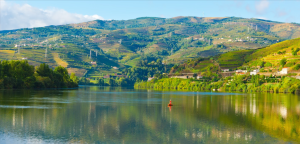
The Douro Valley is spectacular but hilly. It is best experienced from a well-positioned quinta where the views are enjoyed from a terrace rather than through vigorous walking. A river cruise on the Douro – available from Porto upstream through the valley – is one of the finest ways to see the landscape and requires no walking at all.
Cascais is an excellent base for the Lisbon area. Flatter and quieter than the capital, with a pleasant seafront, good restaurants, easy access to the train for day trips to Lisbon, and a scale that does not overwhelm. For families who find Lisbon too busy or too hilly, Cascais offers all the quality without the physical demands of the city.
Practical Tips That Make a Real Difference
Start every day without a fixed agenda. Decide over breakfast how everyone is feeling and plan accordingly. A flexible approach is not a sign of poor planning – it is the mark of a group that has understood how multigenerational travel actually works.
Book restaurants in advance, especially for lunch. The best restaurants in Lisbon and Porto fill up, and arriving without a reservation at a good table wastes time and causes unnecessary stress. Many of Portugal’s finest restaurants offer lunch menus at a fraction of the evening price.
Carry water and snacks. Portugal in summer can be extremely hot – temperatures regularly exceed 35°C in July and August in Lisbon, and above 40°C in the Alentejo. Older travellers are more susceptible to dehydration and heat exhaustion than they may realise. Recommended shade, rest and hydration throughout the day.
Consider travel insurance with medical repatriation cover. Portugal has a good healthcare system, and European health insurance cards cover EU citizens for emergency treatment. Non-EU travellers – particularly from the US, Canada and Australia – should ensure they have comprehensive medical coverage before travelling.
Bring any prescription medication in its original packaging, with a letter from the prescribing doctor if it includes controlled substances. Portugal is straightforward for medication entry, but documentation avoids any complications at the border.
The best time of year for older travellers is spring (April to May) or autumn (September to October). The temperatures are mild, the crowds are manageable, and the light is extraordinary. Summer is the most popular time but also the most demanding – July and August in Lisbon can be punishing in the midday heat, and the most popular sites are at their busiest.
Travelling with Elderly Parents in Portugal with Amiroad
The families who travel to Portugal with Amiroad and come back to tell us it was the best trip they ever took with their parents share a common characteristic: they did not try to do too much, and they did not leave the transport to chance.
Amiroad provides private transport for multigenerational families across Portugal – from airport arrivals to hotel departures, and everything in between. Our vehicles are spacious, air-conditioned and comfortable for older travellers. Our drivers are patient, professional and experienced in adapting the pace and approach to the needs of the group. If someone needs more time getting in and out of the vehicle, we allow for it. If an itinerary needs to change on the day because someone is tired, we change it without fuss.
We cover all of Portugal’s major destinations – Lisbon, Cascais, Sintra, the Algarve, the Alentejo, the Douro Valley and Porto – with a fleet of executive cars, buses and minibuses to match the size of every group. For families arriving from the US, UK, Canada, Australia or anywhere else in the world, we can design the full transport programme for the trip in advance, so that the logistics are entirely resolved before you land.
See also: Luxury Private Tours in Portugal and Private Day Trips from Lisbon – for families building a detailed itinerary.
Contact us to discuss your trip and receive a tailored proposal.

For tailor-made tours or other programs, please get in touch with us through the telephone below or by filling out the form.