
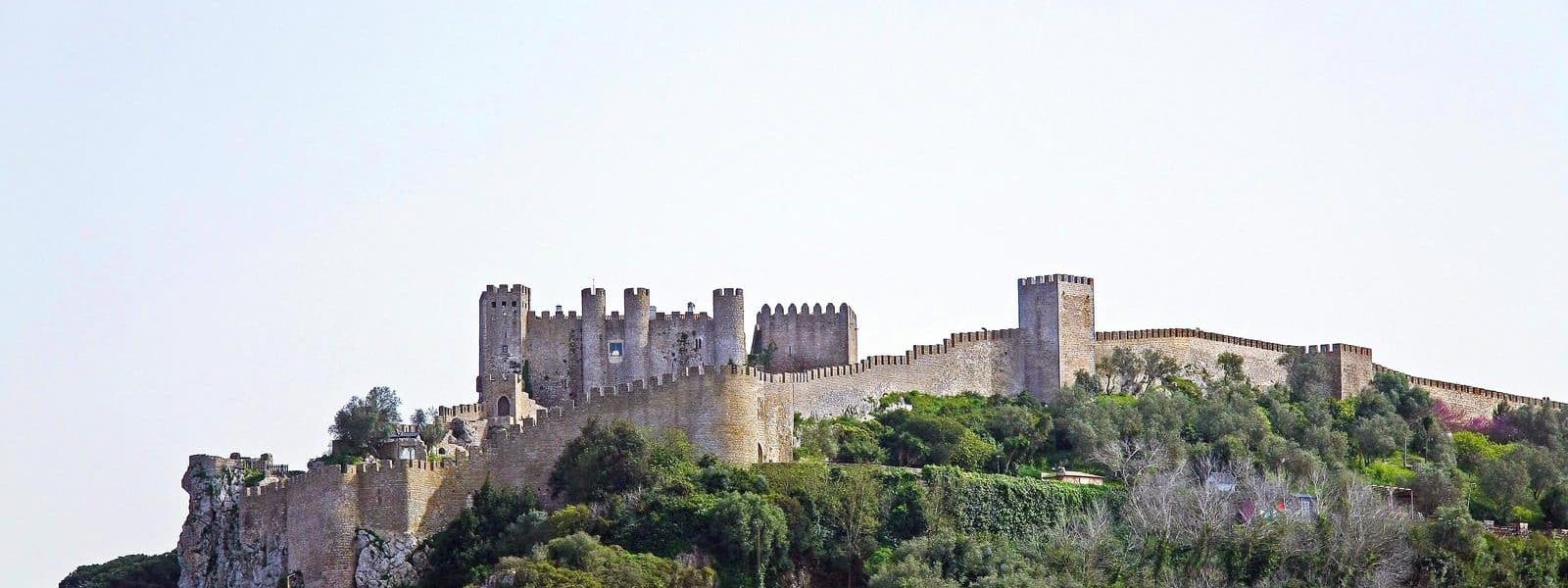
Óbidos, Portugal: the walled medieval town worth a day trip from Lisbon
Óbidos is a fully walled medieval town about an hour north of Lisbon, small enough to see on foot in half a day yet dense enough with castle ramparts, azulejo-covered chapels and a whitewashed main street to fill an entire private day trip. Unlike Sintra or Cascais, it rarely appears on a first-time visitor’s list, which is exactly what makes it worth the detour.
Óbidos was a royal wedding gift: in 1282, King Dinis gave the town to his wife, Queen Isabel of Aragon, beginning a tradition in which Óbidos belonged to the Queens of Portugal for nearly six centuries. That royal patronage explains the town’s unusually well-preserved walls and the concentration of churches and noble houses packed inside them. This guide covers what to see inside the walls, when to time a visit around Óbidos’ festivals, and why travelers increasingly reach it by private chauffeur rather than a fixed-schedule coach tour.
Why visit Óbidos with a private chauffeur, not a coach tour
Óbidos is roughly 80 km and a one-hour drive north of Lisbon on the A8 motorway, close enough for a half-day visit but far enough that public transport options are limited and infrequent. The town itself sits entirely within its 14th-century walls, so cars are banned or heavily restricted on the streets inside, and the small car parks just outside the main gate fill up quickly on weekends and during festivals.
- One road in, one road out. A chauffeur who already knows where to drop off and collect passengers at the main gate saves the frustration of circling for parking that a rental car cannot avoid.
- Built for pairing, not a standalone trip. Óbidos alone rarely fills a full day. A private driver can combine it with the Lagoa de Óbidos, Foz do Arelho beach, or the coastal towns further north in a single custom itinerary.
- Festival-day traffic. During the Óbidos Chocolate Festival or the Christmas Village, the town and its car parks reach capacity by mid-morning. A chauffeur monitoring the roads in real time can adjust timing and routing accordingly.
- Comfort for a walking-heavy day. The castle walls and cobblestone streets involve a fair amount of uneven walking; arriving relaxed rather than having just navigated unfamiliar rural roads makes a real difference.
What to see inside the walls
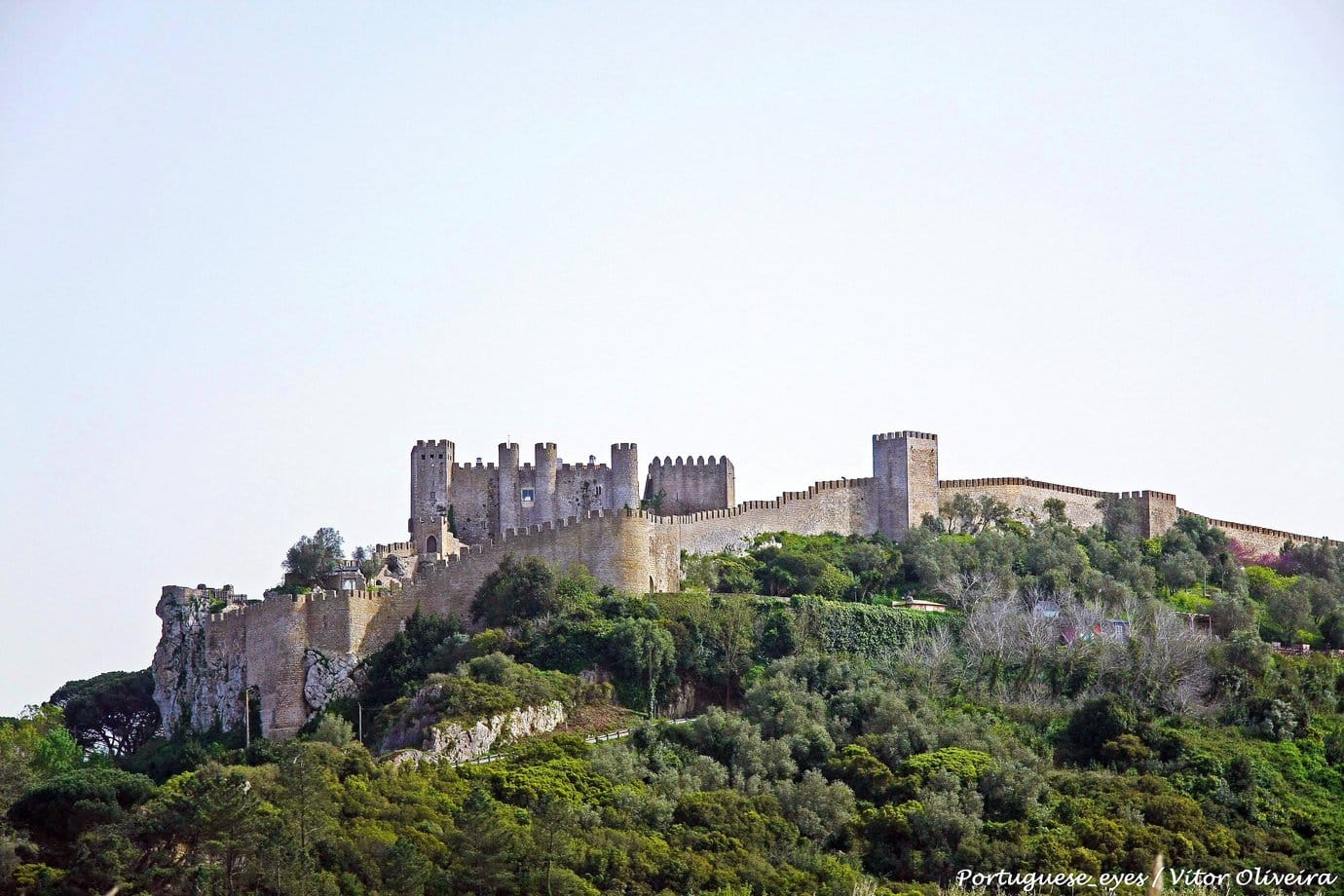
Castelo de Óbidos
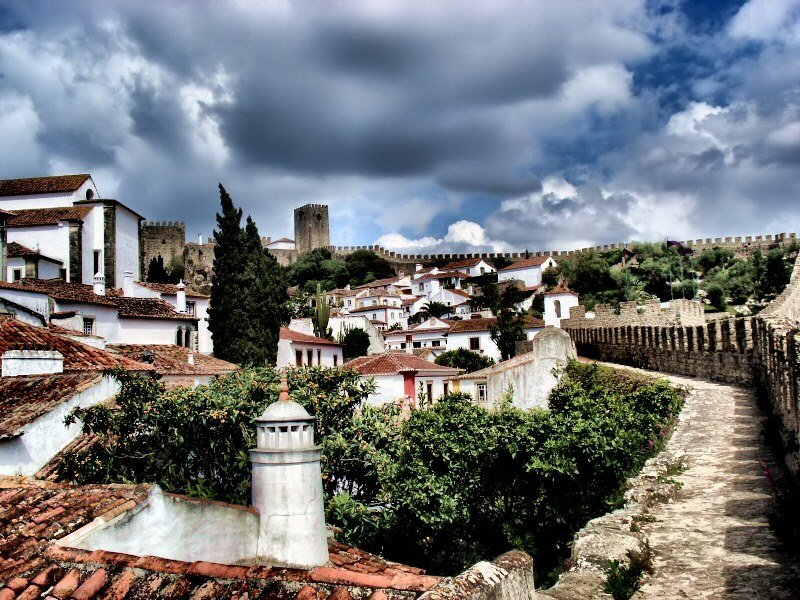
The castle anchors the highest point of town and its walls form a continuous walkway around almost the entire perimeter of Óbidos. Much of the rampart is open to walk for free, offering views over the orange rooftops on one side and the countryside toward the Óbidos lagoon on the other. The stone is uneven and unguarded in places, so it rewards sturdy shoes rather than sandals, and it isn’t accessible for wheelchairs or strollers, so travelers with mobility needs may prefer the view from the base of the walls instead. Part of the castle itself now operates as a pousada, one of Portugal’s historic state-run hotels, though the walls remain open to all visitors regardless of where they are staying.
Rua Direita and the ginjinha tradition
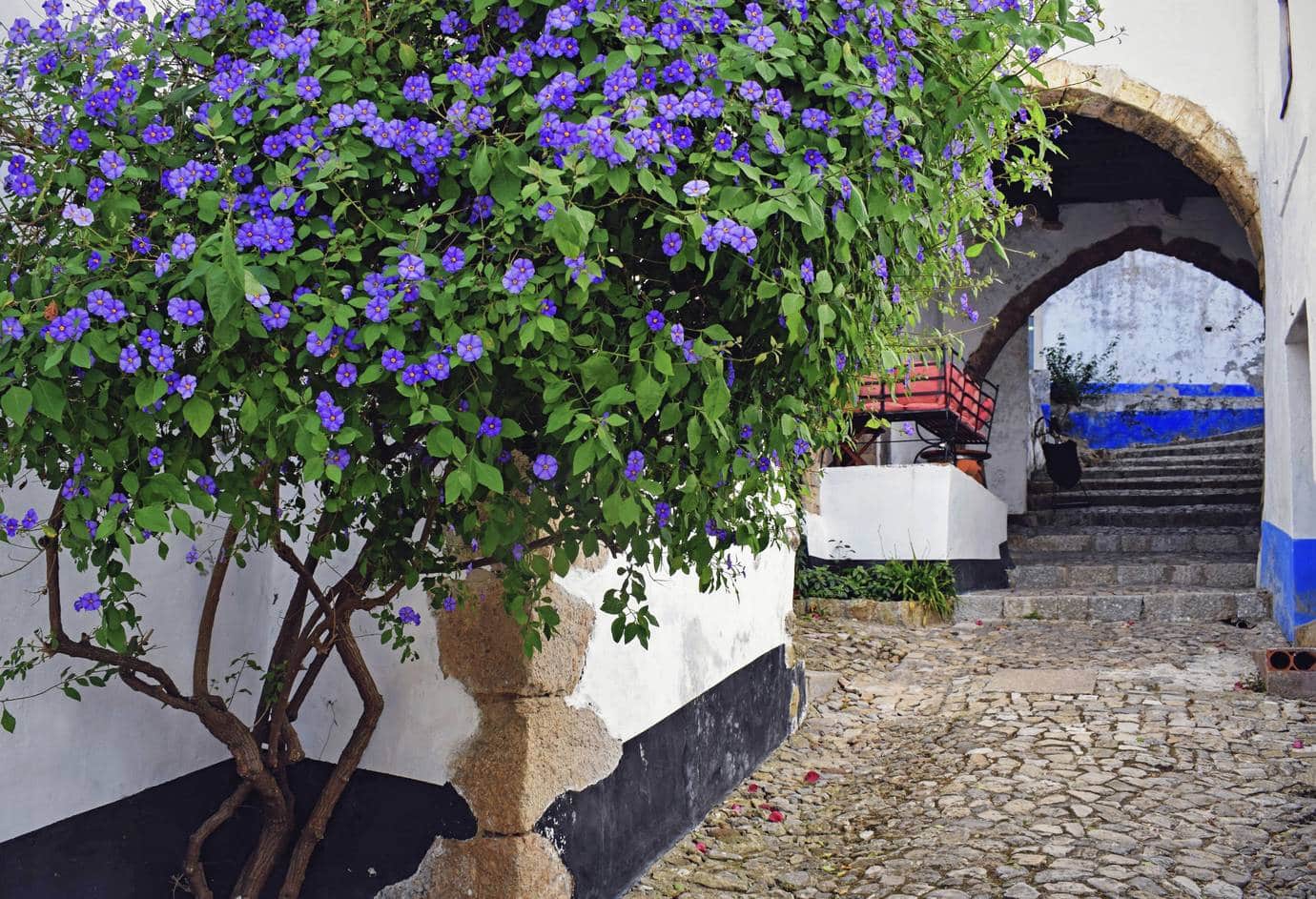
Rua Direita, the single main street running from the castle to the town gate, is lined with whitewashed houses trimmed in yellow and blue, small galleries, and shops selling ginjinha, Portugal’s sour cherry liqueur, traditionally served in a small edible chocolate cup. It is a tourist ritual by now, but a genuinely good one, and one of the few places in Portugal where the drink and its cup are sold as a matter of local pride rather than a novelty aimed purely at visitors.
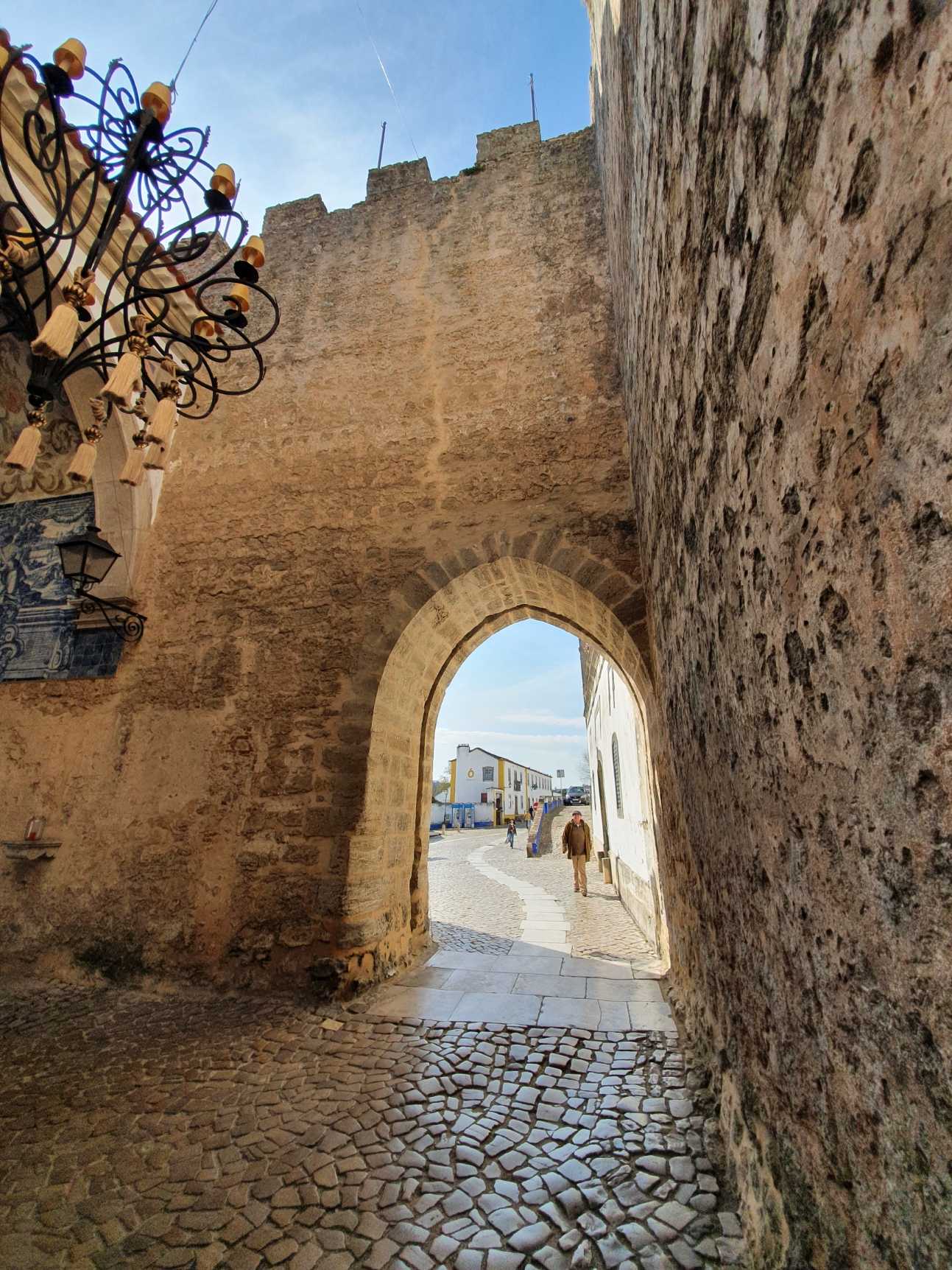
Porta da Vila and its azulejos
The main gate into Óbidos, Porta da Vila, is where most visits begin. Its inner archway and adjoining chapel, the Oratório da Nossa Senhora da Piedade, are covered in 18th-century azulejo tiles, one of the most photographed details in town before visitors have even reached the castle.
Igreja de Santa Maria
On the town’s main square, this church has an outsized history for its modest size: it hosted the 1441 wedding of a nine-year-old King Afonso V to his eight-year-old cousin Isabel of Coimbra, a marriage arranged for political reasons that was typical of the era. Inside, floor-to-ceiling azulejo panels and a painted ceiling make it worth the short stop even for visitors who do not usually seek out churches.
Óbidos’ festivals: the best time to plan your visit
| Event | Typical Timing | What to Expect |
|---|---|---|
| Óbidos International Chocolate Festival | March | Chocolate sculptures, tastings and workshops throughout the walled town |
| Mercado Medieval de Óbidos | July | Costumed reenactors, jousting and medieval market stalls along the main street |
| Óbidos Vila Natal (Christmas Village) | December | One of Portugal’s best-known Christmas markets, with an ice rink and light installations built into the walls |
| Any weekday, outside festivals | Year-round | Quiet streets, easier photography, and the best chance to have the castle walls largely to yourself |
Exact dates shift year to year, so it is worth confirming the current calendar before booking, but the pattern holds: festival weekends bring the town to life and its car parks to capacity, while a weekday visit outside those dates gives a calmer, more private experience of the same streets.
Combine Óbidos with the Silver Coast
Because Óbidos itself takes roughly two to three hours to see well, it pairs naturally with the coastline just west of it, known as the Silver Coast. The Lagoa de Óbidos and the beach town of Foz do Arelho sit fifteen minutes away, popular for windsurfing and a calmer alternative to the open Atlantic. A further twenty minutes brings travelers to Peniche, Portugal’s fishing and surf capital, or the towering Atlantic swells of Nazaré a little further north. Travelers with more of an eye for the unusual sometimes add Bombarral’s Buddha Eden, an oriental-style garden of Buddhist statues built as a peace monument, on the way back toward Lisbon.
None of these combinations work well on a fixed coach itinerary, which typically allocates a single stop and a fixed return time. A private day trip from Lisbon can be built around however long each stop actually deserves.
Choosing the right Amiroad vehicle for your Óbidos day trip
| Group Size | Recommended Vehicle | Best For |
|---|---|---|
| 1–3 passengers | Mercedes E Class / S Class | Couples or solo travelers wanting a relaxed, unhurried day |
| 4–6 passengers | Mercedes V-Class | Families combining Óbidos with a beach stop at Foz do Arelho |
| 8–15 passengers | Mercedes Sprinter (Van) | Small groups touring the Silver Coast in one extended day |
A couple visiting only Óbidos fits comfortably in a sedan for the round trip from Lisbon, while a family adding Foz do Arelho’s beach in the afternoon gets more room and boot space for towels and gear in the V-Class.
Amiroad’s Services
Amiroad Luxury Transports designs each Óbidos itinerary around the traveler, not a fixed script:
- Custom day trips from Lisbon combining Óbidos with the Silver Coast, the Lagoa de Óbidos or nearby wine estates
- Airport and city transfers for travelers arriving directly ahead of a countryside day out
- Festival-day routing that adjusts timing around the Chocolate Festival, Medieval Market or Christmas Village crowds
- Multilingual chauffeurs familiar with Óbidos’ one-way approach roads and where to wait comfortably while guests explore on foot
Every vehicle in Amiroad’s fleet comes equipped with air conditioning, GPS, Wi-Fi, complimentary water and a professional, discreet chauffeur, so the only thing to plan is how long to linger on Rua Direita.
Frequently asked questions
How far is Óbidos from Lisbon?
Óbidos is about 80 km from Lisbon, roughly a one-hour drive north on the A8 motorway.
Is Óbidos worth visiting as a day trip?
Yes. Its intact medieval walls, castle and azulejo-covered churches can be seen in two to three hours, making it easy to combine with the nearby Silver Coast for a fuller day out from Lisbon.
Can you walk the walls of Óbidos castle?
Most of the perimeter wall is open to walk for free, with panoramic views over the town and countryside. The stone path is uneven and unguarded in places, so comfortable, sturdy shoes are recommended.
What is ginjinha and where should I try it in Óbidos?
Ginjinha is a Portuguese sour cherry liqueur, traditionally served in a small edible chocolate cup. It is sold at small stalls and shops along Rua Direita, the main street running from the town gate to the castle.
When is the Óbidos Chocolate Festival?
The Óbidos International Chocolate Festival is typically held in March, though exact dates vary by year and are worth confirming before booking a visit around it.
Is a private driver better than a bus tour for visiting Óbidos?
A private chauffeur avoids the fixed schedules and single-stop limits of a coach tour, allowing Óbidos to be paired with the Lagoa de Óbidos, Foz do Arelho, Peniche or Nazaré in one flexible itinerary, and adjusting timing around festival-day crowds.
Can Óbidos be combined with Nazaré or Peniche in one day?
Yes. Both are within a 20 to 40 minute drive of Óbidos, and a private chauffeur can plan the order and duration of each stop around the group’s pace rather than a fixed tour schedule.

For tailor-made tours or other programs, please get in touch with us through the telephone below or by filling out the form.