

The best Portuguese souvenirs
Packing and wondering what to buy in Portugal? Well, spare some space for a few awesome souvenirs.
Quick answer: the most authentic things to buy in Portugal are hand-painted azulejo tiles, a Barcelos rooster, cork goods, Port wine, tinned fish, Vista Alegre or Bordallo Pinheiro ceramics, and Claus Porto soap. Below you will find what each one is, where to buy it, and how to take it home, including how tax-free shopping works for visitors from outside the EU.
Typical ceramic tiles
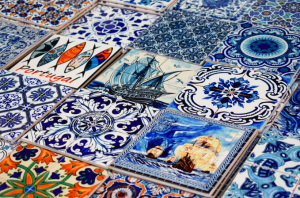
One of the most common choices is the blue and white ceramic tiles, called azulejos. This souvenir is so traditional because many famous buildings’ façades are decorated with it. Besides their beauty, these tile panels tell stories about Portuguese religion, history, and culture.
For a genuine piece, buy new hand-painted tiles from a workshop. Lisbon’s Fábrica de Sant’Anna has been working since 1741 and sells from showrooms in Chiado and Ajuda. Avoid so-called antique tiles at flea markets. Tile theft from façades is a documented problem, so a seller without paperwork is a red flag. For more makers and studios, see our guide to luxury craftsmanship in Portugal.
The rooster statue
Barcelos Rooster is a symbol of Portugal and you’ll see that right away. You can buy this Portuguese souvenir in many forms, though the ceramic colorfully hand-painted form is the most traditional one. According to legend, a pilgrim was wrongly accused of theft in Barcelos. He claimed his innocence would be proved if the roast rooster on the judge’s table crowed, and it did. Since then the bird has stood for justice, honesty and good luck. Barcelos, in the Minho, is a UNESCO Creative City for crafts and folk art. Its big Thursday market on the Campo da República is a good place to buy a rooster straight from the potters.
Cork Bags and other goods
Portugal is one of the largest producers of cork in the world. Cork trees mainly growing in the Algarve and Alentejo region make much more than sealing wine bottles. Cork is used for flooring, stylish walls, and for many interiors, architecture, and design projects. But, there are also many goods that come from this material, such as bags, wallets, hats, footwear, and many others.
Portugal produces roughly half of the world’s cork, so this is a souvenir with real local roots. Cork is also light, unbreakable and easy to pack. Our guide to Portuguese cork explains how it is harvested and what to look for in a well-made piece.
Gold, silver, and filigree jewelry
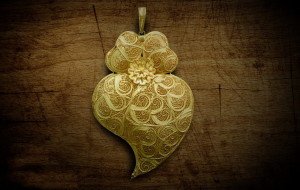
Filigree is an old goldsmithing technique. Jewelers curl very thin threads of gold or silver into delicate patterns and solder them together. The most authentic piece to take home is the Heart of Viana (Coração de Viana), a filigree heart from the Minho region. It is linked to devotion to the Sacred Heart of Jesus. Today it represents life, love, and friendship.
Ceramic dishes and mugs
Food is a big deal in our culture. It isn’t by chance that Portugal’s growing popularity as a tourist destination is also related to gastronomic matters. Given this importance, ceramics makes part of a table that we are proud to invite everyone. Pottery is also a practice of Portuguese culture for centuries, especially in regions such as Alentejo or Coimbra, which also have museums for that. Some of the finest ceramic houses are Vista Alegre and Bordallo Pinheiro.
Vista Alegre was founded in 1824 in Ílhavo, near Aveiro, and was the first Portuguese factory dedicated to porcelain. The site has a factory museum and a store. Bordallo Pinheiro has made ceramics since 1884, and its cabbage-leaf (Couve) and sardine collections make colorful, instantly recognizable gifts. Both brands sell through their own stores and websites, so you can buy and ship home.
Typical drinks: Port Wine, Moscatel de Setúbal, or the famous Ginjinha
Port wine is worldwide known and produced in Douro Valley, up to the north of Portugal. A sweet and fortified wine, typically red, but there’s also the white, both are delicious and exquisite gifts. Ginjinha is like a cherry liqueur perfect for an after-meal drink. The young and old drink it alike, at home on the streets, or at a nightclub. It can be bought in small or larger bottles all over Lisbon shops. In some places, you can also drink it in chocolate cups. Sounds right, hum?
The original bar, A Ginjinha, has served the liqueur at Largo de São Domingos since 1840. It sits a few steps from Rossio, so you can taste before you buy a bottle.
For Port, the easiest place to compare styles in Lisbon is the Solar do Vinho do Porto, run by the Port and Douro wine institute. It has been open since 1946 and offers about 150 Port and Douro wines to taste and buy. In Porto, the wine lodges across the river in Vila Nova de Gaia offer tastings and cellar-door sales. To go deeper, read our guides to Portuguese wines and wine tourism in Portugal.
Portuguese Moscatel comes from Setúbal the next south region after Lisbon, right from the grapes of Arrábida Hills. It is flavorful and a good choice for a gift for wine lovers. Some known wineries are José Maria da Fonseca and Bacalhôa.
Wine lovers can read more about this area in our guide to Setúbal and its sweet wine.
Portuguese sweets
Pastel de Belém or Pastel de nata are a must! You can easily buy them all over Portugal, though the best ones you should try are Pastéis de Belém next to Mosteiro dos Jerónimos and Manteigaria at Time Out Market. Pastéis de Belém has been baking since 1837, and its recipe is said to come from the nearby Jerónimos Monastery.
There are also the Ovos Moles which are a conventual pastry with a delicate wafer filled with a smooth custard of egg cream and sugar. These are typical of the Aveiro region and you can buy them at Confeitaria Peixinho in Aveiro but in Lisbon as well. The name Ovos Moles de Aveiro is a protected geographical indication in the EU, so the real thing comes from the Aveiro lagoon area. Our Aveiro guide has more on the city.
Canned Sardines
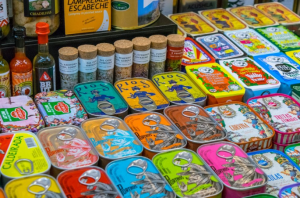
This may seem, at first, an odd choice but it is indeed one of the most traditional and iconic dishes in Portugal. Especially during the Santo António Festival happening in June in Lisbon, people all over the city enjoy these grilled sardines in the streets, having a beer and fun! So this is also a very iconic souvenir.
For the best selection in Lisbon, visit Conserveira de Lisboa on Rua dos Bacalhoeiros, which opened in 1930. The shop sells tinned sardines, tuna, mackerel and more in vintage-style packaging. To plan around the June parties, see our guide to festivals and traditional festivities.
Olive Oil
Olive oil is the backbone of Portuguese cooking. Alentejo is the largest producing region, followed by Trás-os-Montes. For a gift, look for a bottle labeled DOP (protected designation of origin), such as Azeite de Trás-os-Montes DOP. A dark glass bottle or a tin keeps the oil away from light on the trip home.
A book from Livraria Bertrand
One of the best places to buy books in Lisbon is Livraria Bertrand, a historical bookstore from 1732, located at Rua Garret, in the Chiado district. You can choose Fernando Pessoa poetry as a gift, this was one of the most important writers of Portuguese history.
Bertrand is recognized by Guinness World Records as the world’s oldest operating bookshop. For other remarkable shops, see our guide to Portugal’s historic bookshops.
Arraiolos rugs
Arraiolos rugs come from the town of the same name in the Alentejo. Unlike Persian or Turkish carpets, they are not knotted on a loom. They are embroidered in wool, in a diagonal cross-stitch called ponto de Arraiolos. The craft dates back at least to the 16th century. If you are passing through, the Centro Interpretativo do Tapete de Arraiolos shows how the rugs are made. These are heavy, so plan shipping before you buy.
Portuguese soap: Claus Porto
Claus Porto was founded in Porto in 1887 by Ferdinand Claus and Georges Schweder. It began as Portugal’s first soap and perfume factory. Its wrapped soaps are easy to pack and make a lovely gift. In Lisbon, the Claus Porto store is at Rua da Misericórdia 135 in Chiado, in a former pharmacy. The Porto flagship is at Rua das Flores 22, in a 19th-century townhouse.
Where can you buy some of these?
Here’s a list of some typical Portuguese stores:
- A Vida Portuguesa (traditional Portuguese products; Lisbon stores in Chiado and Intendente)
- Arte Rústica
- Bordallo Pinheiro
- Vista Alegre
- Claus Porto (soap and fragrance; Rua da Misericórdia 135, Lisbon)
- Conserveira de Lisboa (tinned fish; Rua dos Bacalhoeiros 34, Lisbon)
- Solar do Vinho do Porto (Port wine; Rua de São Pedro de Alcântara, Lisbon)
- Manuel Tavares (traditional delicatessen on Rua da Betesga, open since 1860: Port, cheeses, tinned fish)
- Time Out Market Lisboa
Where to go for something more special
For higher-end design, antiques and one-off pieces, read our guide to art, antiques and design shopping in Portugal. If you prefer browsing, our guide to Portuguese markets and fairs covers flea markets and traditional handicrafts.
Tax-free shopping and practical tips
VAT refund. Visitors who live outside the EU can claim back VAT on goods for personal use. The total purchase must exceed €50 excluding VAT, which refund operators put at about €61.50 including 23% VAT. Show your passport at the shop, and ask for the tax-free form. You must leave the EU with the goods within three months. Before you fly, validate the form at an e-Taxfree customs kiosk at the airport, and keep the goods new and unused until then. Refunds are paid minus administrative fees. See the Portuguese Tax Authority guide for the full process.
Liquids. Wine, Port, ginjinha and olive oil are usually best packed in checked luggage, wrapped well. Cabin rules on liquids vary by airport and have changed in recent years. Duty-free bottles bought after security normally travel in a sealed bag, but check your airline and airport first.
Fragile and bulky items. Ask the shop to pack ceramics and tiles for travel. Many stores also ship abroad, which helps with rugs and larger pieces.
Customs at home. Allowances for alcohol, cheese, cured meat and other food differ by country. Check your home country’s rules before you buy in bulk.
Shopping with a driver. A day of souvenir hunting often means several neighborhoods, a stop in Belém, and heavy bags. A private driver can wait while you shop and keep purchases safe in the car. See our private chauffeur service or plan a private day trip from Lisbon.
Frequently asked questions
What are the best souvenirs to buy in Portugal?
The best souvenirs are azulejo tiles, Barcelos roosters, cork goods, Port wine, tinned fish, olive oil, Vista Alegre or Bordallo Pinheiro ceramics, and Claus Porto soap. All of them are made in Portugal and easy to find in Lisbon.
Can tourists get a VAT refund in Portugal?
Yes, if you live outside the EU. You need to spend more than €50 excluding VAT, take the goods out of the EU within three months, and validate the tax-free form at customs before you leave.
Can I carry Port wine in hand luggage?
Usually not, unless you buy it in duty-free after security and keep it in the sealed bag. Larger bottles normally go in checked luggage. Rules vary by airport, so check with your airline.
Where can I buy authentic Portuguese products in Lisbon?
Start in Chiado and Baixa. A Vida Portuguesa, Claus Porto, Conserveira de Lisboa, Manuel Tavares and the Solar do Vinho do Porto all sell traditional products and are within a short drive of each other.
Is it safe to buy old azulejos?
It is better not to. Tile theft from buildings is a known problem, and sellers at flea markets often cannot show where antique tiles come from. Buy new hand-painted tiles from a workshop, or use a dealer who provides documented provenance.

For tailor-made tours or other programs, please get in touch with us through the telephone below or by filling out the form.