
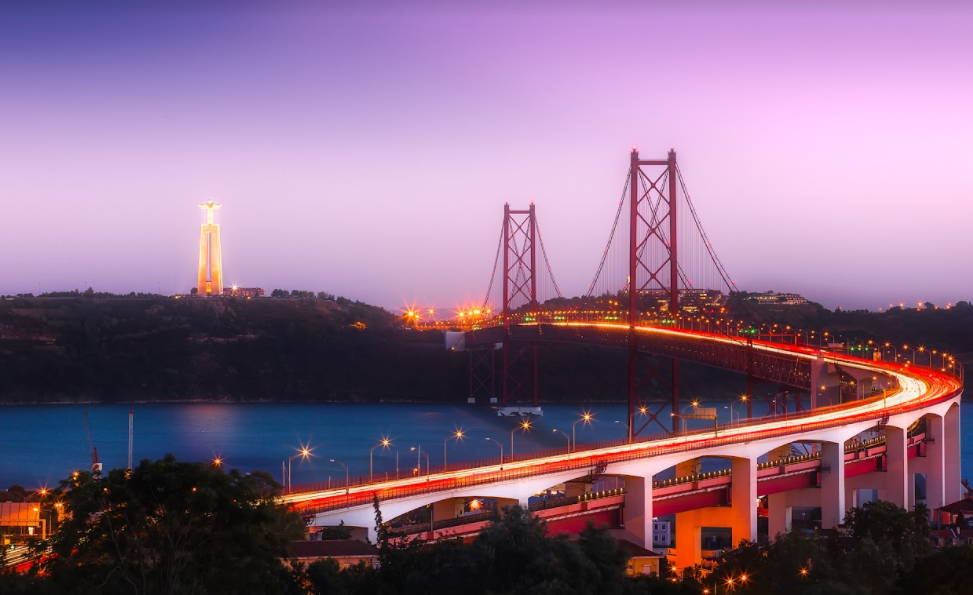
Hard to choose, but here are some of the best cities in Portugal
Visiting Portugal but don’t really know where to start? What are then, the best cities in Portugal? From major cities to smaller towns, our country is full of treasures, from historic buildings to natural landscapes. Despite being a small country, you can find the nicest cities near the seashore or in the deep country, up north in a more traditional and green nature-related vibe, or south to some of the most incredible beaches in the world.
Here’s a list of some of the best cities in Portugal and their highlights.
Quick answer: Lisbon, Porto and Sintra are the best places to start. Coimbra, Évora, Guimarães, Braga and Aveiro are the strongest next steps. Portugal has 17 UNESCO World Heritage Sites, and most of the cities below contain at least one. Distances are short, so you can combine several in one trip.
Below you will find the classics, plus a few less obvious cities that deserve more time. Each section links to a detailed guide from our blog.
Lisbon, the capital
Lisbon attracts more visitors and attention, it is one of the most popular city destinations in Europe, and we can easily justify why. It has incredible weather, gorgeous sunshine, and sunrises, and welcoming and warm people, as in any other part of the country, to be fair. But what makes Lisbon so trendy?
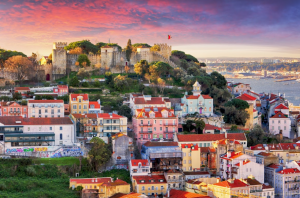
Somehow divided into 3 main areas, the city center which is the most traditional, the new Lisbon in Parque das Nações district is the modern side, and finally, the historical part, filled with monuments and history in Belém area. Though each one of these has a bit of the other, monuments, museums and cultural activities, impressive architecture, delicious food and of course, its riverside view.
Lisbon is also known for its vibe, nightlife, renowned restaurants, cinemas, theatres, and events happening all over the city.
Some Lisbon sights and activities: explore Alfama, Chiado, Baixa and São Bento, neighborhoods. Visit the Jerónimos Monastery and Belém Tower, Basílica da Estrela. Go to the Time Out Market Lisboa, the Oceanário de Lisboa, a theatre play or a fado show. Visit Museums, such as MAAT, Orient Museum or Azulejo Museum.
Discover some of our private tours in Lisbon
Lisbon at a glance
Lisbon has roughly 545,000 residents within the city limits, according to the 2021 census. It feels much bigger because so much is packed into its hills and riverfront. The Jerónimos Monastery and Belém Tower were inscribed on the UNESCO list together in 1983. Parque das Nações, the modern district, grew out of Expo 98, and the Oceanário de Lisboa opened there the same year.
Lisbon’s hills are steep and its cobbles uneven. As a result, guests with limited mobility often prefer door-to-door transport between neighborhoods. For ideas, read our guides to the best things to do in Lisbon, the city’s hidden gems and the Alfama neighborhood. Choosing a base? See where to stay in Lisbon.
Porto, the city of charm
Certainly one of the best cities in Portugal, Porto has a unique charm. Not only because of its picturesque ambiance and architecture, but for the people, the food, and the cultural vibe. Porto is worldly known for its wineries and Porto Wine, but it is much more than that. It has constantly super interesting exhibitions, concerts, and events.
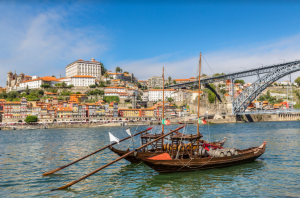
Set along the famous Douro River, Porto esplanades are a perfect way to spend a relaxing afternoon drinking port wine. Explore the historic streets, and visit incredible monuments and churches with their frequent tiled panels.
Discover the architecture: from the iron bridge D. Luís (Eiffel School), Casa da Música (Rem Koolhaas), or Serralves Foundation Museum (Siza Vieira), and many more renowned architects.
Go for a wine-tasting program, it’s mandatory.
Some Porto sights and activities: São Bento Train Station, Clérigos Tower, Serralves Foundation, Stock Exchange Palace, Lello Bookstore, Port Wine House, explore the riverfront area and take a boat ride in Douro River.
Amiroad private tours in Porto
Porto at a glance
Porto is compact, with about 232,000 residents in the city proper. Its Historic Centre, the Luiz I Bridge and the Serra do Pilar Monastery were inscribed on the UNESCO list in 1996. The Dom Luís I Bridge opened in 1886 and was designed by Théophile Seyrig, a former associate of Gustave Eiffel. Casa da Música, by Rem Koolhaas, opened in 2005. The Serralves contemporary art museum, by Álvaro Siza Vieira, opened in 1999.
Livraria Lello requires a ticket, so check the official website for current prices and opening hours. Booking ahead is wise in high season. For more ideas, see our guide to things to do in Porto. Coming from the capital? Read about the Lisbon to Porto journey by private driver. Wine lovers should also explore wine tourism in Portugal.
Sintra, the city of romance
If we had to choose two words to define Sintra it would be: magical and romantic. Sintra is a town about 30 km west of Lisbon. It used, back in the days, to host some of the most notable royal events. Today remain the beautiful palaces and gardens from that time.
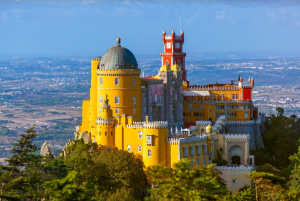
You can easily feel a fairy tale while in one of these palaces and forests. The peculiar and colorful Pena Palace is one of Sintra’s main attractions, a huge palace in an absolutely overwhelming park with fountains and lakes. Though, the elegance and stunning architecture of Monserrate are also enchanting – this one is a hidden gem of Sintra.
Sintra is also rich in gardens and parks, many of them part of palaces complexes, the special one here can easily be Regaleira – a must-see as well. There’s another thing you cannot miss while in Sintra, the travesseiros or queijadas from the historic Piriquita pastry.
Sintra sights and activities: Pena Palace and Pena Park, Quinta da Regaleira, Monserrate Palace, historic city center, National Palace of Sintra, Seteais Palace, and the Moorish Castle. Go for a sweet at Piriquita pastry.
Amiroad luxury private tours in Sintra
Sintra at a glance
Strictly speaking, Sintra is a town rather than a large city, but it earns its place on this list. The Cultural Landscape of Sintra has been a UNESCO World Heritage Site since 1995. Palaces and gardens sit among forested hills, and the roads are narrow and winding. A private driver makes the day far easier, and it helps guests who find steep paths tiring.
Casa Piriquita dates its history to 1862, according to the Portuguese Comércio com História program. Travesseiros and queijadas are the classic orders. To go deeper, read Sintra, embrace the enchantment and Sintra beyond Pena Palace.
Coimbra, the university city
Coimbra grew around one of Europe’s oldest universities. The University of Coimbra, Alta and Sofia, joined the UNESCO list in 2013. The Joanina Library and the old university buildings crown the hill. Below, the Mondego river and the old town offer cafés, fado and student life.
The climb to the Alta is steep. Plan transport to the top if you prefer to avoid the stairs. Coimbra sits roughly halfway between Lisbon and Porto, so it makes a natural stop. Read our full Coimbra travel guide.
Évora, the walled jewel of the Alentejo
Évora’s historic center was inscribed by UNESCO in 1986, and you can walk it in a day. Start at Praça do Giraldo, the main square. Then head uphill to the Roman temple, dated to the first century AD, and the cathedral beside it. The Chapel of Bones, inside the Church of São Francisco, is the most unusual stop.
The streets are cobbled and uneven, so comfortable shoes help. Évora is also an easy base for the Alentejo’s wine estates and cork forests. Learn more in our guide to the Alentejo region. Read the official UNESCO entry for the Historic Centre of Évora.
Guimarães, the birthplace city
Guimarães is often called the birthplace of Portugal. Its historic center and the Couros Zone, the old tanneries district, form a UNESCO World Heritage Site inscribed in 2001. The castle crowns the old town. The Palace of the Dukes of Braganza dates from around 1420, although it has been heavily restored.
A cable car climbs to the Penha sanctuary in about ten minutes, with wide views. That also makes it a good option for travelers who prefer not to hike. Our Guimarães travel guide explains why it rewards a longer stay.
Braga, a Roman city with a sacred staircase
Braga began as the Roman city of Bracara Augusta, founded around 16 BC. Its cathedral, begun in the 11th century, is considered the oldest in the country. Just outside town, the Sanctuary of Bom Jesus do Monte became a UNESCO World Heritage Site in 2019. Its baroque staircase is famous, and a historic water-powered funicular, opened in 1882, offers an easier way up.
Holy Week is the city’s best-known event, with solemn processions through the old center. Book transport early if you visit then. Read our guide to Braga, Bom Jesus and the cathedral.
Aveiro, canals and Art Nouveau
Aveiro is nicknamed the Venice of Portugal, and its canals explain why. Painted moliceiro boats, once used to gather seaweed, now carry visitors along the water. The city also has a notable Art Nouveau heritage. Try ovos moles, a sweet of egg yolk and sugar in a thin wafer shell.
Nearby Costa Nova is known for its striped beach houses. Aveiro is about an hour from Porto by train. It works well as a day trip or a stop on the road south. Discover more in Aveiro, the Venice of Portugal.
Tomar, Templar history in the heart of Portugal
Tomar is a smaller city, but its Convent of Christ is a highlight of the country. The convent grew from a Knights Templar fortress begun in 1160 and joined the UNESCO list in 1983. After the Templars were suppressed, the Order of Christ took over the site. That order later supported Portugal’s age of maritime exploration.
Tomar lies about 130 km north of Lisbon, so it fits into a long day trip. See the official UNESCO entry. For similar sites, read about Portugal’s forgotten monasteries and convents.
Elvas, a fortress town on the Spanish border
Elvas is one of the least known entries on this list. It was inscribed by UNESCO in 2012 as a garrison border town with its fortifications. UNESCO describes these as an outstanding example of the Dutch school of fortification, with a dry-ditch defense system. The listing includes the Amoreira Aqueduct, the Fort of Graça and several smaller forts.
Elvas sits in the eastern Alentejo, close to Spain. Combine it with Évora for a two-day history route. Read the UNESCO description of Elvas.
Tavira, the Algarve without the crowds
Tavira offers a calmer side of the Algarve. Its pedestrian bridge is known as the Roman Bridge. Most sources say, however, that it was built in the Islamic period and rebuilt after a collapse in 1655. A small castle overlooks the town, and the Ria Formosa natural park lies just offshore. Visitors reach Tavira Island by a short ferry crossing.
Cacela Velha, a small whitewashed village east of Tavira, has views over the lagoon. Compare other coastal bases in our guides to Lagos and the best beach towns in Portugal. Traveling from the capital? See how to get to the Algarve from Lisbon.
More cities and towns worth a stop
Several more places deserve a visit, each with its own guide or story:
- Óbidos: a walled medieval town, easy to visit from Lisbon
- Évora: see the section above for the highlights
- Coimbra: read the full Coimbra guide
- Batalha: a monastery built to commemorate the Battle of Aljubarrota in 1385, UNESCO-listed since 1983
- Fátima: one of the world’s major Catholic pilgrimage sites
- Alcobaça: a UNESCO-listed monastery, inscribed in 1989
How to visit several cities in one trip
Portugal is small, which makes multi-city trips easy. Lisbon to Porto is roughly three hours by road, with Coimbra and Aveiro conveniently on the way. A private driver lets you stop where you like and skip the parking search. It also removes luggage worries when you change hotels.
For sample routes, see our 5 days in Portugal itinerary. You can also read why private transfers beat renting a car and browse our private day trips from Lisbon. If you want a guide in the car, explore our guided tours with a chauffeur. Planning timing? Check the best time to visit Portugal.
Frequently asked questions
What are the best cities in Portugal to visit?
Lisbon, Porto and Sintra are the best cities for first-time visitors. Coimbra, Évora, Guimarães, Braga and Aveiro add university history, Roman and medieval heritage, and canals. Tomar and Elvas suit travelers who want fewer crowds.
Which Portuguese cities are UNESCO World Heritage Sites?
Several are. Lisbon (Jerónimos Monastery and Belém Tower, 1983), Évora (1986), Sintra (1995), Porto (1996) and Guimarães (2001) all qualify. So do Elvas (2012), Coimbra (University, 2013) and Braga (Bom Jesus do Monte, 2019). Tomar, Batalha and Alcobaça are listed for their monasteries. See our guide to UNESCO World Heritage Sites in Portugal.
How many days do you need to see Portugal’s main cities?
Five to seven days is a comfortable minimum for Lisbon, Sintra, Porto and one more stop such as Coimbra. Ten days gives time for Évora, Guimarães and Braga as well. Add extra days for the Algarve coast if beaches are a priority.
Is it easy to travel between Portuguese cities?
Yes, distances are short and the main routes are well connected. Lisbon to Porto takes roughly three hours by road. Private transfers are the most flexible option for groups, families and travelers with limited mobility. See our travel to Portugal guide.
When is the best time to visit Portugal’s cities?
Spring and early autumn are usually the most comfortable for city sightseeing. Summers can be hot, especially inland in the Alentejo. See our guides to the best time to visit Portugal and to summer in Portugal.

For tailor-made tours or other programs, please get in touch with us through the telephone below or by filling out the form.